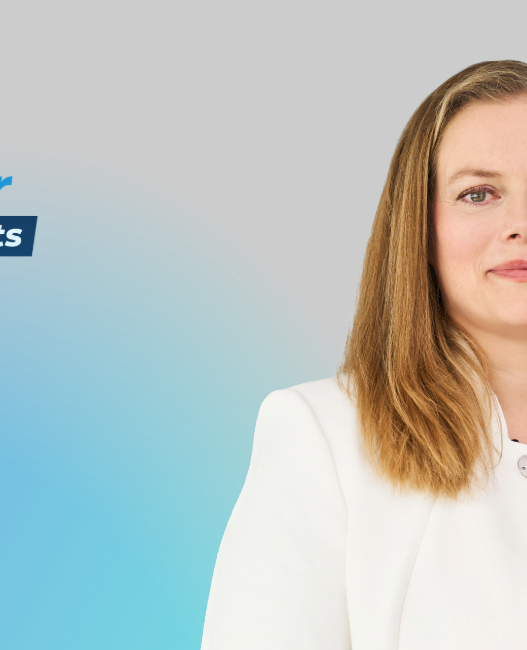





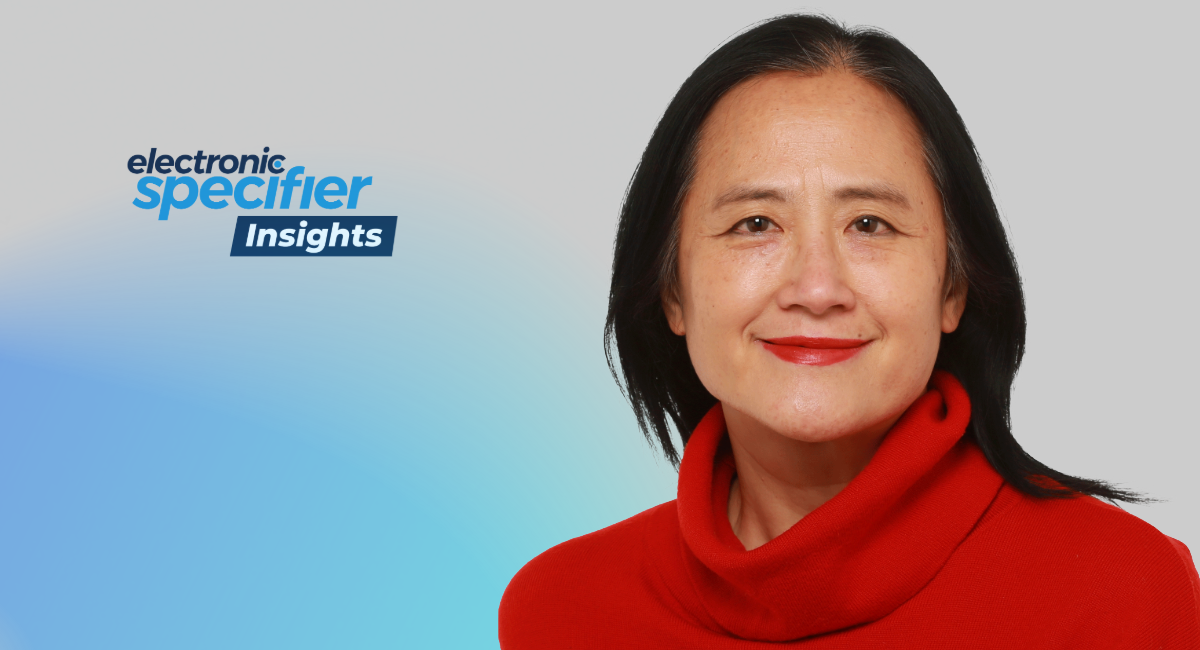
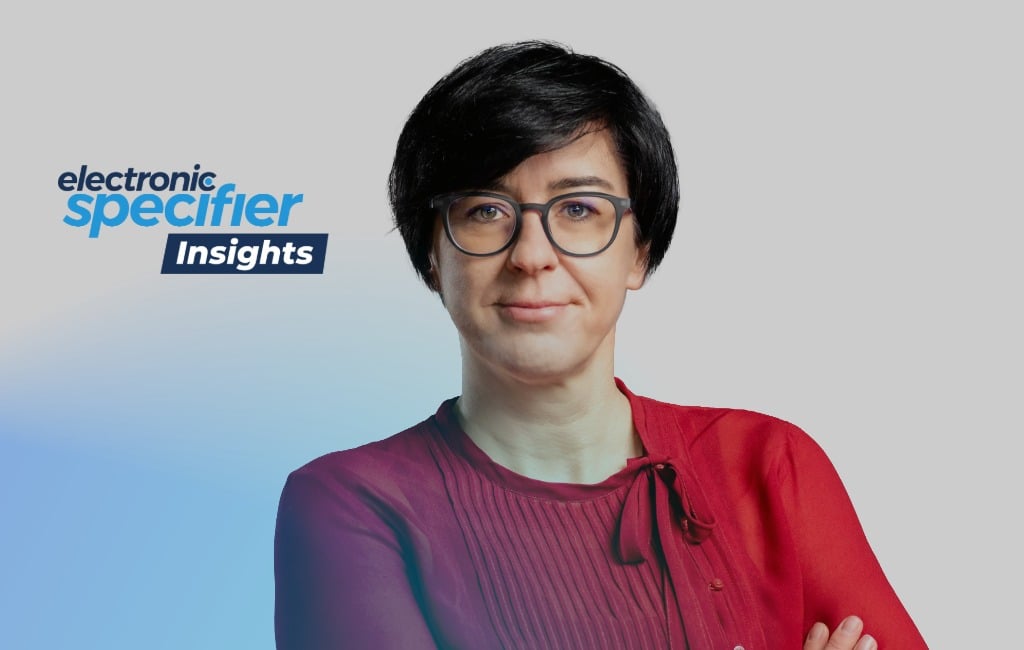
In a conversation with Sheryl Miles for the Electronic Specifier Insights Women in Tech podcast, Fiona Treacy, Managing Director of Industrial Automation and Robotics at Analog Devices (ADI), explored how electronics are shaping the next generation of intelligent machines – and shared lessons from a career spanning more than two decades.
Treacy, who studied applied physics and electronics at University College Galway, leads a global research and development team. She has seen ADI grow from a company focused on general-purpose amplifiers and analogue-to-digital converters into one developing application-specific technologies for robotics, automotive systems, and data centres. Alongside its semiconductor expertise, the company has expanded its software capabilities to help customers put products into use more easily.
The rise of artificial intelligence, she said, is making ADI’s core strengths more relevant. While large language models often run on powerful GPUs, “the analogue signals become more and more important as we move towards physical intelligence.” For robots to operate in the real world, they need to sense their surroundings, interpret what they detect, and respond safely.
Treacy described tactile sensing as one emerging piece of that puzzle. A robot may need to recognise whether it is holding a pen, cup, or sponge, determine where to grip it, and apply just enough force to avoid damaging it. Other technologies, including gyroscopes, inertial measurement units, and magnetic sensors, can help robots balance, monitor temperature, and remember a joint’s position when power is off.
Robots are likely to move into factories before they become commonplace in homes. “The first phase of deployment will absolutely be in factory automation systems because they’re quite controlled environments,” Treacy said. Initially, machines will handle specific tasks, gradually combining them into more complex capabilities. Over time, she expects robotics to assist with everyday activities, potentially giving people more time for other priorities.
Automation also has a role to play in sustainability. With energy demand rising, Treacy argued that using energy more efficiently is essential. Sensors and real-time monitoring can help manufacturers identify production issues earlier, reduce waste, and improve quality. Flexible automation could also make it practical to produce smaller batches closer to where goods are used, cutting the emissions associated with shipping products and components around the world.
Her interest in problem-solving began long before her engineering career. Growing up on a farm in County Galway taught her to plan, adapt, and prepare for unexpected challenges. Her mother, a biochemist, also made science feel familiar and accessible. Treacy believes that hands-on experiences – such as ADI’s robotics workshops for children – can help young people see what a future in science and engineering might look like.
Treacy’s own career was not a straight line. She moved from test development into applications engineering, customer-facing work, marketing, and business leadership, taking courses along the way, including an MBA. Her advice is to identify where you want to go, build the skills and experience needed, and actively ask for opportunities. A new role can be uncomfortable at first, she noted, because you move from being highly capable in one area to learning the basics in another. That learning curve is part of growth.
She also called on companies to create better conditions for women in technology: make career paths visible, support people returning to work, and ensure women receive high-impact assignments rather than being left with administrative “busy work.” Her advice to aspiring engineers is captured in three words: “accumulate,” “amplify”, and “aspire” – build knowledge and networks, raise up others’ contributions, and put your name forward.
Above all, Treacy encouraged listeners to take a chance even when they feel uncertain. “You have to put your hand up,” she said. Her closing reminder was simple: “Do it with a smile.”
To hear more from Fiona Treacy, you can listen to Electronic Specifier’s interview on Spotify or Apple podcasts.
Electronic Specifier Insights













Series 18 – Episode 10 – Women in tech takeover: an AI mindset
In this special Women in Tech takeover, Sheryl Miles speaks with Jeana Bolanos, Founder and President, SalesE about her unique career journey from nuclear engineer in the US Navy to semiconductor industry professional and now tech entrepreneur.

Series 18 – Episode 9 – Nanusens’ new approach to MEMS integration
Paige West speaks with Dr Josep Montanyà i Silvestre, CEO at Nanusens about the company’s MEMS-in-CMOS technology.

Series 18 – Episode 8 – optimising Edge AI with low-power FPGAs
Paige West speaks with Hussein Osman, Marketing Director, Lattice Semiconductor about the company’s role in enabling Edge AI.
Series 18 – Episode 7 – modern manufacturing needs modern profiling
Paige West speaks with Chris Williams, Head of European Sales, Solderstar about thermal profiling.
Series 18 – Episode 6 – memory at the core of innovation
Paige West speaks with Steve Shih, Automotive and Embedded Product Manager, Silicon Motion about memory being at the core of innovation and, in particular, how it’s transforming the industrial and automotive sectors.
Series 18 – Episode 5 – re-launch of the Systems Change Lab
Paige West speaks with Ellie Carey, Elected Trustee at Engineers Without Borders UK and Eva Fernandez, Strategic Sustainability Consultant at Ramboll about the launch of the 2025 Systems Change Lab.
Series 18 – Episode 4 – shaping IoT’s next chapter with antenna innovation
Paige West speaks with Dermot O'Shea, Co-Founder and CEO, Taoglas about the Internet of Things (IoT) and antenna innovation.
Series 18 – Episode 3 – security for embedded systems
Paige West speaks with Roland Marx, Product Manager, swissbit about the critical world of cybersecurity and swissbit’s Security Upgrade System.

Series 18 – Episode 2 – PXI, LXI, & the modular test puzzle: finding the right fit
Paige West speaks with Tom Sarfi, Business Development Manager, Pickering Interfaces about the differences between LXI & PXI and where each is best suited.

Series 18 – Episode 1 – the future of battery management
Paige West speaks with Joseph Notaro, Vice President Global Sales & Marketing, Dukosi about its cell monitoring system, the DKCMS with C-Synq.