








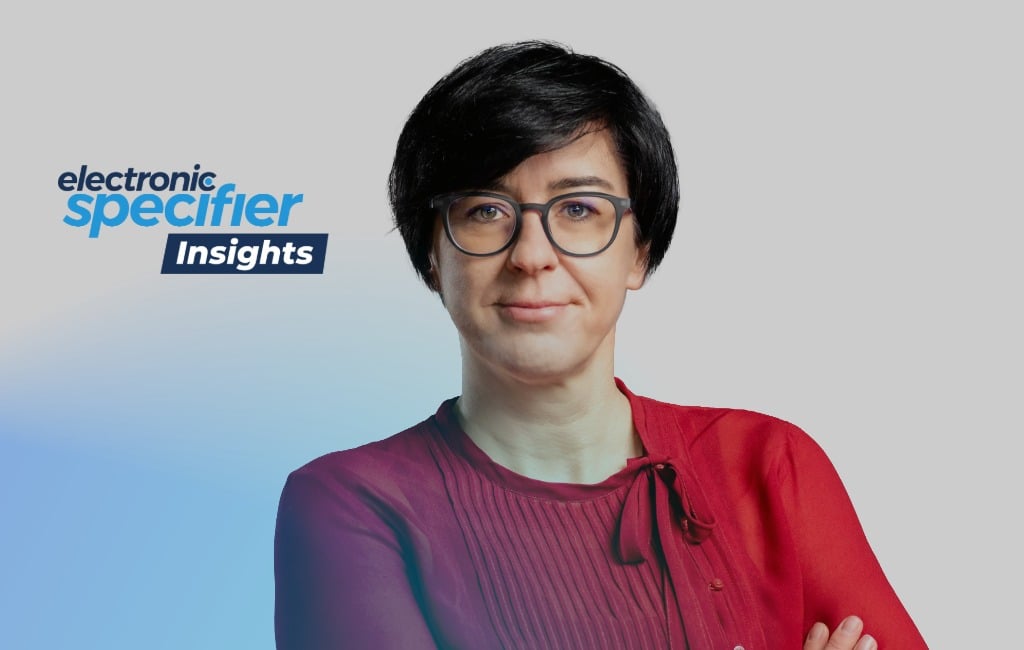
Paige Hookway sat down with Oyvind Strøm, Executive Vice President of Nordic’s Short-Range Business Unit, and Arjun Chandra, Head of AI, to explore how ultra‑low‑power intelligence on devices is reshaping the IoT landscape.
From the outset, Nordic framed Edge AI not as a buzzword, but as a practical design paradigm. As Chandra put it, Edge AI at Nordic is about “intelligence that runs on a coin cell where the data is actually generated”. In other words, decisions are made locally on constrained devices – without relying on a constant Cloud connection. Crucially, Nordic’s goal is to make this technology accessible: “Making it easy enough that any developer can build one without a PhD in data science.”
Why AI is moving to the Edge
Several powerful forces are driving this shift. Latency is at the top of the list. Many applications – from industrial sensing to medical wearables – simply cannot afford the delay of sending data to the Cloud and waiting for a response. As Chandra explained, “decisions that are taken on device … need to happen in milliseconds instead of seconds”.
Privacy is another critical factor. Keeping sensitive data, such as biometric signals from wearables or audio from smart homes, on device greatly reduces exposure risks. Power efficiency is equally important: streaming raw data continuously to the Cloud is both energy‑hungry and economically impractical when scaled to billions of IoT devices.
Moreover, Edge AI improves robustness. Devices must continue working even when connectivity is intermittent. “AI should really keep working, even when connectivity drops”, Chandra noted, underscoring a key requirement for industrial, medical, and remote applications.
From niche experiments to default feature
Strøm described a clear market transition. A few years ago, Edge AI “was a technology searching for an application”. Today, the situation has flipped. Customers are no longer experimenting post‑deployment; instead, “they are planning their projects with Edge AI from the early days and from the start”.
This mainstreaming spans a broad range of sectors: wearables, medical devices, industrial sensing, smart home, audio, and asset tracking. In all these areas, small, power‑efficient models running on tiny devices can deliver real‑time intelligence while preserving battery life and privacy.
Engineering for kilobytes, not gigabytes
Deploying AI on resource‑constrained devices introduces unique engineering challenges. “Every milliwatt counts, models have to fit in kilobytes, not gigabytes,” Chandra stressed. Compounding this, many of the people building such systems are embedded developers, not machine learning specialists. Nordic’s tools and platforms therefore aim to “meet them where they are”, abstracting away complexity while retaining efficiency.
On the silicon side, Strøm highlighted Nordic’s use of advanced 22nm embedded process technology, enabling ultra‑low‑power operation and more integration. Its approach combines:
- Power‑efficient NPUs and accelerators (e.g., on devices like the nRF54LM20B) delivering “up to 15 times faster inference” than CPU‑only implementations
- Right‑sized, tiny ML models from Nordic’s Newton AI acquisition, where certain inference tasks can be solved with around “five kilobytes of code”, making them “10x smaller and much more faster” than conventional approaches
This dual strategy – highly efficient software models plus integrated NPUs – lets Nordic tailor solutions across a spectrum of Edge AI use cases.
Security and connectivity by design
Security is built into Nordic’s platform rather than bolted on later. “Security isn’t an afterthought. It’s actually in the silicon,” Chandra explained. Features like PSA certification, secure boot, and hardware root of trust protect both firmware and models. When AI models need updating in the field, they travel “the same signed, encrypted path the firmware does over secure over‑the‑air updates”, leveraging Nordic’s Cloud technologies.
Low‑power wireless technologies, including Bluetooth LE, cellular IoT, and satellite, complement Edge AI by judiciously using connectivity. Chandra captured this interplay succinctly: “AI kind of decides … the radio kind of only wakes up when there’s something worth saying”. Nearby interactions can use Bluetooth LE, while cellular and satellite manage long‑range links – all orchestrated by on‑device intelligence.
Edge AI as the new baseline
Looking ahead, Strøm sees ultra‑low‑power Edge AI becoming standard: “It’s really the new baseline for both IoT and Bluetooth Low Energy applications”, no longer a premium option. With a full portfolio of 22nm products, integrated NPUs, and tooling such as Nordic’s Edge AI Lab, the company aims to make intelligent, battery‑powered devices the norm rather than the exception.
To hear more from Nordic Semiconductor, you can listen to Electronic Specifier’s interview on Spotify or Apple podcasts.
Electronic Specifier Insights




















Series 18 – Episode 10 – Women in tech takeover: an AI mindset
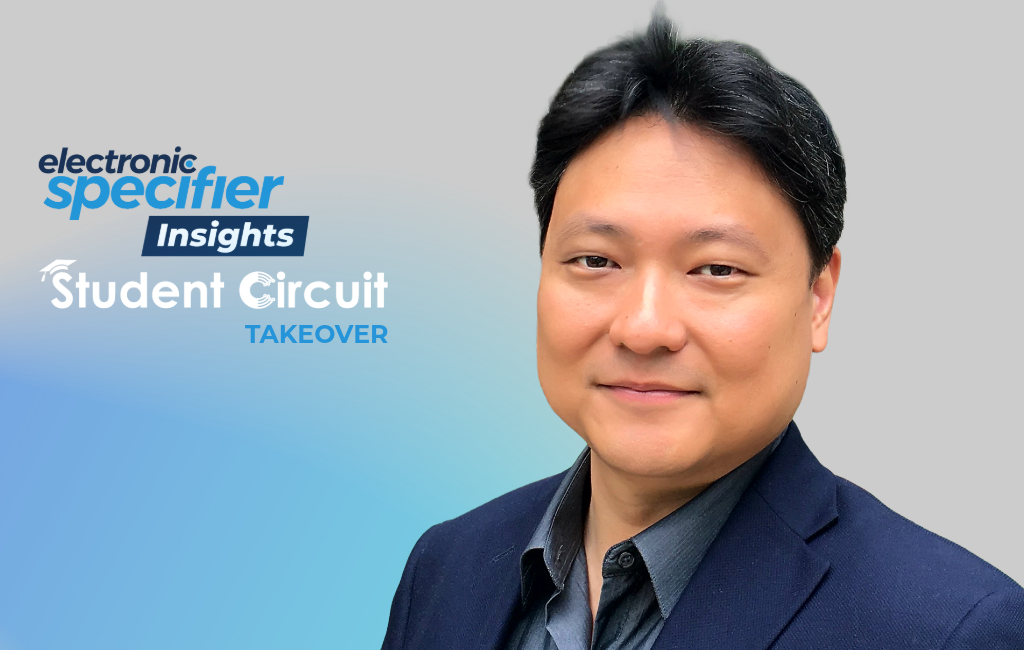
In this special Women in Tech takeover, Sheryl Miles speaks with Jeana Bolanos, Founder and President, SalesE about her unique career journey from nuclear engineer in the US Navy to semiconductor industry professional and now tech entrepreneur.

Series 18 – Episode 9 – Nanusens’ new approach to MEMS integration
Paige West speaks with Dr Josep Montanyà i Silvestre, CEO at Nanusens about the company’s MEMS-in-CMOS technology.

Series 18 – Episode 8 – optimising Edge AI with low-power FPGAs
Paige West speaks with Hussein Osman, Marketing Director, Lattice Semiconductor about the company’s role in enabling Edge AI.

Series 18 – Episode 7 – modern manufacturing needs modern profiling
Paige West speaks with Chris Williams, Head of European Sales, Solderstar about thermal profiling.
Series 18 – Episode 6 – memory at the core of innovation
Paige West speaks with Steve Shih, Automotive and Embedded Product Manager, Silicon Motion about memory being at the core of innovation and, in particular, how it’s transforming the industrial and automotive sectors.

Series 18 – Episode 5 – re-launch of the Systems Change Lab
Paige West speaks with Ellie Carey, Elected Trustee at Engineers Without Borders UK and Eva Fernandez, Strategic Sustainability Consultant at Ramboll about the launch of the 2025 Systems Change Lab.
Series 18 – Episode 4 – shaping IoT’s next chapter with antenna innovation
Paige West speaks with Dermot O'Shea, Co-Founder and CEO, Taoglas about the Internet of Things (IoT) and antenna innovation.

Series 18 – Episode 3 – security for embedded systems
Paige West speaks with Roland Marx, Product Manager, swissbit about the critical world of cybersecurity and swissbit’s Security Upgrade System.

Series 18 – Episode 2 – PXI, LXI, & the modular test puzzle: finding the right fit
Paige West speaks with Tom Sarfi, Business Development Manager, Pickering Interfaces about the differences between LXI & PXI and where each is best suited.

Series 18 – Episode 1 – the future of battery management
Paige West speaks with Joseph Notaro, Vice President Global Sales & Marketing, Dukosi about its cell monitoring system, the DKCMS with C-Synq.