




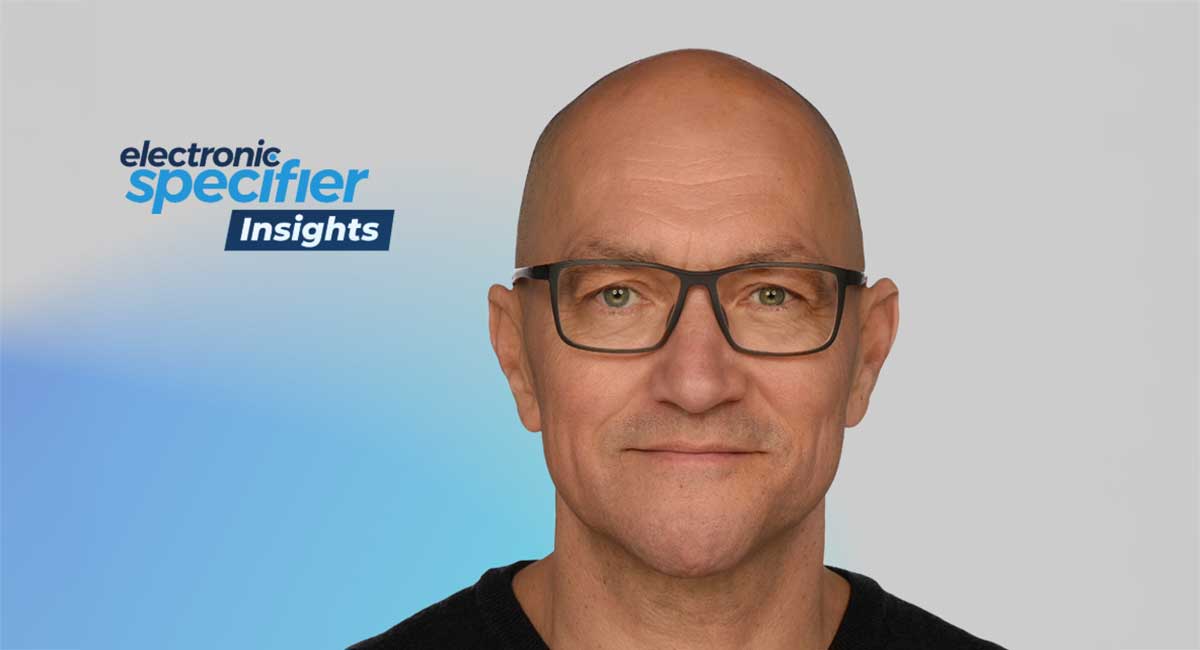
In a recent episode of Electronic Specifier Insights, Paige Hookway spoke with Rolf Segger, Founder of SEGGER Microcontroller, about how its new technology, emApps, could reshape flexibility, security, and customisation in embedded devices.
emApps emerged organically from SEGGER’s long-standing work on flash programmers (Flashers) and J-Link debug probes. Traditionally, each microcontroller family required its own dedicated flash programmer because every vendor – and often each device – uses a different, non-standardised programming method. Maintaining separate firmware images was not scalable: every new device support meant a firmware change and growing firmware size.
SEGGER’s solution was to make the hardware flexible (using FPGAs where needed) and to move device-specific intelligence into downloadable apps. These compact programs can be dynamically loaded into the flasher and executed in a sandboxed environment, allowing SEGGER to add or modify behaviour without bloating the core firmware.
What are emApps?
emApps are small, portable applications that run on a custom virtual CPU inside embedded systems. They are:
- Compact – the executor requires about 2.5KB on the target
- Fast and efficient – designed specifically for embedded use
- Sandboxed and secure – running in a virtual processor with strict isolation
- Hardware-agnostic – no MMU/MPU needed; they can run even on very low-cost microcontrollers, including RISC-V
Developers (or even end customers, if permitted) can write apps in C against a controlled API exposed by the device firmware. The device manufacturer decides exactly what capabilities an app may have: for example, granting read-only access to a file system, or providing limited communication primitives, but withholding write operations or privileged functions.
This API-based design ensures that even if an app misbehaves – such as accessing memory out of bounds – the virtual machine halts the app rather than crashing the whole system, similar to a smartphone where a single app can fail without bringing down the OS.
Security, sandboxing, and certification
Security is central to emApps. The key challenges SEGGER addressed include:
- Ensuring no escape from the sandbox is possible, regardless of which instruction sequence an app executes
- Validating API calls so that every buffer and pointer remains strictly within the allowed memory space
Rolf notes that, beyond being safe itself, emApps can improve overall system security: non-critical features such as displays or custom UI logic can be isolated into apps. For example, an elevator’s main control logic stays in certified firmware, while the display logic – subject to frequent customisation – runs as an app that can fail harmlessly without impacting safety.
Real-world and future use cases
Rolf describes numerous uses already in place:
- Flash programming algorithms for new microcontroller families
- Production testing where one app handles programming and another triggers self-tests on the target hardware
- Regression testing in SEGGER’s own test farm, including performance checks like timed memory copy loops
- Customer-specific customisation, such as localised web interfaces, without SEGGER bloating its firmware with every possible language or feature
Looking ahead, Rolf predicts that dynamic software extensions like emApps will be present in a large fraction of embedded devices – perhaps around half – particularly where communication, web interfaces, or energy-optimised behaviour need to be tailored to specific deployments or markets.
Getting started with emApps
Developers can begin experimenting with emApps using a PC trial application that runs apps on a desktop.
SEGGER will also offer trial options for real embedded targets, and plans to showcase emApps with a live demonstrator at embedded world, where attendees can see the technology in action.
To hear more from Rolf Segger, you can listen to Electronic Specifier’s interview on Spotify or Apple podcasts.
Electronic Specifier Insights









Series 18 – Episode 10 – Women in tech takeover: an AI mindset
In this special Women in Tech takeover, Sheryl Miles speaks with Jeana Bolanos, Founder and President, SalesE about her unique career journey from nuclear engineer in the US Navy to semiconductor industry professional and now tech entrepreneur.

Series 18 – Episode 9 – Nanusens’ new approach to MEMS integration
Paige West speaks with Dr Josep Montanyà i Silvestre, CEO at Nanusens about the company’s MEMS-in-CMOS technology.

Series 18 – Episode 8 – optimising Edge AI with low-power FPGAs
Paige West speaks with Hussein Osman, Marketing Director, Lattice Semiconductor about the company’s role in enabling Edge AI.
Series 18 – Episode 7 – modern manufacturing needs modern profiling
Paige West speaks with Chris Williams, Head of European Sales, Solderstar about thermal profiling.
Series 18 – Episode 6 – memory at the core of innovation
Paige West speaks with Steve Shih, Automotive and Embedded Product Manager, Silicon Motion about memory being at the core of innovation and, in particular, how it’s transforming the industrial and automotive sectors.
Series 18 – Episode 5 – re-launch of the Systems Change Lab
Paige West speaks with Ellie Carey, Elected Trustee at Engineers Without Borders UK and Eva Fernandez, Strategic Sustainability Consultant at Ramboll about the launch of the 2025 Systems Change Lab.
Series 18 – Episode 4 – shaping IoT’s next chapter with antenna innovation
Paige West speaks with Dermot O'Shea, Co-Founder and CEO, Taoglas about the Internet of Things (IoT) and antenna innovation.
Series 18 – Episode 3 – security for embedded systems
Paige West speaks with Roland Marx, Product Manager, swissbit about the critical world of cybersecurity and swissbit’s Security Upgrade System.

Series 18 – Episode 2 – PXI, LXI, & the modular test puzzle: finding the right fit
Paige West speaks with Tom Sarfi, Business Development Manager, Pickering Interfaces about the differences between LXI & PXI and where each is best suited.

Series 18 – Episode 1 – the future of battery management
Paige West speaks with Joseph Notaro, Vice President Global Sales & Marketing, Dukosi about its cell monitoring system, the DKCMS with C-Synq.