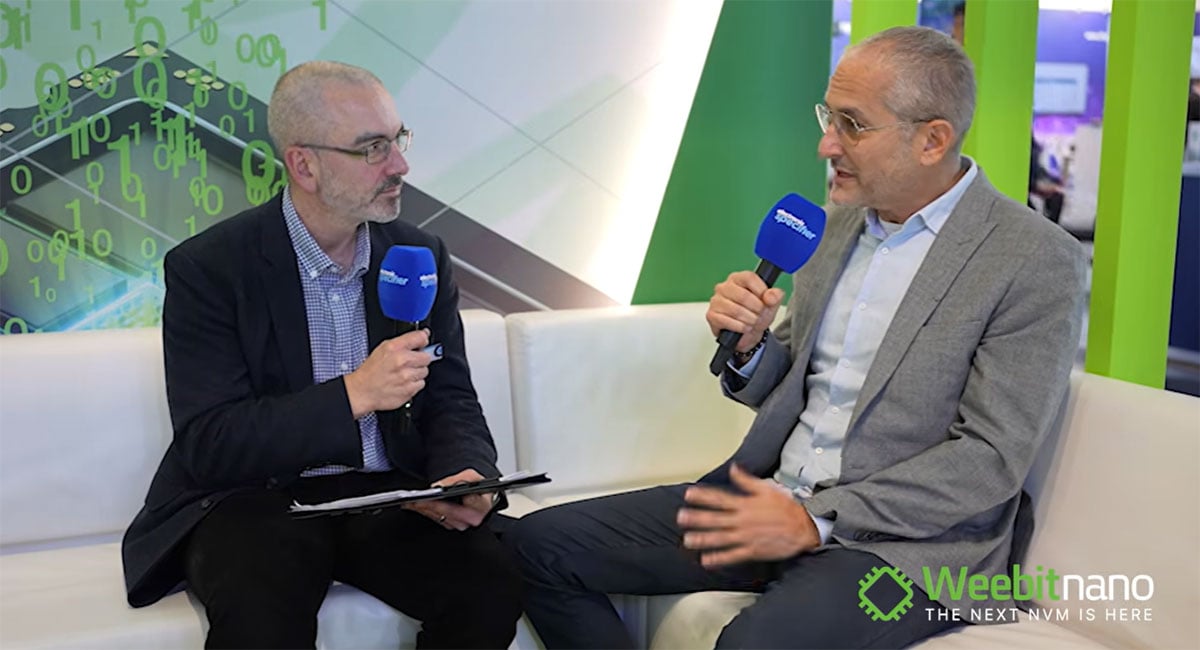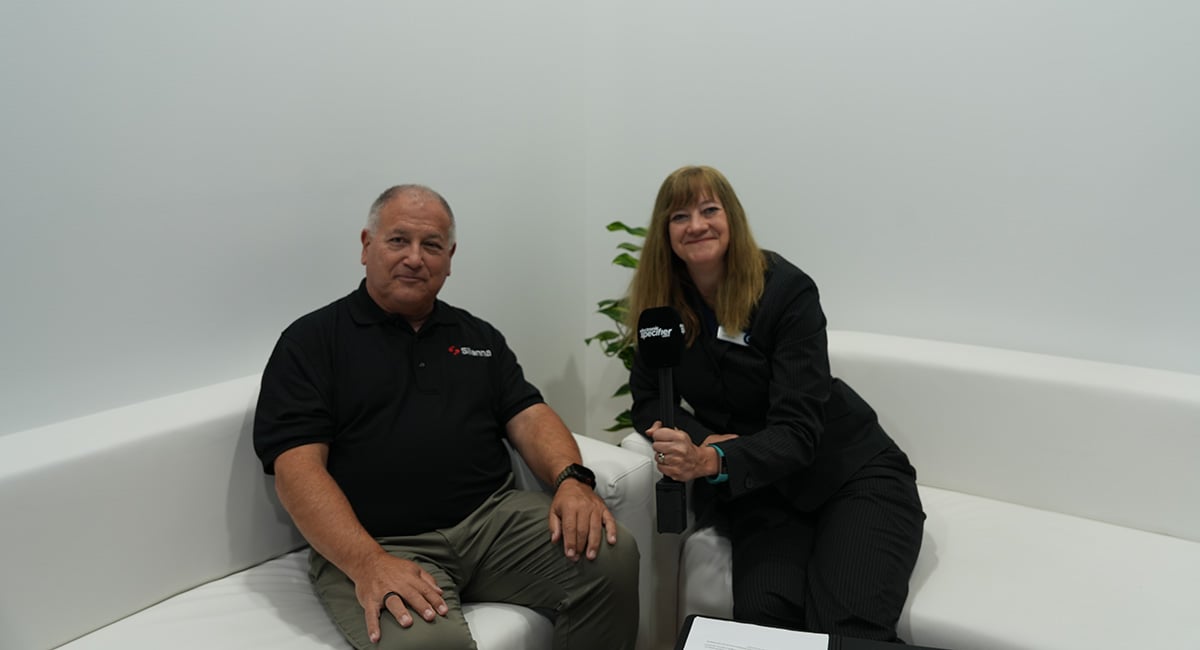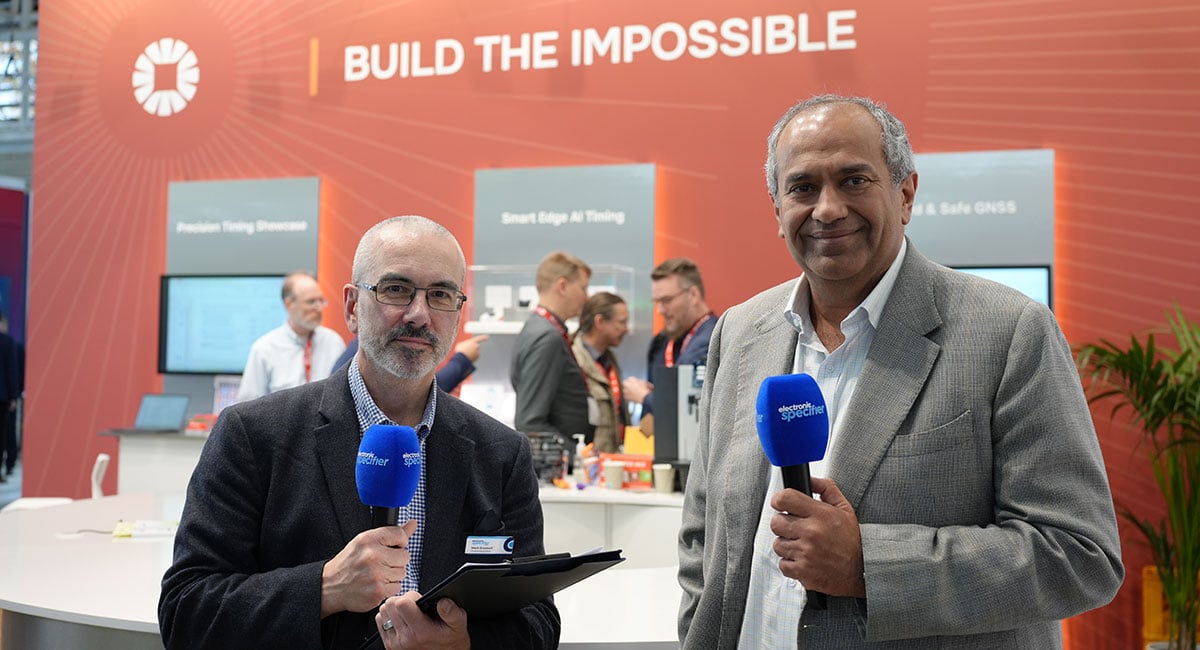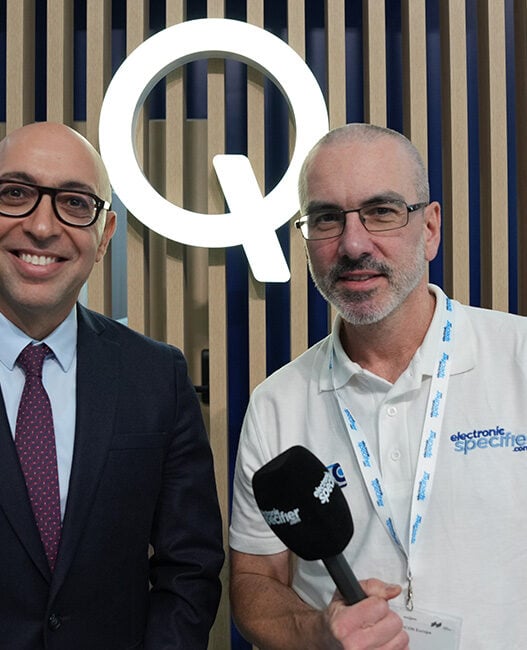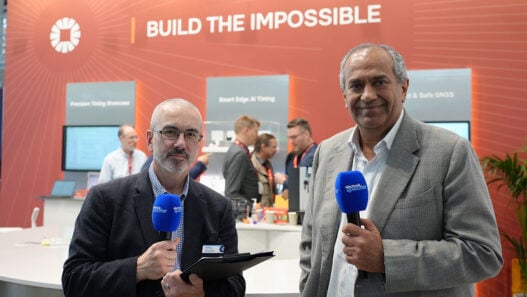


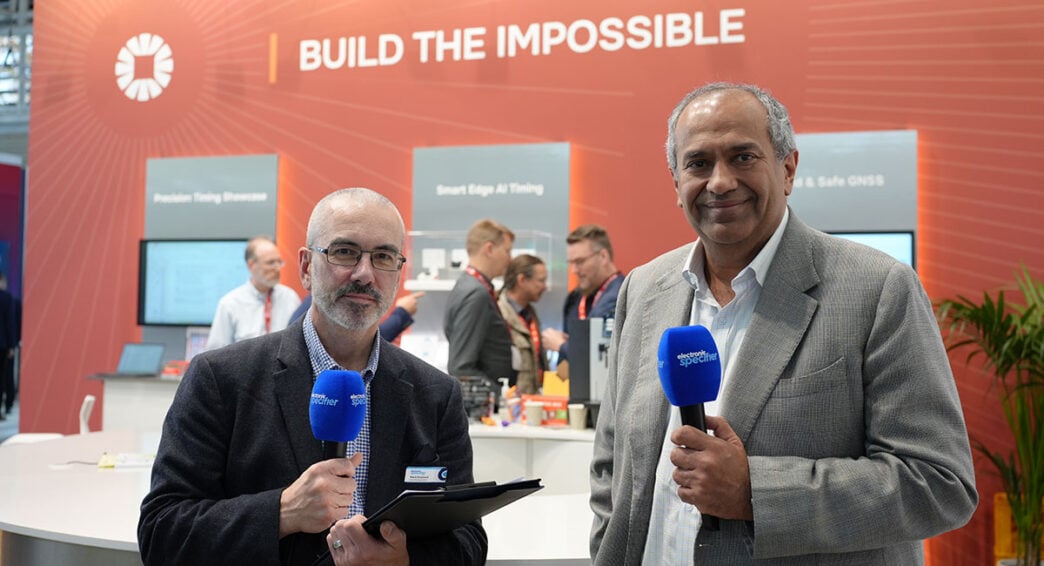
In this interview at electronica 2026 in Munich, Electronic Specifier Contributing Editor, Mark Gradwell talks with Piyush Sevalia, Executive Vice President & Chief Business Officer at SiTime about why precision timing is becoming increasingly important for AI, data centres, and connected systems – and how resilient timing can support more reliable, high-performance electronics.
The biggest shift is growth
Talking about the rapid growth the business has experienced over the past year, Sevalia outlined three key market segments that are driving the growth: firstly, enterprise communications and data centres; then, automotive, industrial, and defence applications; and finally, mobile, IoT, and consumer electronics. “The biggest thing that’s changed (over the last 12 months) is growth,” explained Sevalia, with all three markets seeing dramatic expansion, led by the data centre sector. “Our overall revenue was up something like 250% year on year.”
This rapid growth included the acquisition of Renesas’ timing products division, which joined SiTime on July 1st, bringing in around 150 new staff and expanding the company’s portfolio and capabilities. Talking about the complementary fit of the two businesses, Sevalia emphasised their shared vision: “We are only focused on timing.” Growth has meant scaling customer support and speeding up product development, he added.
Timing critical as electronics evolve
Discussing market trends, Sevalia went on to say that electronics are becoming more intelligent, always connected, and higher performing – from both a compute and bandwidth perspective. Equipment is also being deployed in harsher conditions than before, such as on building walls and in stadiums, and data centre hardware runs hot.
These “environmental disturbers” (vibration, shock, rapid and extreme temperature changes, power supply noise) all affect timing, Sevalia explained. SiTime has built its innovation around making timing resilient to them, a category it calls precision timing. “How you make timing resilient to all of these environmental disturbers is a big thing for us,” Sevalia said, “So that these systems can run better and more reliably.”
Show highlights
Outlining what SiTime is showcasing at electronica, Sevalia reiterated its core message to engineers: “Timing is becoming really critical as electronics evolves.” He highlighted a GNSS demo that shows how rapid ambient temperature changes can disrupt a GNSS chip’s timing, slowing signal acquisition and reducing location accuracy, versus using a SiTime chip that ensures timing remains much more stable.
He also talked about the company’s MEMS-based Titan resonators, used in microcontrollers and SoCs for space-constrained designs. Reflecting on its electronica 2026 ‘Best-In-Show’ award from Embedded Computing Design (in the ‘MEMS, Sensors & Wearables’ category), in addition to it being shortlisted for an Electronic Specifier Excellence Award in the Semiconductor category, Sevalia said, “This resonator, which is a timing reference, is seven times smaller than anything else out there.”
Finally, Sevalia highlighted the company’s Lab Anywhere evaluation platform. It lets customers remotely log in, configure devices, run tests, and get results without having physical hardware or lab access, speeding up evaluation.
Watch the full video interview at: https://www.youtube.com/watch?v=QdYls2QbizM