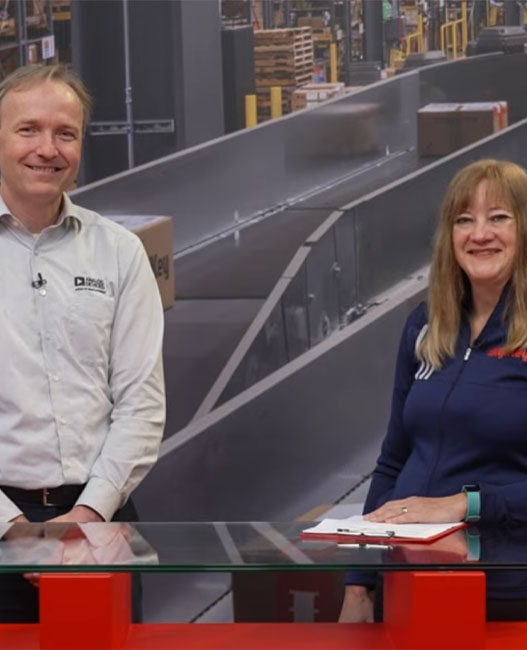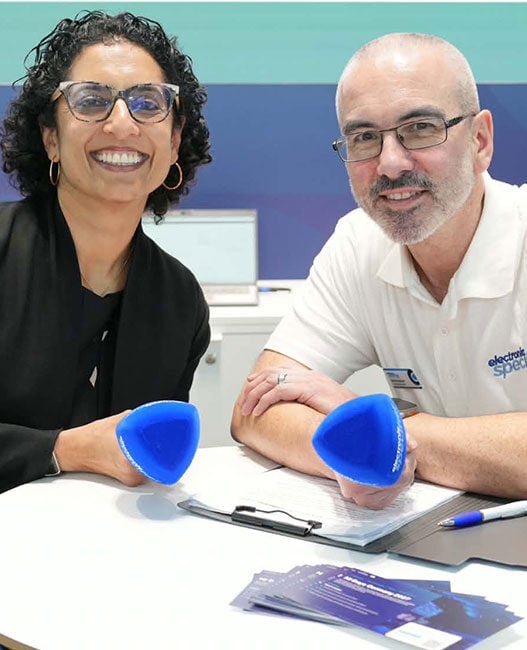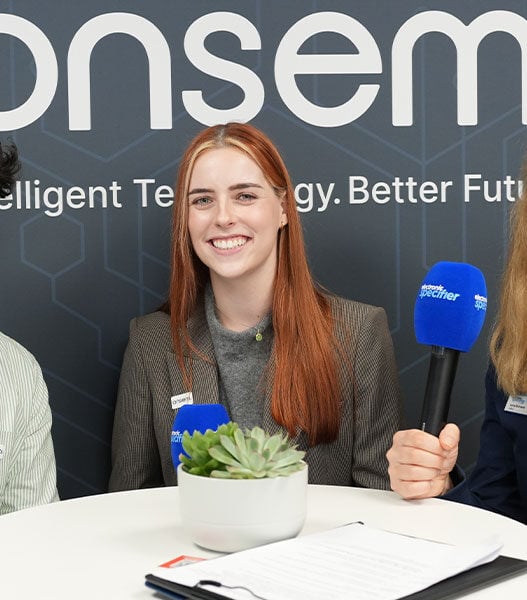

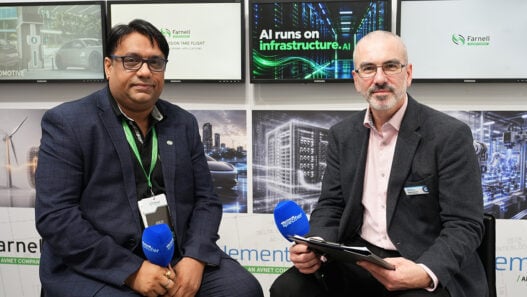

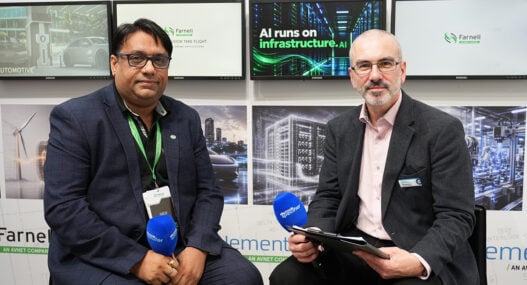
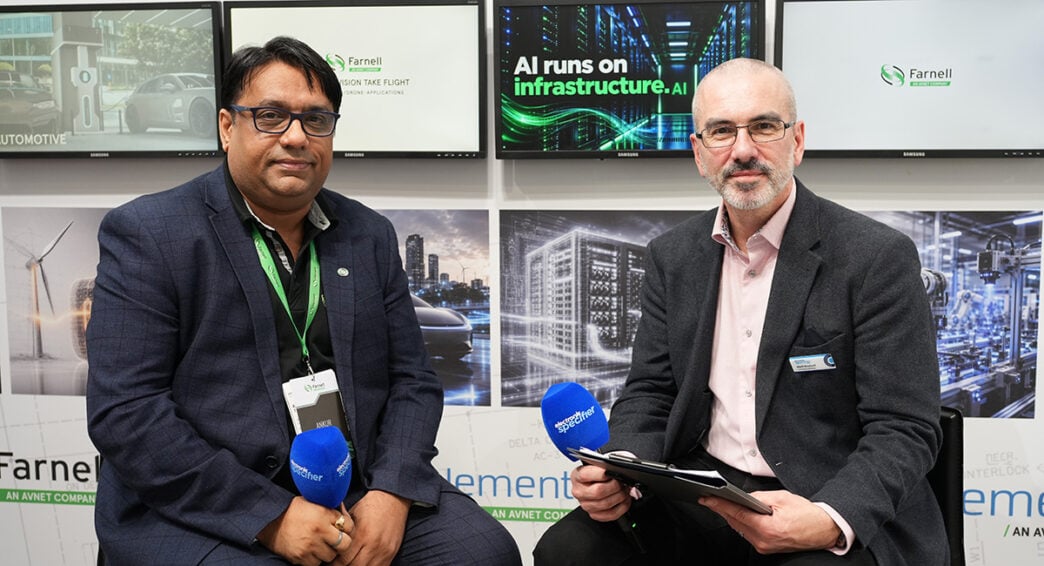
At electronica 2026, Electronic Specifier’s Contributing Editor Mark Gradwell caught up with Ankur Tomar, Regional Solutions Marketing Manager at Farnell, to discuss how a fast-moving market is reshaping the way engineers work, where Edge AI is already delivering practical value, and how Farnell’s DevKit HQ aims to shorten the path from prototype to production.
Talking from the show, Tomar said the atmosphere on the stand had been upbeat, with “a lot of good energy” and plenty of conversations with both customers and suppliers. Those conversations, he said, reflect an industry that is changing quickly, and one that is asking more of design engineers than ever before.
More choice, more pressure
According to Tomar, the pace at which suppliers are bringing new products to market – across chips, sensing, and connectivity – has greatly accelerated in recent years. That gives engineers a wider selection than ever to find the right fit for their application, but it also raises expectations.
Engineers are under constant pressure to deliver products with higher performance and lower power consumption, while also making devices more secure. As more products become connected, Tomar said, “power and security is becoming … one big concern for most of the design nowadays.”
Add that to the need to be first to market, and many teams simply no longer have the time to design from scratch. Instead, Tomar sees engineers turning to ready-made, off-the-shelf solutions that they can prototype with, test, and then scale into production. The trend, he said, is “moving to a solution approach rather than just looking at the components.”
Keeping skills up to speed
With new technologies arriving so quickly, engineers are increasingly having to design with chips, tools, and techniques they have never studied or used before. “They need to learn, understand it, and adapt to it, and launch the product to the market,” Tomar said, which means upskilling has become a frequent and ongoing requirement rather than an occasional one.
This is where Tomar believes Farnell can help, as part of the company’s new brand strategy. “We are not just offering the components and the products to a customer; we are trying to bring the ecosystem,” he explained. That ecosystem brings together suppliers, Farnell’s online platforms, technical resources and publications, reference designs, and pre-built projects, alongside the element14 community, where engineers can “share their thoughts, share their ideas, share their challenges” and get faster, trusted support as they take a product from prototype to production.
Edge AI: already in the real world
Turning to Edge AI, Tomar said that the technology is no longer a future promise. It is already here. “We are already seeing AI delivering in our real world nowadays, especially when we are talking about AI … moving from Cloud to the Edge,” he said.
He noted everyday tech such as smart wearables, smart doorbells, robot vacuum cleaners, and robotic lawnmowers, which use AI models to scan their surroundings and avoid collisions. Running AI at the Edge allows devices to make faster decisions locally, and Tomar sees applications spreading across security, industrial automation, electric vehicles, and the medical sector.
The main hurdle is familiarity. “AI is something which most of the engineers have not studied before,” he noted. To bridge that gap, suppliers are developing AI accelerators, development platforms, and single-board computers that design engineers can “start using from day one”, without needing to become data scientists. Supported by software ecosystems and tools, engineers can adopt pre-trained models or train their own for custom applications, helping them get to market faster.
DevKit HQ: a one-stop shop
To help engineers navigate this growing choice of platforms, Farnell has developed DevKit HQ, an online resource that brings together development kits, reference designs, and single-board computers in one place.
Engineers can search by supplier product family, by technology – such as sensors, wireless communication, motor control, and power management – or by application, including industrial automation, automotive, robotics, and end-to-end IoT sensor-to-Cloud solutions.
Once an engineer has chosen a kit, DevKit HQ gathers the associated resources – user manuals, getting started guides, bills of materials, Gerber files, SDKs, training videos, and webinars – into a single space. Tomar said it is “a one-stop shop for the product and for the resources.”
He also highlighted the value of hands-on experience and peer validation. When engineers hear success stories from others already using a product in real applications, “that builds their confidence and their trust in the product and the technology.”
Summing up Farnell’s role, Tomar said: “That’s where we see Farnell plays a vital role, bringing the entire ecosystem of product, customer, suppliers, and the knowledge hub all together.”
Watch the full interview here: