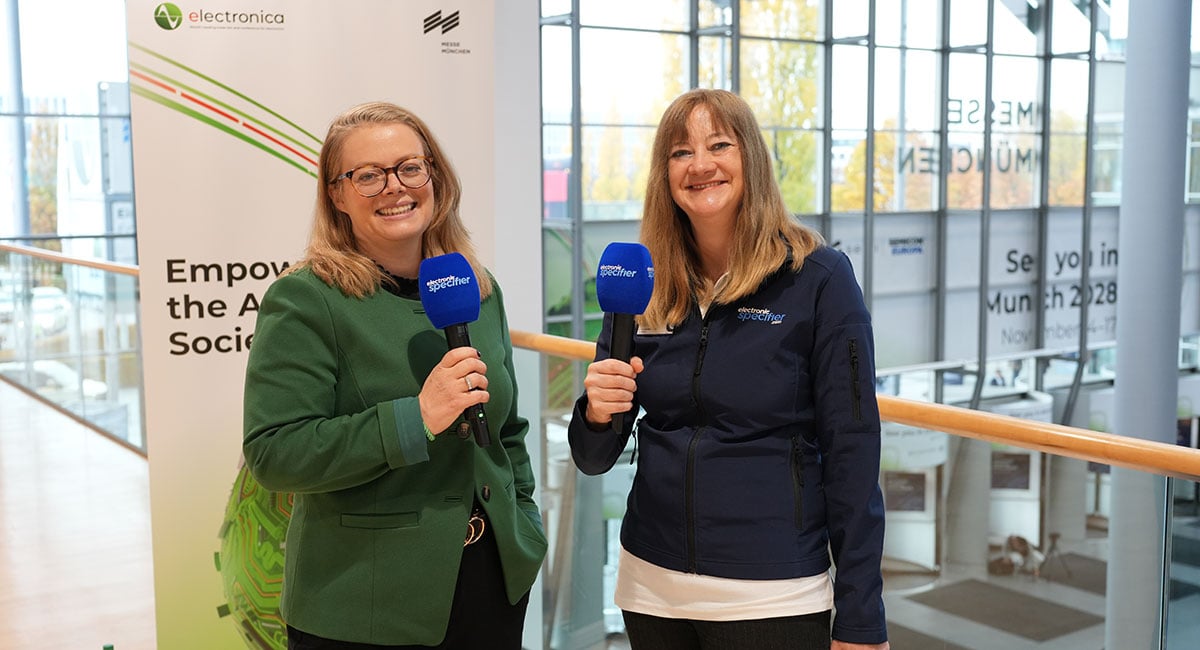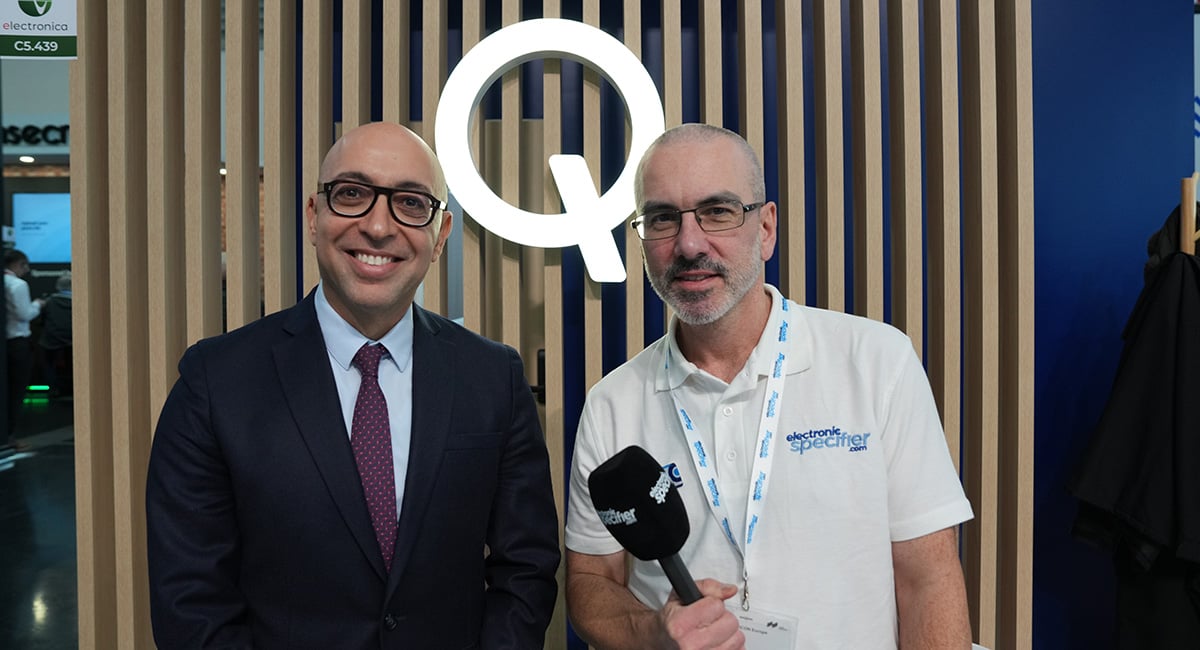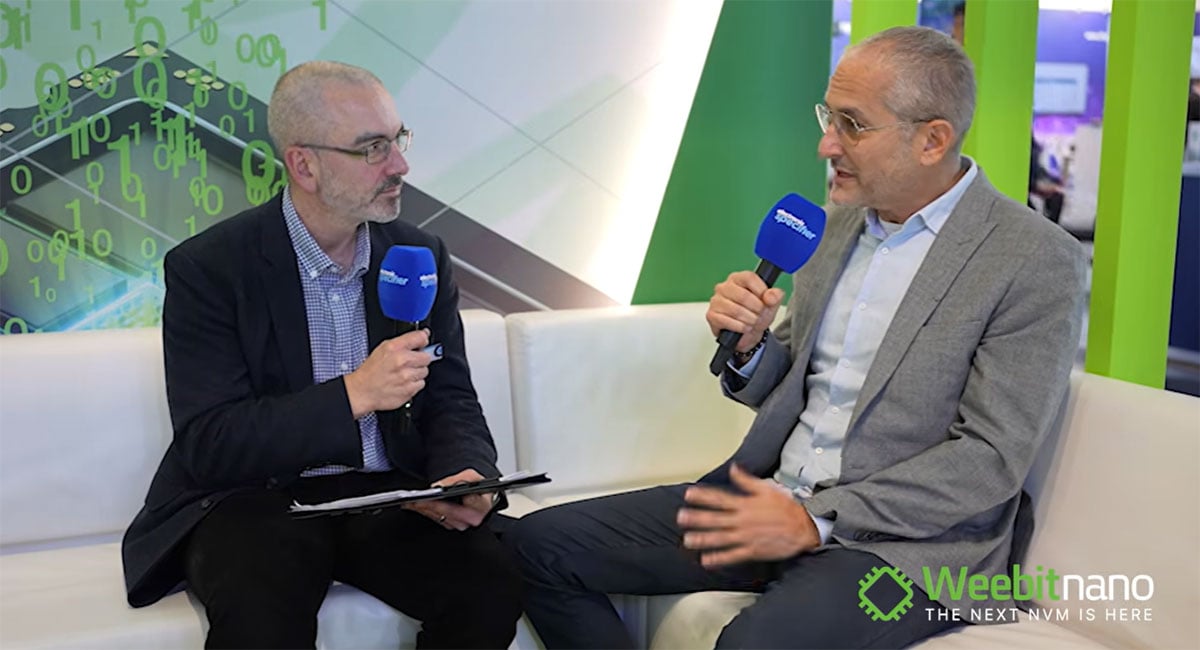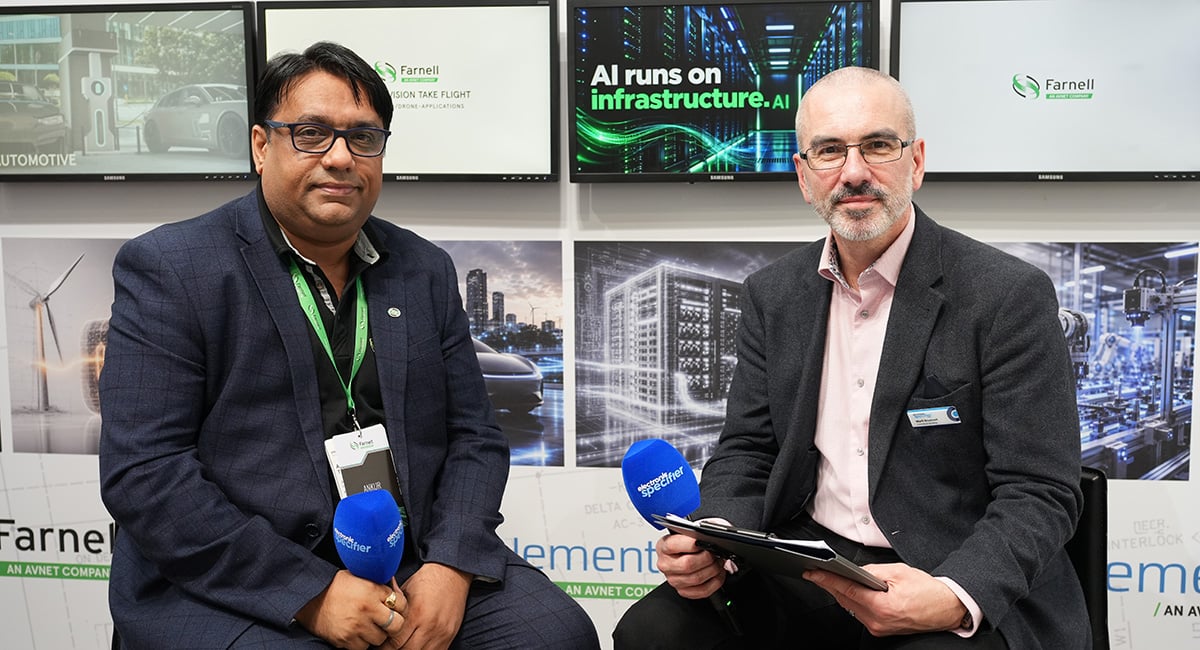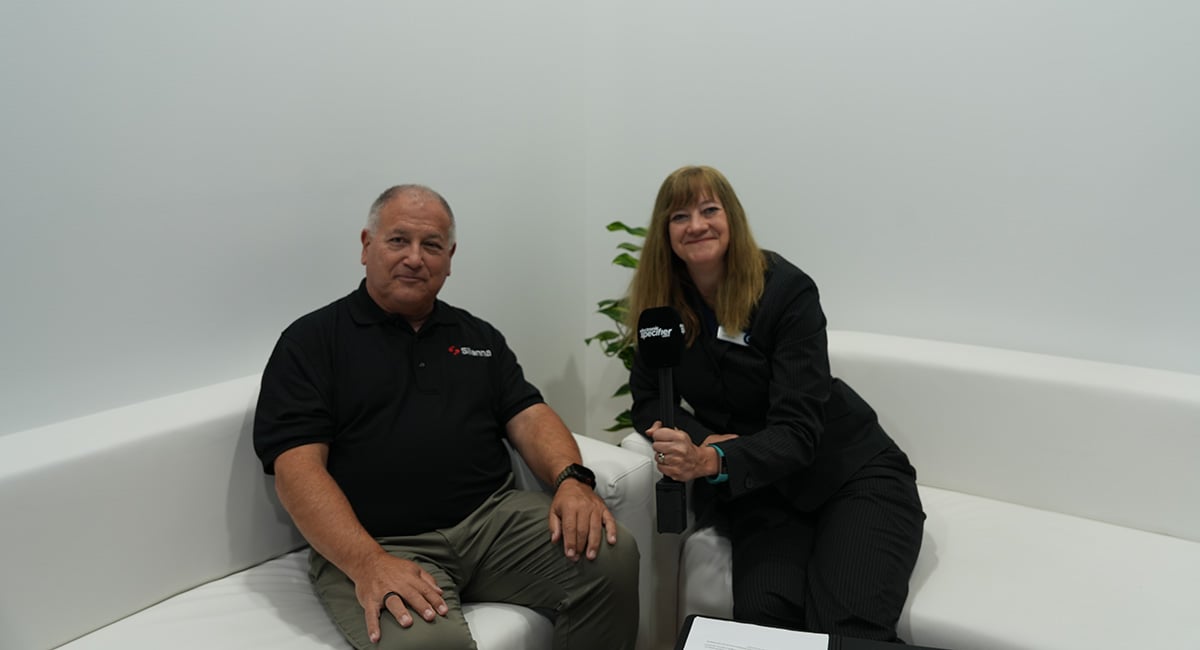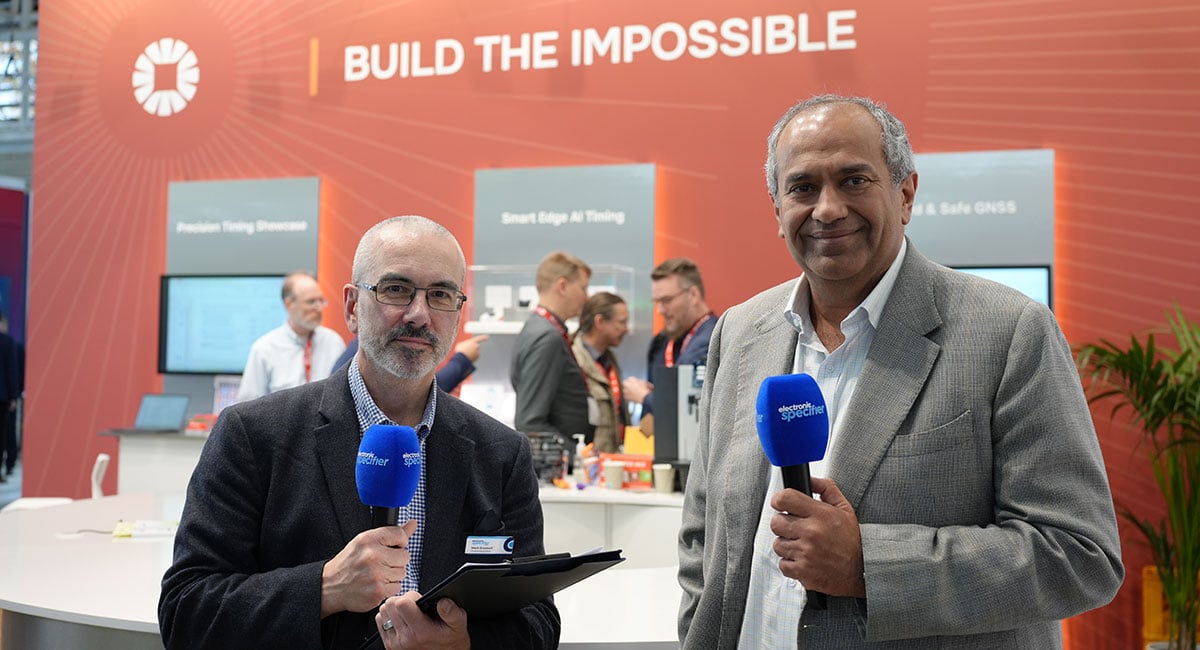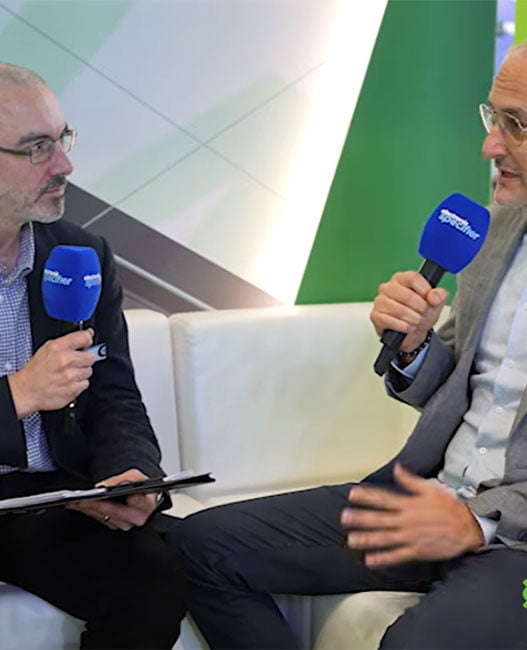


At electronica 2026 in Munich, Electronic Specifier’s Lucy Barnard spoke with Mark Drucker, CEO of Silanna Semiconductor, about the company’s two new product families, Plural Nano and FirePower Octane, and why supply chain resilience is still high on customers’ minds.
Mark Drucker brings over 40 years of semiconductor experience. He started as an engineer and worked through operations, marketing, and other roles to executive management. “I’ve been a bit of a serial entrepreneur [launching] a series of startups over the past 30 years or so,” he says.
A company that takes on big challenges
Silanna’s aim is to develop market-changing technology. “You know, we take on big challenges,” Drucker explains. It’s Australian team develops ultraviolet LEDs for disinfection. The San Diego group that Drucker leads develops adaptable analogue products, LiDAR laser drivers and power management products. A third team works on advanced semiconductor materials and devices.
Drucker’s own story with Silanna began when the company acquired his startup, IO Semiconductor, in 2012, which became Silanna Semiconductor North America. The businesses have since rebranded under one Silanna name. The parent company is based in Australia and the semiconductor group is in San Diego, California.
Plural Nano: the world’s smallest high-performance ADCs
Silanna had two announcements to share at electronica. The first, unveiled the week before the show, was Plural Nano, which puts the company’s Plural data converters into what Silanna calls the world’s smallest packages.
To understand why that matters, it helps to know why Plural exists. Drucker explains that years of mergers and acquisitions have left just one or two companies controlling 90% of the data converter market. For customers, that has meant repeated price rises, very little support, and very long lead times. The big players have also been protected by the sheer size of their portfolios, because building that many products from scratch would traditionally cost over $100 million. Plural was designed to break that hold and give customers real choice again.
Silanna’s answer was to use advanced technology nodes to design single chips that can be turned into many products through packaging. “We don’t have to develop 100 different designs. We could do three or four and produce over 200 products in the end.”
The Plural range has evolved in stages. The first devices were designed as drop-in replacements, so customers could fit them straight into sockets built for competitors’ parts. Next came feature-rich versions with built-in DSP capability, which let customers move some processing off expensive FPGAs and onto the data converter itself, while still paying less than they do today.
Plural Nano is the latest step. It uses the same die but in a much smaller package, measuring just 3.4 x 3.4 mm. Drucker says customers have told them again and again that the data converter is often the largest device on their board, so shrinking it makes a real difference to overall design size. “We listened to our customers, we heard what they needed, and we delivered.”
FirePower Octane: simplifying solid-state LiDAR
The second announcement, made that morning, was FirePower Octane. It extends the FirePower laser driver family, also introduced about a year ago, to solid-state LiDAR.
LiDAR has been “a coming technology for a long time,” Drucker says. It’s gaining traction in industrial markets. The bigger opportunity, though, is in cars, as part of Level 4 and Level 5 autonomous driving systems. What’s held carmakers back is cost: to reach the mass market, each LiDAR sensor needs to cost under $300, and ideally nearer $200.
To get there, LiDAR makers are moving to fully solid-state designs with multi-channel VCSELs. Traditionally, each channel needs its own driver and GaN FET. With sensors now using 32, 64 or even 128 channels, that adds up to a lot of components.
FirePower Octane puts an eight-channel driver on one die and an octal GaN FET array on another, both pitch-matched to the VCSEL. Replacing 16 components with two means the parts can sit right against the VCSEL. The result is a board area reduction of 70–75% and much better channel-to-channel matching. “So better performance, smaller solution, simpler design, lower cost. That seems to be a pretty winning formula.”
Why have other designs been so complicated? Drucker says few competitors focus solely on this market, so engineers have combined standard GaN FETs and gate drivers. “It works. But it’s big, it’s complex, it’s difficult to design, and it costs a lot of money.” Silanna took a more holistic approach, learning about the systems and designing around what customers actually need.
Efficiency remains a priority too. The original FirePower products integrate the boost charging stage that runs before the laser fires. Less power dissipation means less cooling and thermal management for the customer.
Where it will be used
Automotive is the big opportunity, with Drucker expecting robotaxis to reach an inflection point within three to five years. Beyond cars, automated guided vehicles, robotics, and drones all see LiDAR as a key component.
Looking ahead: supply chain assurance
For the next 12 months, Drucker sees supply chain pressure as the defining issue. “It was horrific during the pandemic. It’s worse now.”
Because Silanna can make many products from a single die, its inventory is simpler. It can offer lead times of six to eight weeks, or 12 weeks at worst, compared with 48 to 60 weeks from competitors. Add designs that need fewer components, and Drucker believes customers gain something they’ve been missing for a long time: real choice when they need it most.
Watch the full interview
To hear more from Mark Drucker, watch the full video interview: