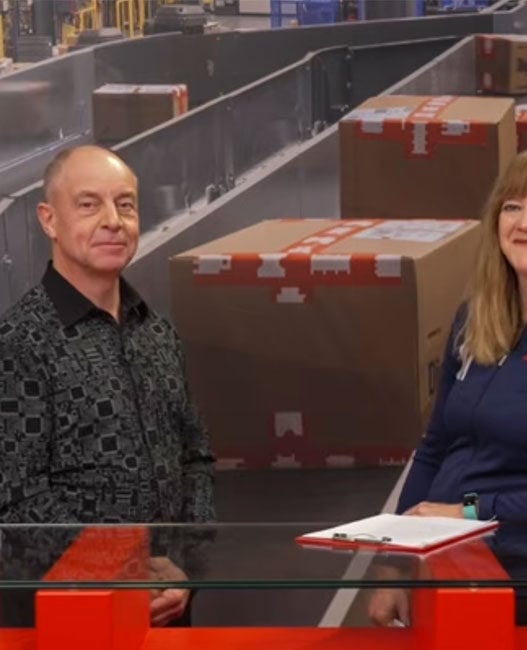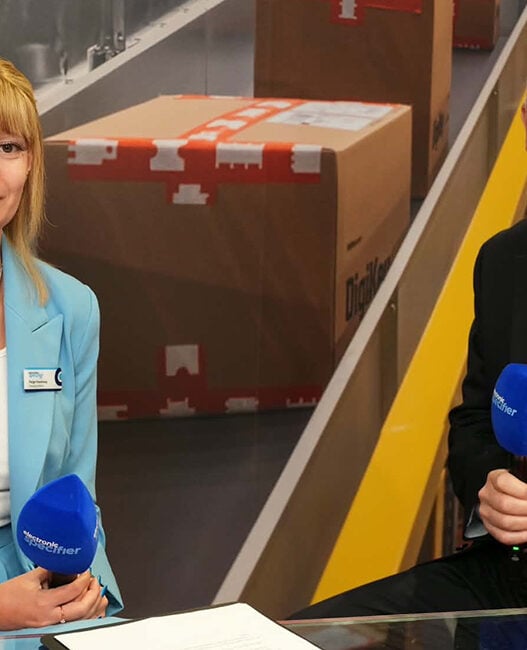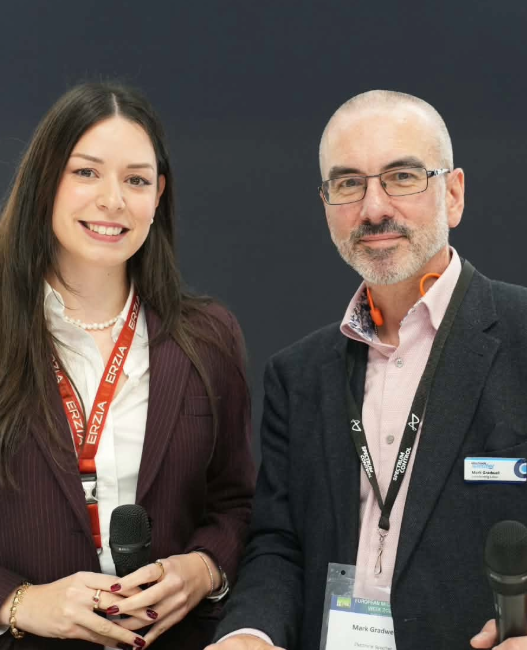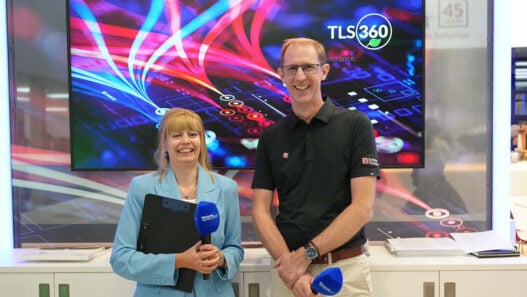



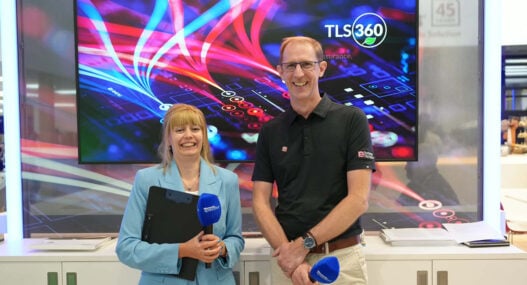
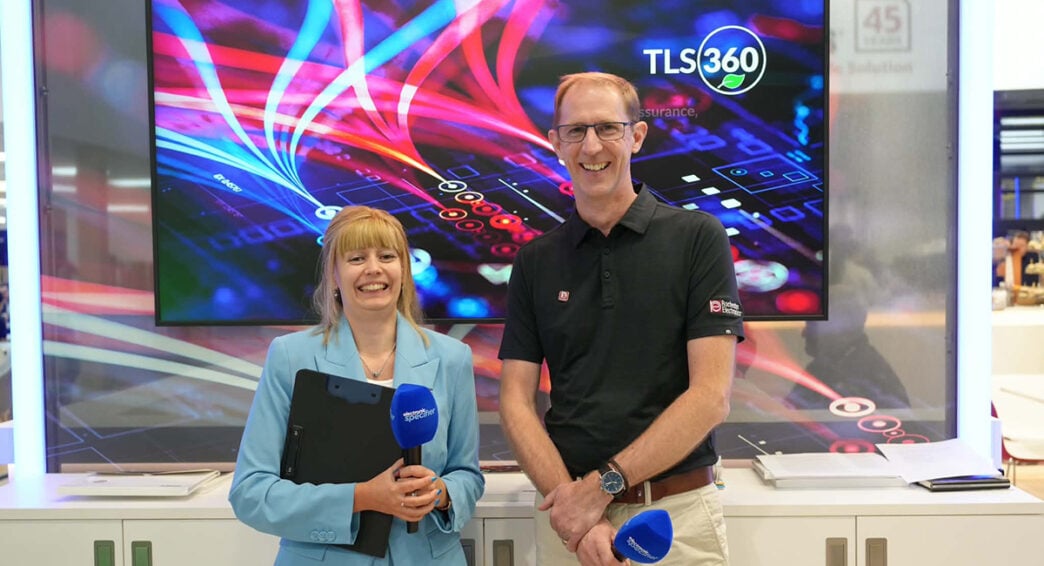
At electronica 2026 in Munich, Electronic Specifier’s Paige Hookway stopped by the Rochester Electronics booth to catch up with Paul Green, General Manager, EMEA, to discuss the company’s newly launched lifecycle management program, Through Life Support 360 (TLS360), and what customers can expect as obsolescence, counterfeit risk, and supply uncertainty continue to shape the market.
What is TLS360?
Green described TLS360 as a program designed to support legacy devices by working closely with original chip manufacturers on critical product lines – the kinds of components that are notoriously difficult to design out or redesign, and that customers are actively asking Rochester to support.
To make that possible, Rochester has put serious resources behind the initiative. “We’ve invested significantly to support in terms of inventory and ongoing manufacturing in some cases,” Green explained, adding that launching the program at electronica was “a really exciting thing for us.”
Using AI to inform lifecycle classification
TLS360 also draws on AI to help inform lifecycle classifications. According to Green, AI helps Rochester evaluate the expected lifetime availability of product lines, anticipate when parts are likely to reach end of life, and understand how that will affect market conditions. That insight feeds directly into how Rochester decides which product lines to support and where to invest on behalf of its customers.
Closing the gap after a last-time buy
The gap TLS360 aims to close is the uncertainty that follows a last-time buy (LTB). Typically, customers are left weighing difficult questions: how many parts to buy, when to redesign, and whether production will have to stop altogether. TLS360 changes that. “It becomes an active product again from Rochester because it means that we continue to supply that product,” said Green.
So when should a customer move from LTB stock to a managed program? Green said: “We can’t stop a last time buy, I’m afraid.” Instead, he stressed having a proactive approach, engaging with both manufacturers and customers as early as possible to understand which parts are critical. If a customer has made an LTB covering, for example, 12 months, Rochester can use that window to transition the product and technology, ensuring continuity of supply and minimising disruption.
Identical in form, fit, and function
For designed-in parts, consistency is non-negotiable. “Absolutely everything that we manufacture is exactly the same as the original manufacturer’s product,” he said.
This is achieved by obtaining the die and full test data from the original manufacturer. The result is “effectively … a Rochester manufactured Intel or TI or ADI or NXP device.” Crucially for customers, he added, “that part number will stay the same.”
Why demand for long-term supply is growing
Green pointed to the sheer pace of technological change as a key driver for growth. While rapid innovation suits companies in fast-moving commercial markets, it presents a real challenge for those building high-reliability products with lifespans of 10, 20, or even 50 years. As Green put it, if a company is “designing in a product that is going to be only around for a year or two, that’s a problem.”
By supporting parts for the long haul, Rochester removes the need for repeated redesigns, something Green said gives customers “that little bit of breathing space.”
Tackling the counterfeit threat
As legacy parts become harder to find, they become prime targets for counterfeiters. Green said that counterfeiting tends to focus on obsolete, hard-to-source components, which is exactly where customers are most exposed if they turn to the open market.
As an authorised distributor and authorised manufacturer, Rochester offers a safer route. “Customers can be reliant on the fact that we’re able to supply them good quality, absolutely warrantied product for a long period of time,” Green said.
A longer life, a more sustainable approach
Extending component availability also carries a clear sustainability benefit. “Everything about Rochester here is really the long term,” he said, noting that the company “could be manufacturing or supplying a part for… decades.” He shared that several customers have been able to maintain legacy products, and in some cases bring products back to life, because Rochester can continue to support the parts inside them.
Looking ahead to 2027
Asked for his outlook on next year’s supply chain, Green said: “I wish I had a crystal ball to properly really answer that.” Reflecting on 2026, he has seen supply issues across several manufacturers and commodities, and he doesn’t expect that to change. “I think that … memory continues to be an issue,” he said, with other commodities heading towards allocation, if not there already.
With political and geographical uncertainty adding to the mix, Green questioned whether the industry still has a clear sense of what ‘normal’ looks like. “Normalisation, what is that? I don’t think we know exactly what that is anymore.”
What Rochester can offer, he concluded, is stability. With around 15 billion parts in stock, the company is well placed to support customers facing supply constraints or obsolescence, whatever the future holds.
Watch the full video interview with Paul Green: