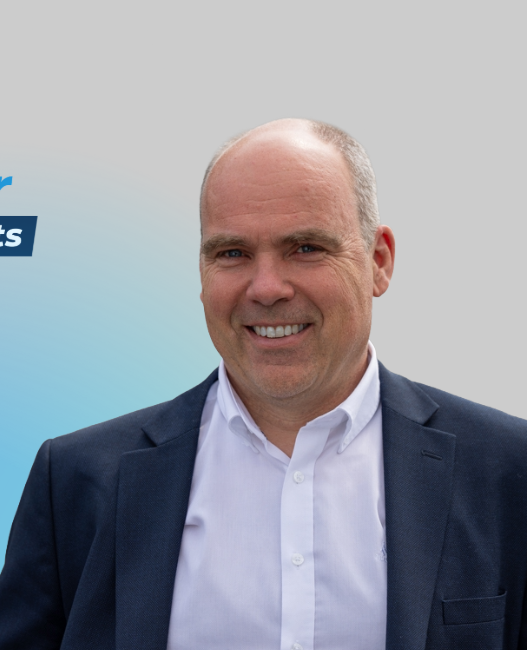










The audio industry is undergoing a quiet but profound transformation, driven by new use cases, tighter form factors, and rising expectations for performance at consumer-friendly price points. In a recent episode of Electronic Specifier Insights, host Paige Hookway spoke with Tony Doy, Vice President of New Product Development at Triad Semiconductor, about these shifts and how a new ‘universal’ analog front end aims to simplify life for audio designers.
Doy brings a deep pedigree in audio, having started his career in the UK as a mixed-signal electronics designer working in pro audio and high-end hi-fi. He later moved to the US to lead development teams for digital audio mixing consoles, then transitioned into semiconductors with Maxim Integrated, where he helped build the audio business unit. After roles at Sonos and Cirrus Logic, he now leads new product definition at Triad Semiconductor, focusing on next-generation analog and mixed-signal solutions.
Triad itself is a small, fabless semiconductor company headquartered in Winston-Salem, North Carolina. Historically, it has specialised in analog and mixed-signal ASICs serving markets like virtual reality and medical sensors. As Doy explains, the company is now broadening from pure ASICs to application-specific standard products (ASSPs), enabling them to design once and sell to many customers, rather than building everything as a one-off.
On the state of the audio market, Doy sees three main growth areas: live sound, home recording, and installation audio (such as houses of worship, theatres, and restaurants). Each brings its own pressures. Live sound demands reliability, power efficiency, and high performance. Home recording, which surged during the pandemic, is caught in a persistent tension: “You’re seeing these demands around performance increasing, but the price point doesn’t change.”
Users might start with an inexpensive microphone and basic interface, then quickly graduate to high-end condenser mics and expect studio-grade performance from gear still powered over USB. That introduces real engineering challenges, especially when delivering 48V phantom power from a 5V USB supply while keeping noise low and behaviour predictable.
Installation audio faces a different set of constraints: extremely tight packaging (wall plates, tiny interface boxes), complex Ethernet-based audio and control, and growing interest in Power over Ethernet (PoE) to simplify wiring. Designers must pack more functionality into less space while managing power and thermal limits.
A core theme of the conversation is the gap between what audio engineers want to build and what conventional components allow them to do – particularly at the front end, where microphones, instruments, and line-level sources all meet the same hardware. Historically, consoles relied on instrumentation amplifier architectures that were very good at amplifying small and moderate signals but struggled with large ones. Designers often resorted to pads, relays, or FETs, and additional protection circuitry, accepting complexity and compromises.
Triad’s response is the TS5510, a two‑channel analog front end promoted as a kind of ‘universal AFE’. Its key promise is to handle both tiny microphone signals and high-level line inputs on the same input – without the traditional trade-offs. As Doy puts it, the device: “Condition[s] either large signals or very tiny signals, and gets them to the right range for the ADC to digitise,” while rejecting common-mode interference like hum and ground noise.
Crucially, the TS5510 is designed around the realities of modern converter design. Most audio ADCs used in these systems have a 2V RMS full-scale input, so the AFE must both amplify small signals and attenuate or shape large ones into this window, without clipping or overloading the ADC. The TS5510’s second stage runs from the same supply rails as the ADC and sets the correct DC bias, eliminating the need for AC coupling capacitors and clip-protection networks on the ADC input. Traditional resistor pads, relays, limiting diodes, and extra op amp stages can be removed entirely.
The result, early evaluators say, is substantial space saving, lower power consumption, and the ability to “deal with almost any input signal” from a single IC plus a handful of passives. As Doy summarises the feedback: “It does what it says it does … [and] basically saves a boatload of discrete components.”
Looking ahead five years, Doy expects continued innovation in interfacing, Ethernet-based transport, and remote control, with pro audio following consumer electronics into ever smaller, more integrated, and more connected hardware. For designers, solutions like a universal AFE are one way to tame that growing complexity – freeing them to focus less on defensive circuitry and more on the creative features their users actually experience.
To hear more from Tony Doy, you can listen to Electronic Specifier’s interview on Spotify or Apple podcasts.
Electronic Specifier Insights




















Series 18 – Episode 10 – Women in tech takeover: an AI mindset
In this special Women in Tech takeover, Sheryl Miles speaks with Jeana Bolanos, Founder and President, SalesE about her unique career journey from nuclear engineer in the US Navy to semiconductor industry professional and now tech entrepreneur.

Series 18 – Episode 9 – Nanusens’ new approach to MEMS integration
Paige West speaks with Dr Josep Montanyà i Silvestre, CEO at Nanusens about the company’s MEMS-in-CMOS technology.

Series 18 – Episode 8 – optimising Edge AI with low-power FPGAs
Paige West speaks with Hussein Osman, Marketing Director, Lattice Semiconductor about the company’s role in enabling Edge AI.
Series 18 – Episode 7 – modern manufacturing needs modern profiling
Paige West speaks with Chris Williams, Head of European Sales, Solderstar about thermal profiling.
Series 18 – Episode 6 – memory at the core of innovation
Paige West speaks with Steve Shih, Automotive and Embedded Product Manager, Silicon Motion about memory being at the core of innovation and, in particular, how it’s transforming the industrial and automotive sectors.

Series 18 – Episode 5 – re-launch of the Systems Change Lab
Paige West speaks with Ellie Carey, Elected Trustee at Engineers Without Borders UK and Eva Fernandez, Strategic Sustainability Consultant at Ramboll about the launch of the 2025 Systems Change Lab.

Series 18 – Episode 4 – shaping IoT’s next chapter with antenna innovation
Paige West speaks with Dermot O'Shea, Co-Founder and CEO, Taoglas about the Internet of Things (IoT) and antenna innovation.

Series 18 – Episode 3 – security for embedded systems
Paige West speaks with Roland Marx, Product Manager, swissbit about the critical world of cybersecurity and swissbit’s Security Upgrade System.

Series 18 – Episode 2 – PXI, LXI, & the modular test puzzle: finding the right fit
Paige West speaks with Tom Sarfi, Business Development Manager, Pickering Interfaces about the differences between LXI & PXI and where each is best suited.

Series 18 – Episode 1 – the future of battery management
Paige West speaks with Joseph Notaro, Vice President Global Sales & Marketing, Dukosi about its cell monitoring system, the DKCMS with C-Synq.