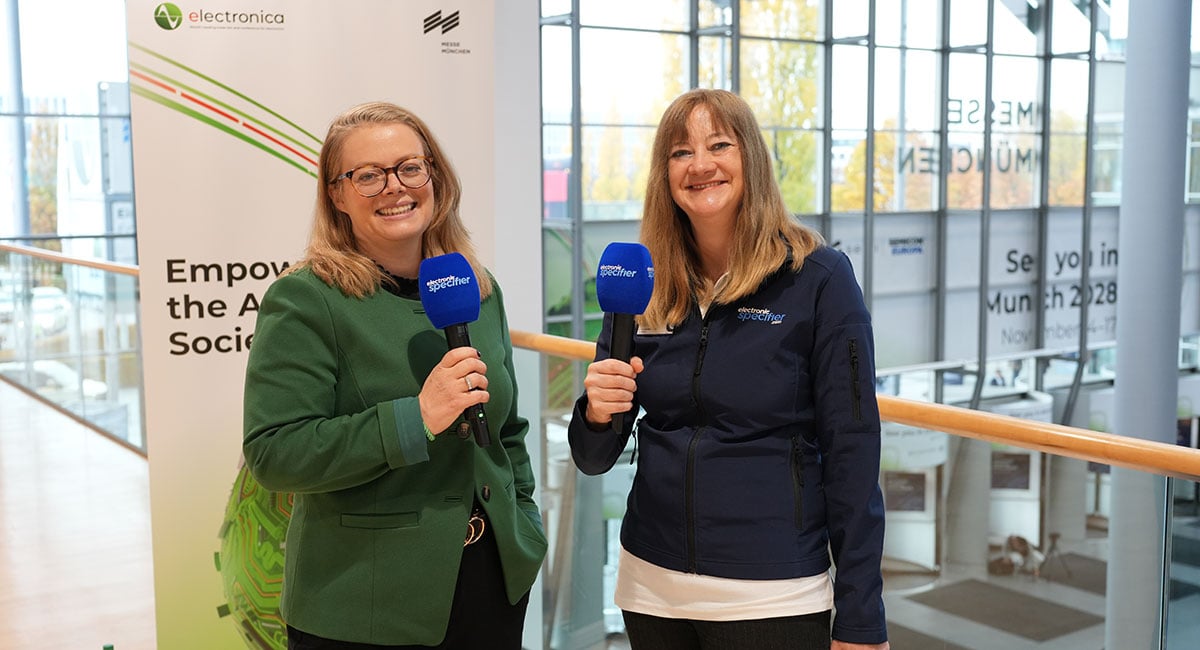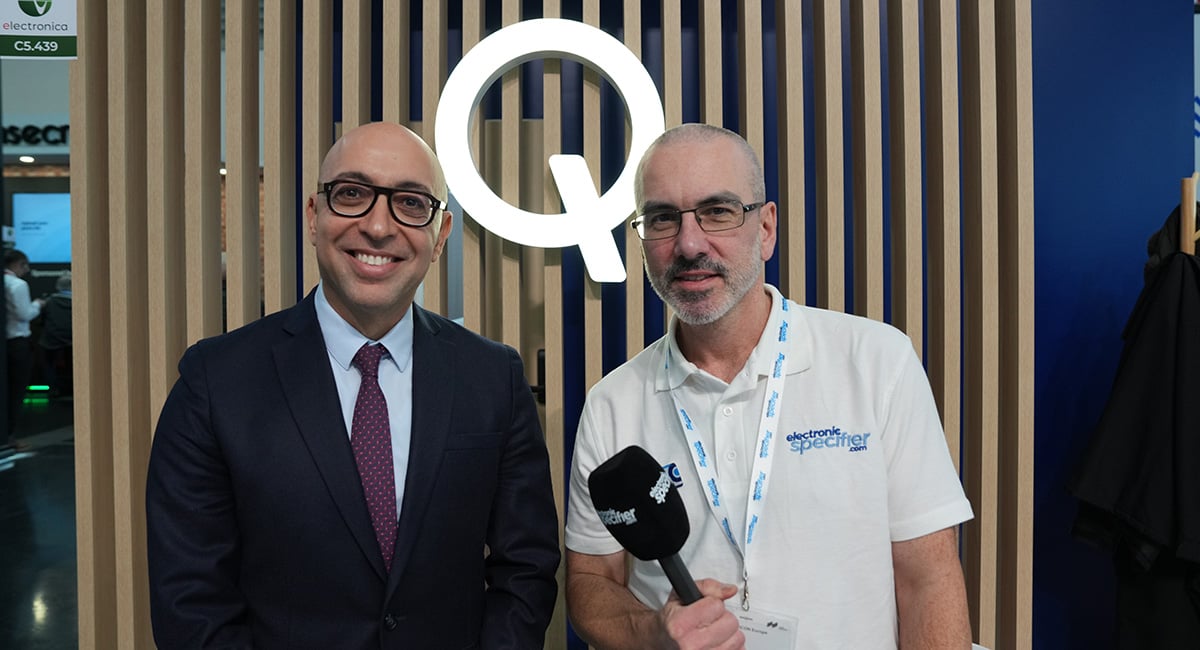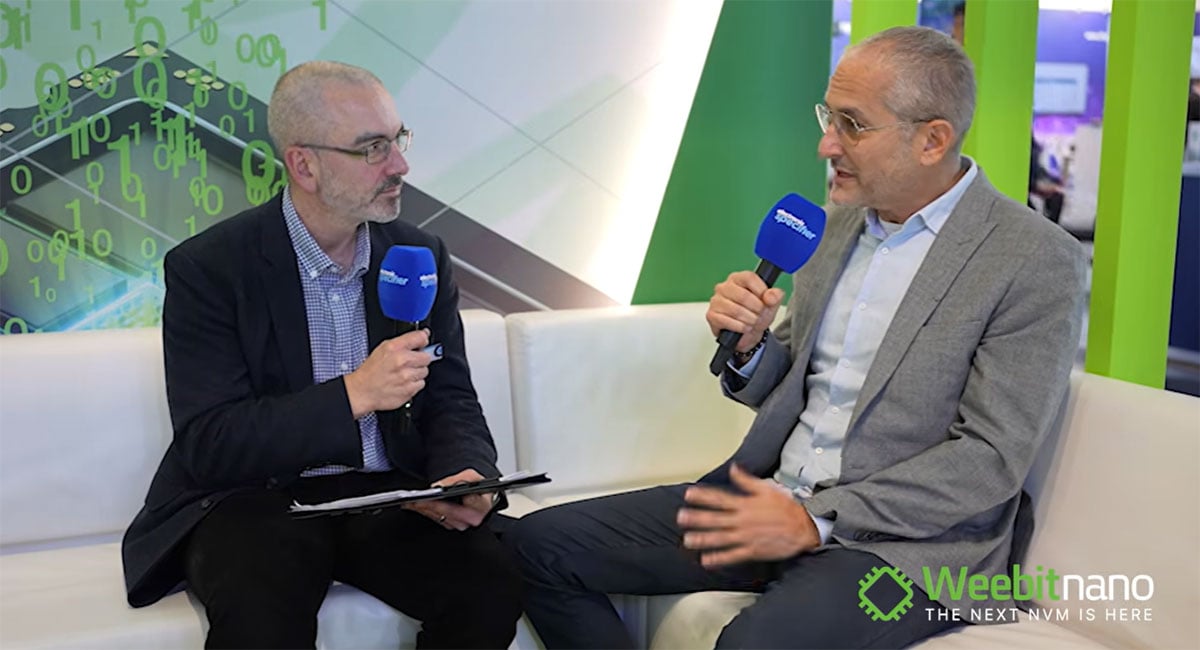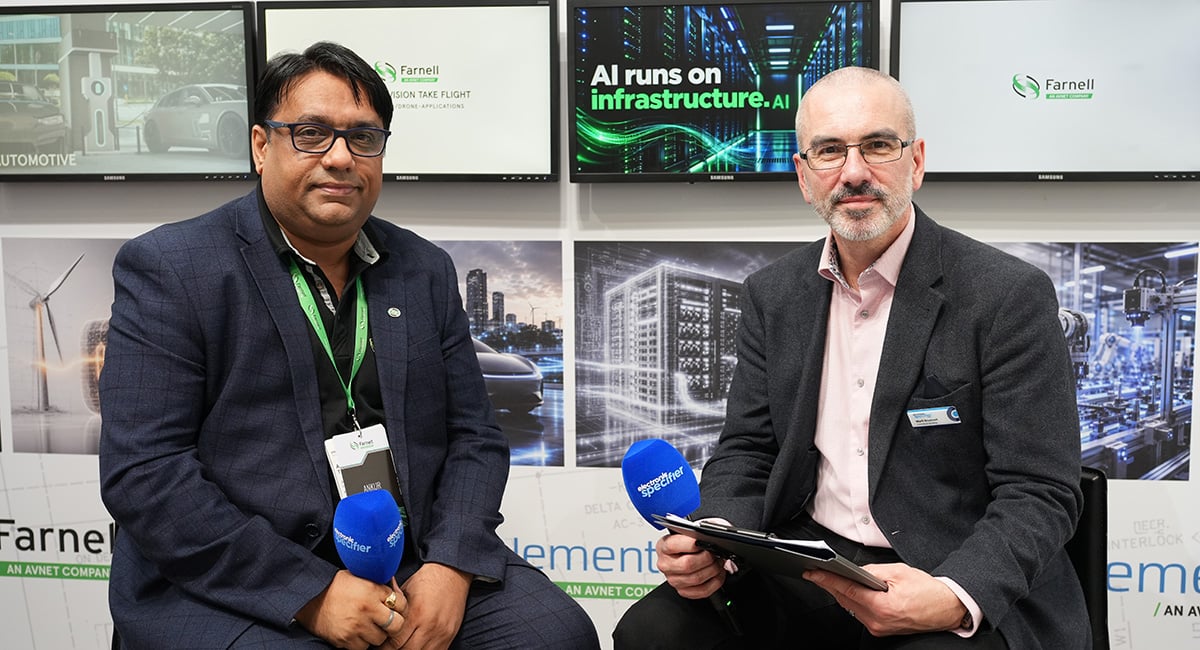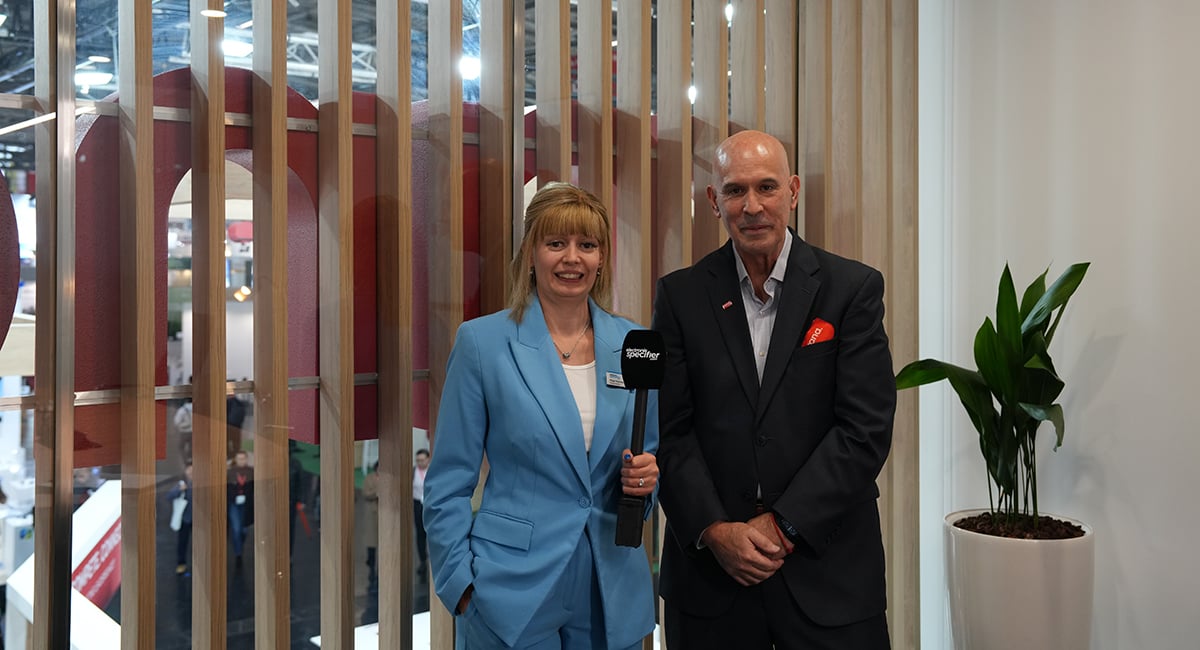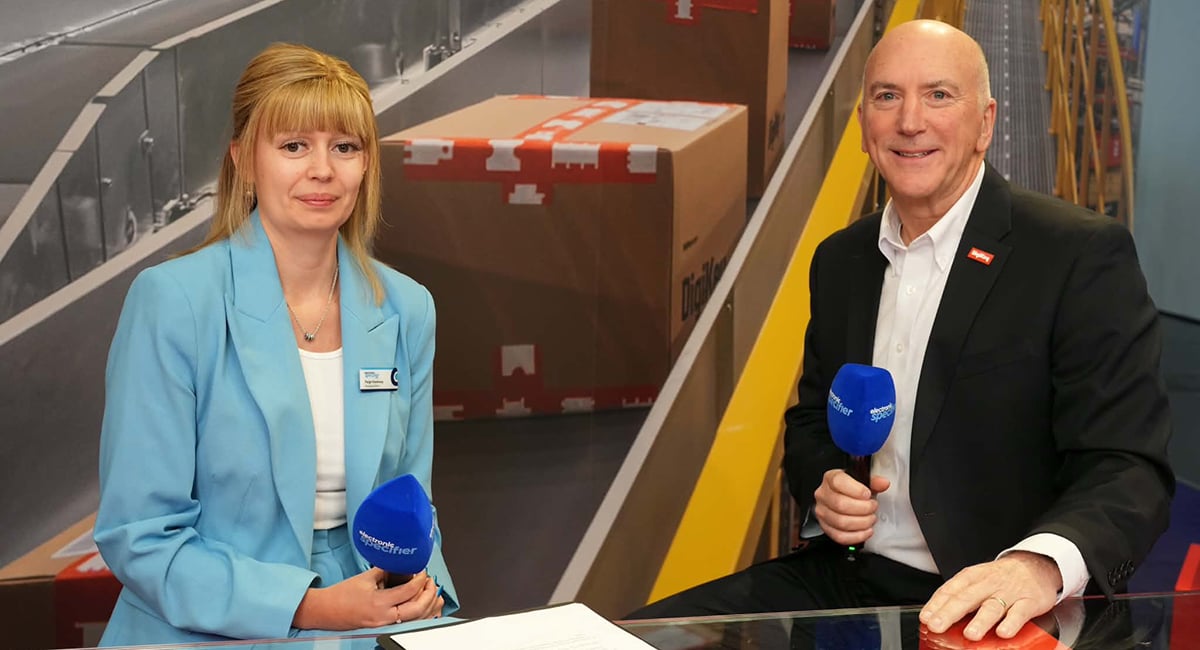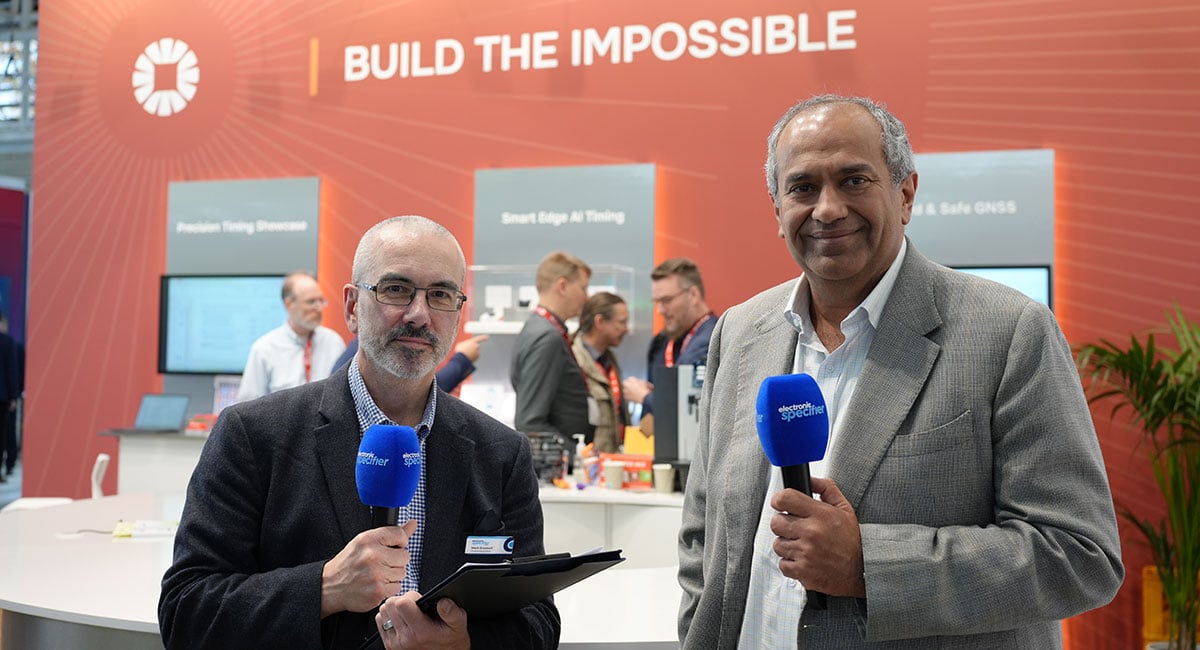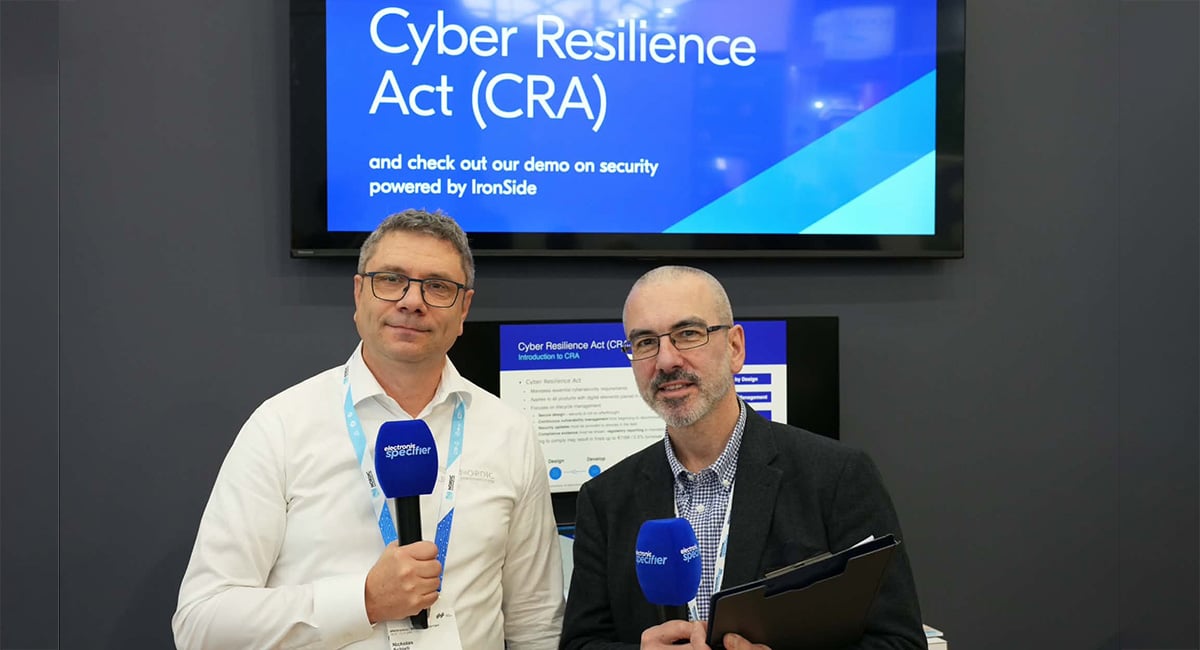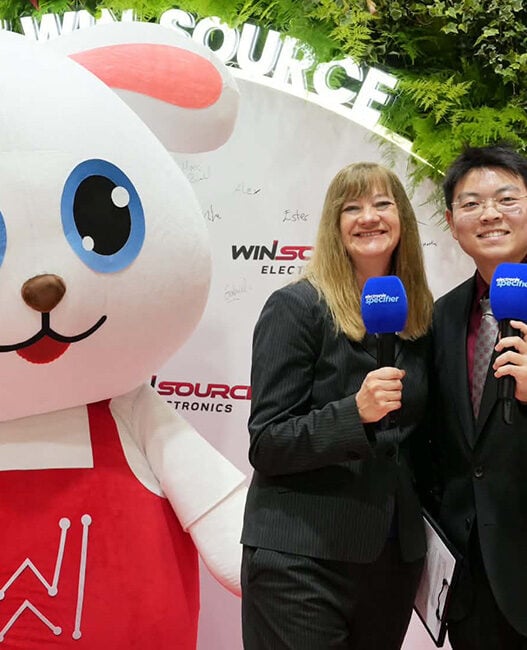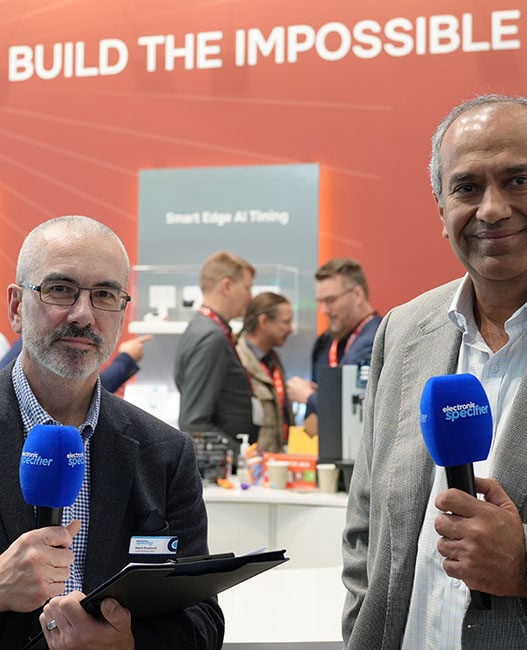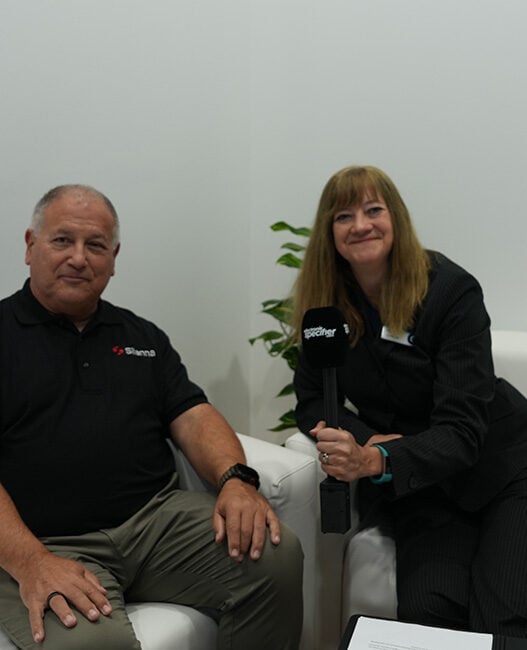


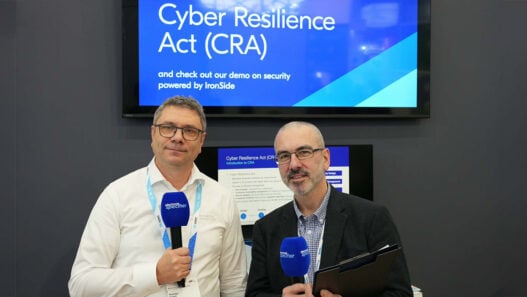


At electronica 2026 in Munich, Electronic Specifier’s Paige Hookway spoke with Andreas Schwaiger, Vice President and Managing Director at Texas Instruments, about seven decades in Europe and where the region goes next.
Texas Instruments (TI) has more than one reason to celebrate this year. Alongside 70 years in Europe, the company is marking 60 years at its headquarters and 50 years of wafer fabrication. For Schwaiger, the headline anniversary is about more than longevity.
“TI has brought new technology to Europe 70 years ago,” he said, describing semiconductor companies of that era as pioneers. Speaking from a busy booth in Munich, he added that the level of interaction at this year’s show had been “super exciting”.
From transistors to a European R&D footprint
TI’s European story began in Bedford, England, the company’s first location and production site outside the United States. That move, Schwaiger explained, was a key element of TI’s international expansion, bringing first transistors and later the integrated circuit to the region.
After 1956, TI’s European footprint accelerated quickly. The company itself has changed considerably since then, sharpening its focus on analog and embedded semiconductors. That shift is reflected in the R&D centres it has established across several countries, including its Kilby foundational innovation lab in Freising, Germany.
Looking back, Schwaiger sees TI as part of Europe’s digital evolution, from computing to personal electronics and the digitisation of telecommunications. “TI has really been shaping seven decades of tech advancement in Europe,” he said.
What has stayed the same
Much has changed in 70 years, but Schwaiger pointed to several constants. The first is proximity to customers, helping them develop solutions to their most critical technical problems.
The second is talent. TI has been able to attract “the brightest minds” to join that journey, he said, and its people “think globally but act locally”, which makes a difference for partners and customers in the region.
The third is adaptability. Over its history, TI has pivoted through successive waves of technology, from mobile communications to the Internet of Things, and now to what Schwaiger calls “the electrification of everything”.
Why Europe is different
Asked what sets the EMEA region apart within TI’s global strategy, Schwaiger highlighted its strong, innovative customer base in automotive and industrial. That includes many “hidden champions”, such as companies in the German Mittelstand that are often global leaders in their niche.
Europe also plays an important R&D role for TI, with centres focused on power management, the analog signal chain, and connectivity. And the region’s demanding requirements around sustainability, compliance, and safety regulation push TI’s engineers worldwide to develop more advanced solutions.
Building resilience in the supply chain
TI recently opened a new product distribution centre in Frankfurt, and Schwaiger said the customer response has been “very, very positive”. Customers see it as an investment in resilience, with more inventory available within the region.
It also reduces exposure to logistics volatility, which Schwaiger described as a way of de-risking supply for the whole ecosystem. The centre supports a fast click-to-ship cycle, with same-day delivery possible in some areas and next-day delivery across most of Europe.
The best is yet to come
On the future, Schwaiger was optimistic. Europe will remain influential, he said, driving advances in energy efficiency, digitisation, and connectivity, with automotive and industrial at the centre of smarter, more connected systems.
TI’s analog and embedded portfolio, in his view, positions it well to support those changes, from decarbonisation to a fully electrified society. “I think the best is yet to come,” he concluded.