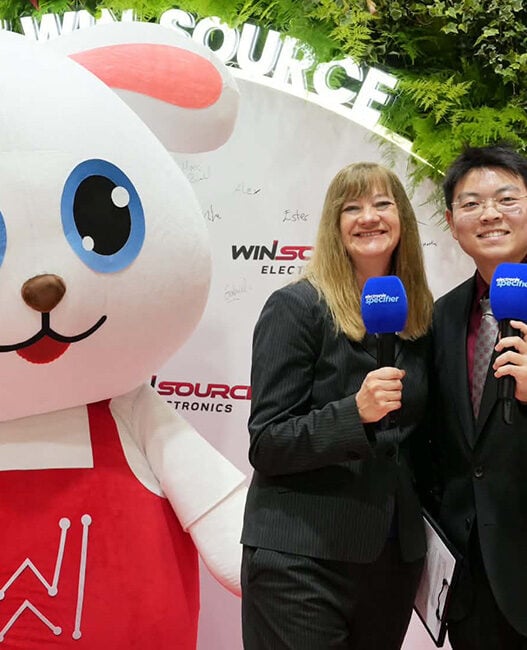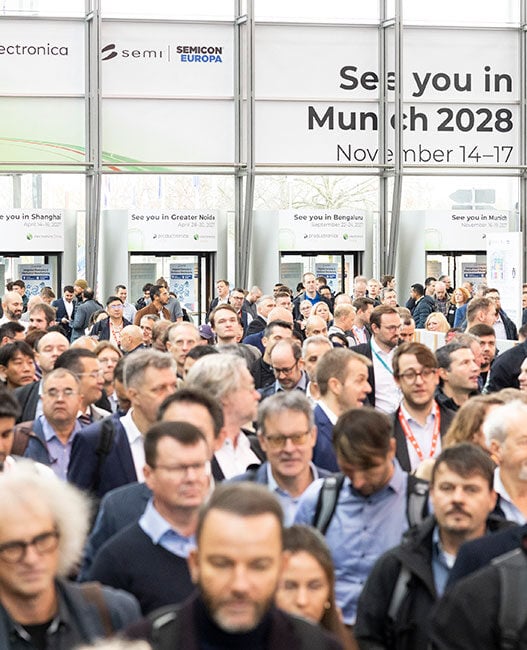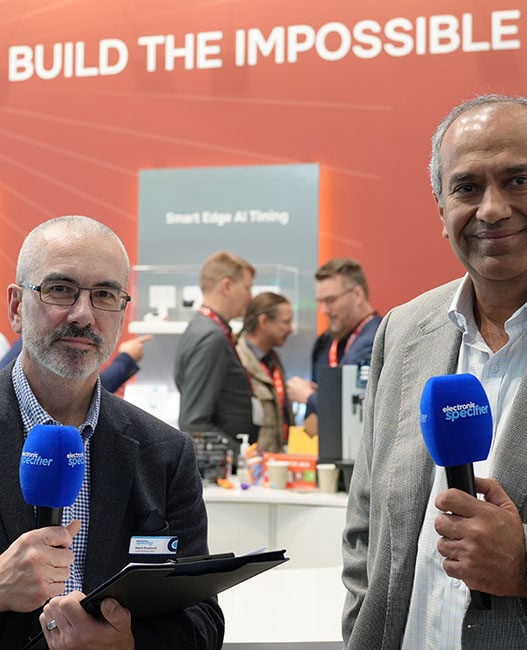



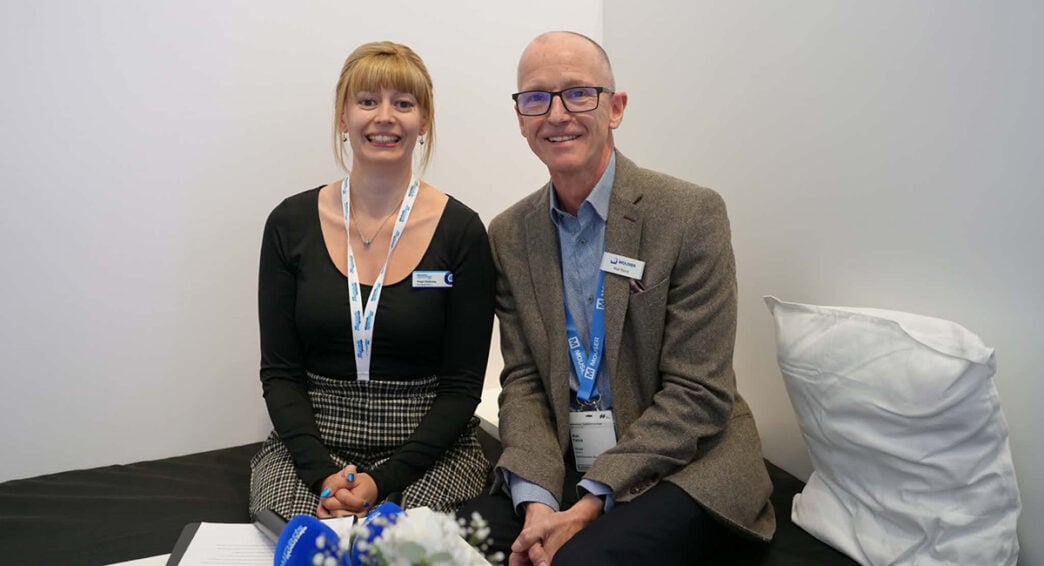
On the final full day of electronica 2026 in Munich, Electronic Specifier’s Paige Hookway sat down with Mark Patrick, Director of Technical Content, EMEA at Mouser Electronics, to talk about the distributor’s priorities, what’s reshaping industrial automation, and where the market is heading next.
Back to basics: new products, and the stock to match
For Mouser, the fundamentals of distribution haven’t changed. “We’re an NPI distributor … So our focus is still on bringing new products in,” Patrick said. That means investing in supplier relationships and local resources, but also in inventory, because once a launch generates interest, “then people want to look to buy it, whatever it might be.”
What has changed, he said, is the engineer’s world. “The supply of information has exploded, and how people access it has exploded,” he said, noting the rise of AI-powered search. Mouser’s priority is to stay present throughout what Patrick calls the engineer’s “information journey”, from first inspiration through to the detailed data that leads to product evaluation.
A big push into industrial automation
Industrial automation is a major focus for Mouser right now, and Patrick noted there’s “quite a lot of overlap between components and industrial automation.” The distributor already worked with suppliers such as Phoenix Contact, and has since brought on household names including Banner Engineering, ABB, and Schneider Electric, alongside a host of others.
So what’s driving demand? Manufacturers across hugely varied sectors – water, food and beverage, medical, and general manufacturing – are chasing greater flexibility and productivity. Regulation is playing its part too, with the EU Cyber Resilience Act and the EU Machinery Regulation accelerating technology adoption. “We need to make sure people understand that that’s on the horizon, or is already here in fact,” he said.
On the factory floor, robotics, sensors, and connectivity are converging to take over repetitive tasks and move human oversight to where it adds the most value. Patrick shared one example from meetings with potential new suppliers at the show: sensors mounted on a robot’s gripper that use a form of spectroscopy – optical analysis – to help the robot understand what material it is actually picking up.
Edge AI is everywhere
Walk any corner of electronica 2026, and you probably bumped into a robot of some sort, whether it be humanoid, industrial, or even dancing. Behind them, Patrick said, are the enabling technologies, particularly Edge AI, which is “really about bringing the intelligence right to the application.” Think machine vision and product sortation: applications where decisions need to be made quickly and locally. New product introductions from manufacturers such as Synaptics and Espressif are putting that capability into engineers’ hands.
A market in growth mode
After a turbulent few years, the outlook is upbeat. “Particularly in the components market, it can be feast and famine,” Patrick said. “We’re very much in feast at the moment, but we do see lead times pushing out,” notably in areas such as memory and high-end processors. The inventory correction of a couple of years ago is firmly in the rear-view mirror.
Customer behaviour has shifted, too. Having been caught short during COVID, buyers now pay close attention to supply chain visibility, availability, and lead times. Patrick stressed that the stock shown on Mouser’s website is what Mouser actually has, and that as the market tightens, buying from an authorised source matters more than ever. Mouser is fully authorised by all of its suppliers and holds AS9120 accreditation with full traceability, so his advice is to steer away from eBay and the grey market.
What’s next?
Amid all the buzzwords at this year’s show, Patrick’s bet for growth next year is: “It still feels like Edge AI. I think it’s become real,” he said, citing machine vision as an application that has moved from hypothetical conversation to real-world deployment. Close behind is power management and efficiency, from operational uptime in battery-powered devices to the overall power budget of data centres, where advanced power architectures and wide bandgap devices are “growing enormously quickly.”
And with AI now emerging as a tool for design as well as something to implement within one, Patrick believes it is changing the landscape massively.
Watch the full interview here: