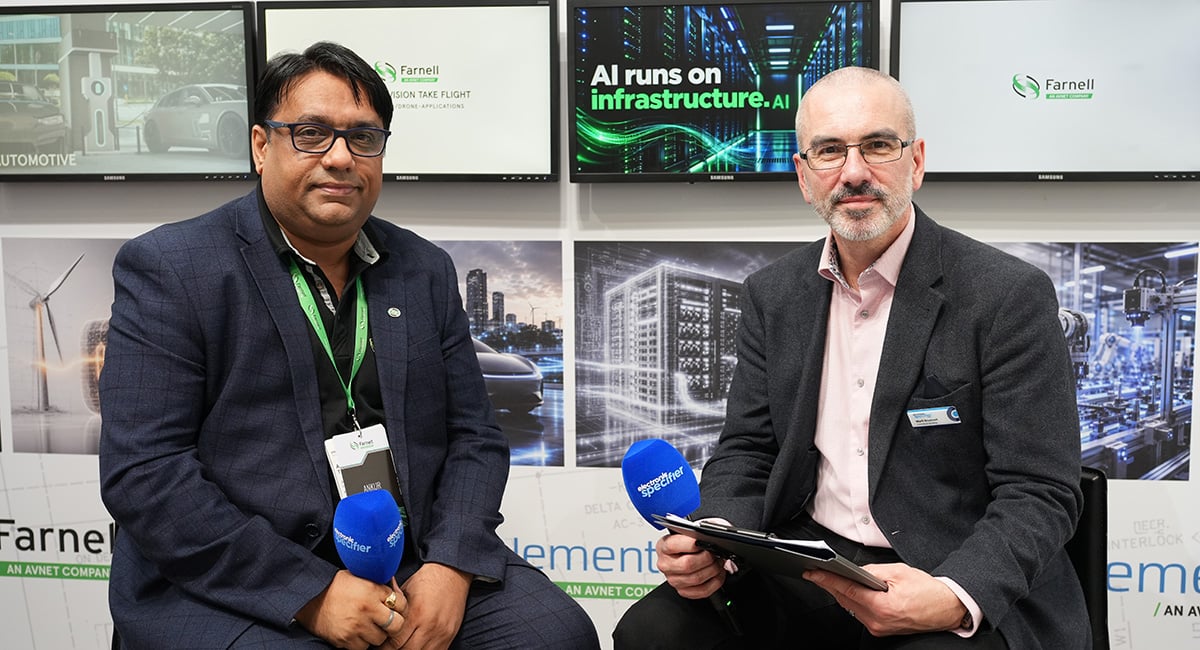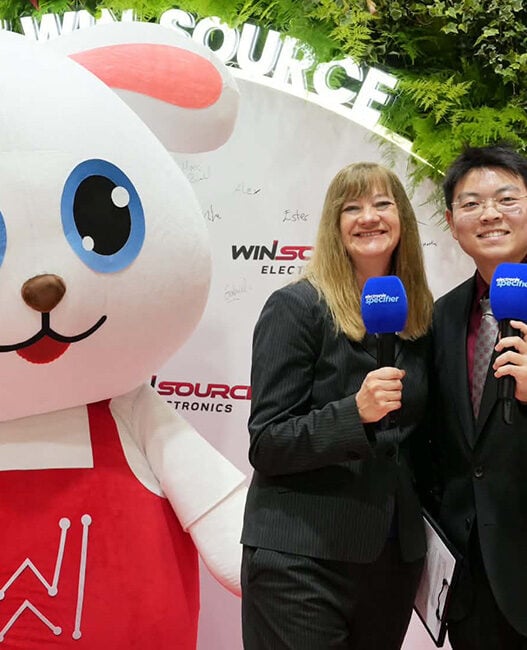





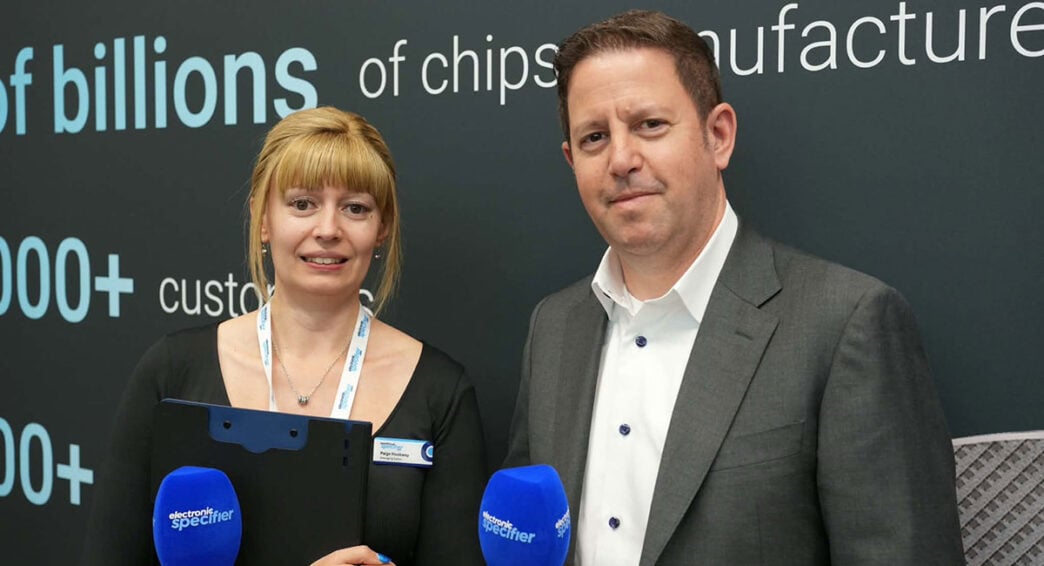
On the Texas Instruments stand at electronica 2026 in Munich, Electronic Specifier‘s Paige Hookway spoke with Amichai Ron, Senior Vice President and General Manager at TI, about new devices for factory interoperability and the company’s move into Agentic AI.
The show has been “super busy, as I like”, said Ron, with plenty of customers visiting the booth to see TI’s latest products. Among them are two new devices designed to enable seamless interoperability across factory automation, robotics, and the Industrial Internet of Things (IIoT).
One product, many protocols
Communication sits at the heart of any factory, Ron explained. Machines need to talk to one another, and sensors need to pass data to controllers so the right decisions can be made.
Yet for historical reasons, different regions favour different industrial protocols. In the past, that meant engineers had to develop one machine for Europe, another for the US and another for China. TI’s answer is a multi-protocol approach that lets customers switch protocols depending on where they are shipping, so they can build fewer designs that serve more of their customers.
Small, pre-certified, and switchable
The TICS100MOD lets engineers move between protocols such as PROFINET, EtherCAT, and EtherNet/IP with a simple firmware update. TI cannot change regional preferences, Ron said, but it can make them easier to support. A customer can develop one product and ship it into more systems without redesigning the instrument.
TI describes it as the industry’s smallest fully featured module of its kind. Ron credits TI’s vertical integration: it is one of the last companies to both design and manufacture its own chips. It developed the AM261 that runs the software, and it builds the module too. Controlling both designs lets TI achieve the smallest possible module for this performance level, making it easier to fit into more systems.
It also arrives pre-certified, with code, module, and chips supplied together. Time savings vary by application, Ron said, but they can be significant. Customers still certify their final system, but the process becomes much easier.
Single-supplier sourcing also reduces supply chain risk, a lesson many learned during COVID-19. With TI controlling module design, chip design, and production, and having invested billions of dollars in capacity, Ron said the aim is for customers to have access “under any market condition”.
Agentic AI at the engineer’s desk
TI has also brought Agentic AI into its CCStudio development tools. Engineers can already use agents for their own development, said Ron, but TI wants to make it easier. The integrated agent can access TI’s data and device documentation and can help with debugging, making it much simpler to write code for TI devices.
A second tool supports migration between TI devices, doing the job more accurately and quickly, and handling the debug. A third helps engineers build Edge AI applications, even if they have never written that kind of code. A user can describe the task in simple language, such as working with a particular sensor, and the tool will pull the data from TI’s database, develop the model, and program the device.
Crucially, the user stays in the loop. The tool shows how it develops the code, gives feedback as it works, and takes instructions to change its approach, so the result fits the application exactly.
Where AI meets the factory network
For Ron, networking and AI go hand in hand. Connected sensors and machines, combined with AI at the Edge, enable predictive maintenance. A machine that starts vibrating can be fixed before it breaks.
The result, he said, is more efficient production lines and higher-quality products, because operators know exactly what is happening in every part of the factory.