





Rather than just selling chips, NVIDIA is now building and owning every layer of the AI value chain.
At COMPUTEX 2026, NVIDIA announced a plethora of releases culminating in an open, full-stack platform for the enterprise agent lifecycle, including OpenShell and the NVIDIA Agent Toolkit for helping agents access tools and follow policies.
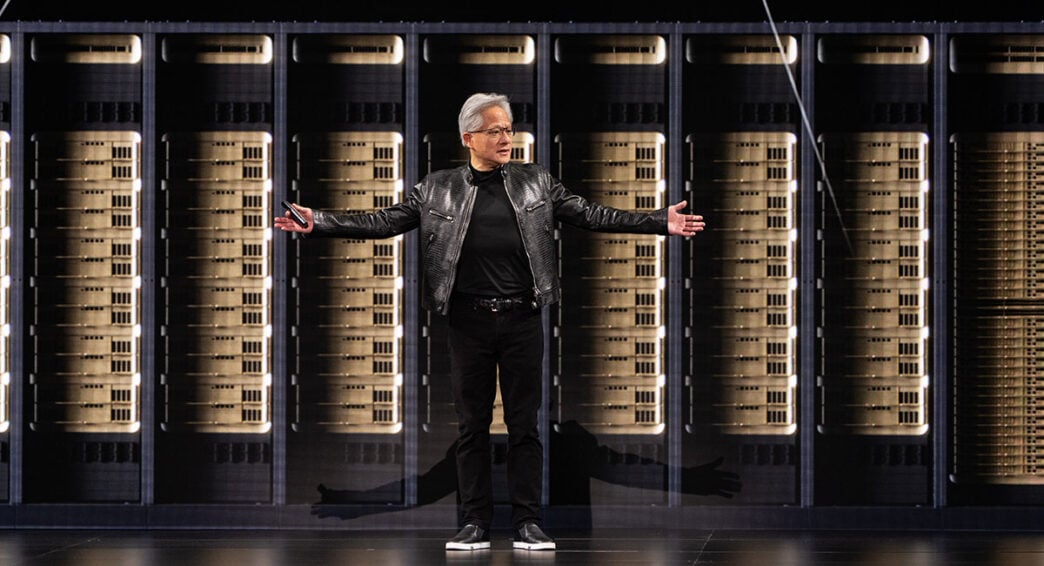
At the event, Huang declared that AI is finally useful as a profit generator and as a gross domestic product (GDP) generator. And it seems that companies are rallying to be part of the journey. Among the industry leaders that are part of the NVIDIA ecosystem are Adobe, Cisco, Palantir, SAP, Salesforce, ServiceNow, Siemens, Synopsys, Cadence, and Dassault Systèmes, who are all building domain-specific agents and AI systems on NVIDIA’s platform.
Also spoken about was DSX, NVIDIA’s AI factory framework for infrastructure builders. It defines how AI factories are designed, built, and optimised across the entire stack. Huang said that the DSX MaxLPS had 40% more GPUs than previous models within the same power budget.
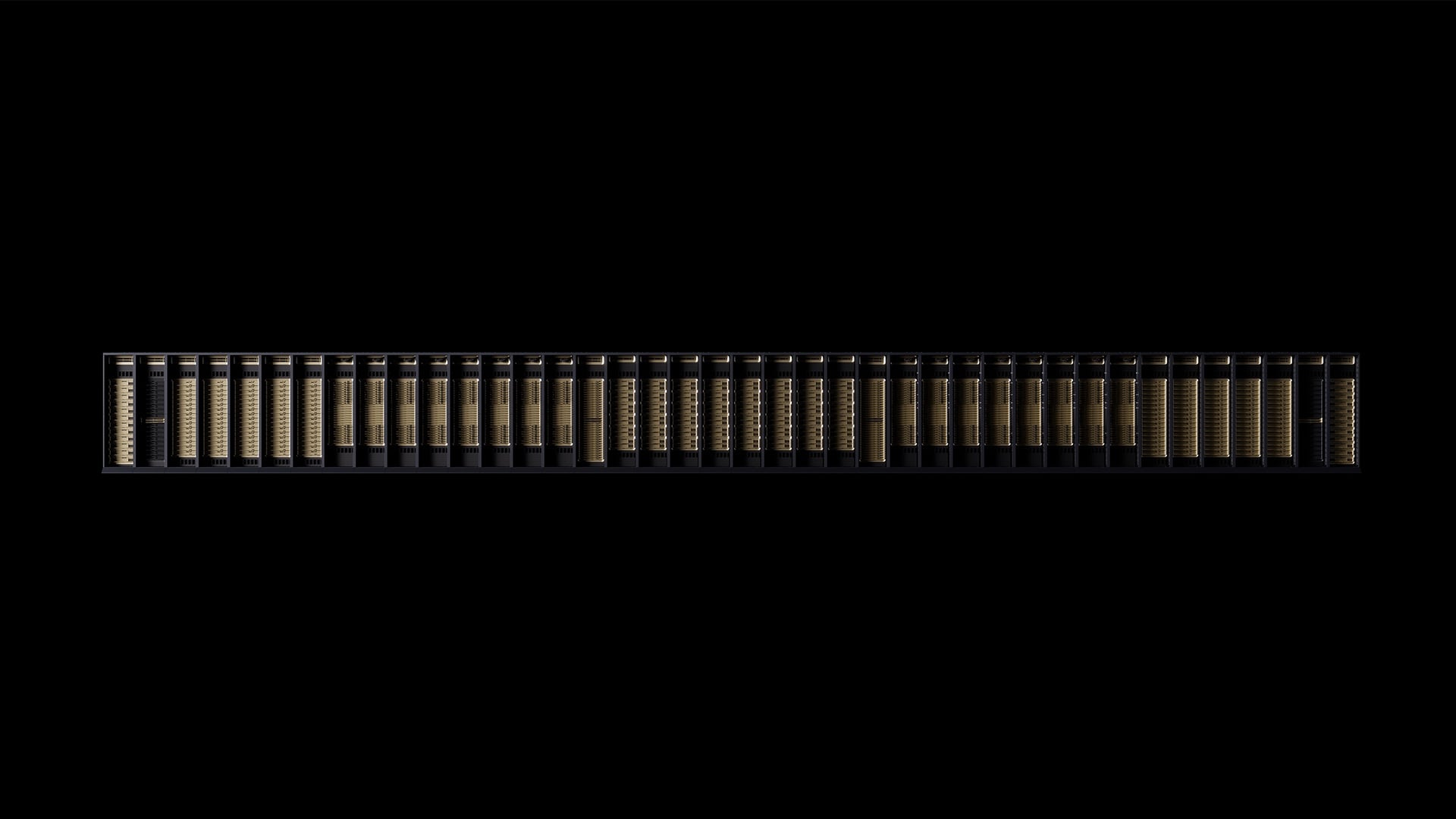
Huang also divulged that its Vera Rubin was in full production and it is twice the size of Grace Blackwell, to keep up with the rising demand from companies for more AI.
But what else is in the NVIDIA ecosystem?
RTX Spark
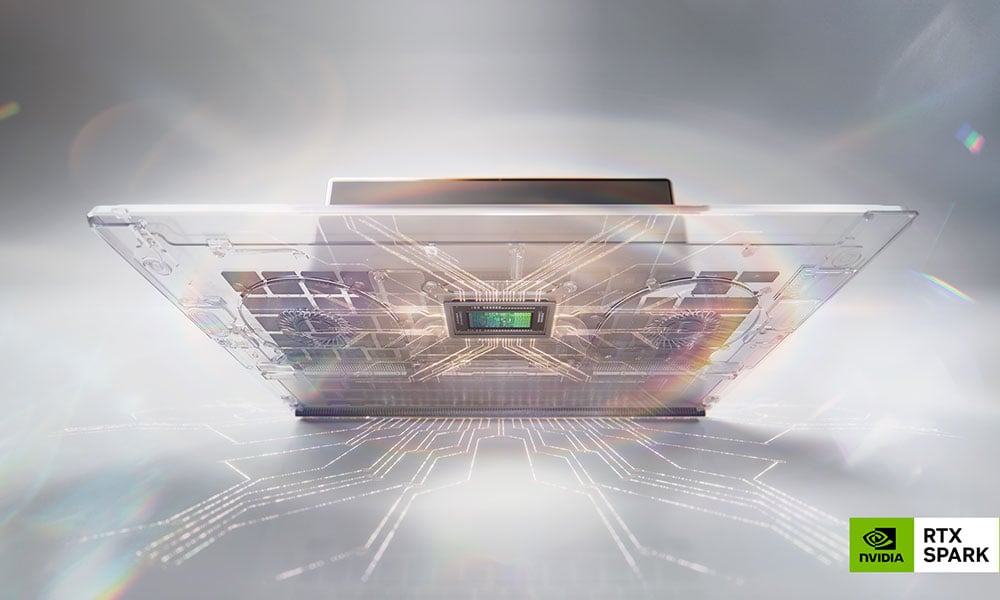
NVIDIA unveiled the RTX Spark, a Windows on Arm platform for laptops powered by its RTX Spark Superchip, aimed at transforming Windows into an Agentic AI OS. RTX Spark has 1 Petaflop of AI performance, supports up to 128GB of unified memory, and has the ability to run LLMs at 120B parameters – all locally.
But not simply stopping at RTX Spark laptops for gaming, greeting, and agents, Huang also announced RTX Spark desktops, continuously-running AI hubs that get smarter over time, and a DGX Station for Windows, targeting developers in the Windows ecosystem, an AI supercomputer with tens of Petaflops and 100s of Gigabytes of memory for developers.
The RTX Spark is powering the first PCs that are purpose-built for personal agents. Something Huang says has rolled 33 years of NVIDIA knowledge all onto one chip.
Nemotron 3 Ultra
Nemotron 3 Ultra is aimed at developers building applications ranging from search tools to scientific research. The Nemotron 3 Ultra has five times faster inference and is 30% cheaper to run than other models in its class.
The AI agents using CUDA-X libraries are now accessible to every agent, everywhere. Verified NVIDIA agent skills are now available in the Claude Code plug-in marketplace and Hermes Skills Hub.
Physical AI
Cosmos 3 was announced as the world’s first open Physical AI omnimodel. These agents can read, write, perceive, reason, and act in the real world. This was designed to understand and simulate the physical world in either the first or third person. The Cosmos 3 learns from teleoperation, simulation, and re-projected third-person videos.
In partnership with Microsoft, NVIDIA is helping transform Windows into an agentic platform via its OpenShell framework and a new set of security primitives that act as guardrails, ensuring local agents and models only access tools and data the user grants them.
The NVIDIA toolkit means that companies can use different models, all supported by underlaying NVIDIA architecture. These companies can then improve their models for their own proprietary use.
The bigger picture
All these announcements and the way they operate in harmony with each other and the clients they serve reveal a fundamental shift in the company’s business model. AI infrastructure is turning compute from a back-office IT cost centre into a direct production system for tokens, reasoning, and automation, and NVIDIA wants to own that entire production system.
But with great power comes great responsibility, and NVIDIA’s move toward full-stack AI infrastructure may limit flexibility in multi-vendor environments, which could create customer lock-in concerns.
NVIDIA is positioning itself at the hub of three computing paradigms simultaneously – classical AI accelerated computing, Agentic AI software platforms, and hybrid quantum-classical systems. At COMPUTEX, Huang himself has hinted there’s more to come, saying that there’s “a surprise new product we haven’t told anyone about yet” for the second half of 2026.
Could 2026 be the biggest year for NVIDIA yet? The company is clearly positioning itself as a full-stack AI platform provider rather than just a chipmaker, and it seems that for this company, the sky has no limits.