





Software-defined vehicles (SDVs) rely on deterministic, high-bandwidth communication to support advanced driver assistance, centralised compute architectures, and over-the-air (OTA) updates. SDV zonal architectures implement automotive Ethernet as the backbone interconnect for these functions, linking domain controllers, gateways, high-performance compute platforms, and switches.
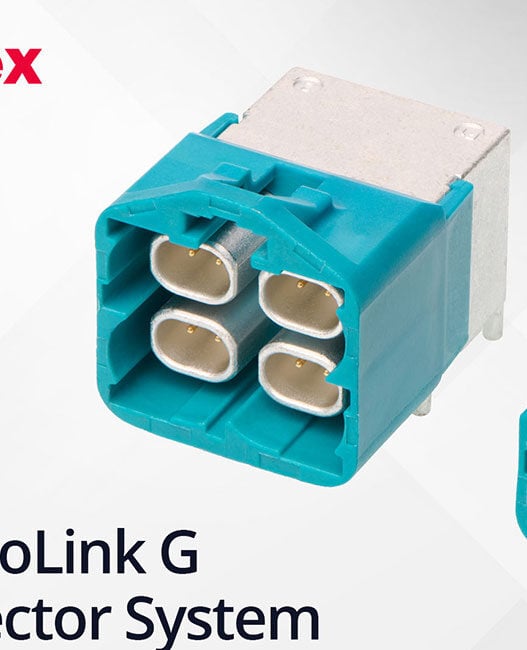
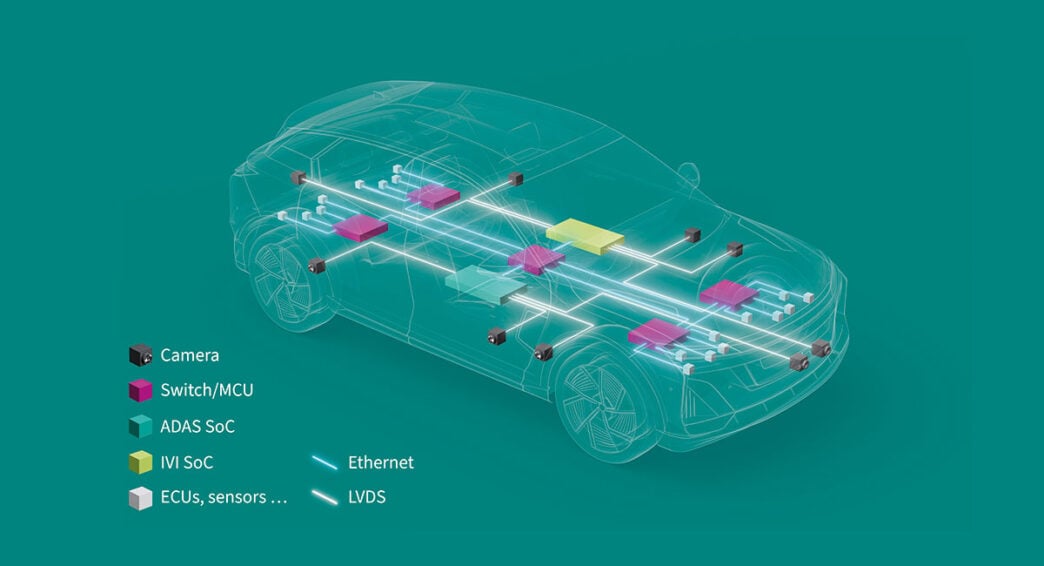
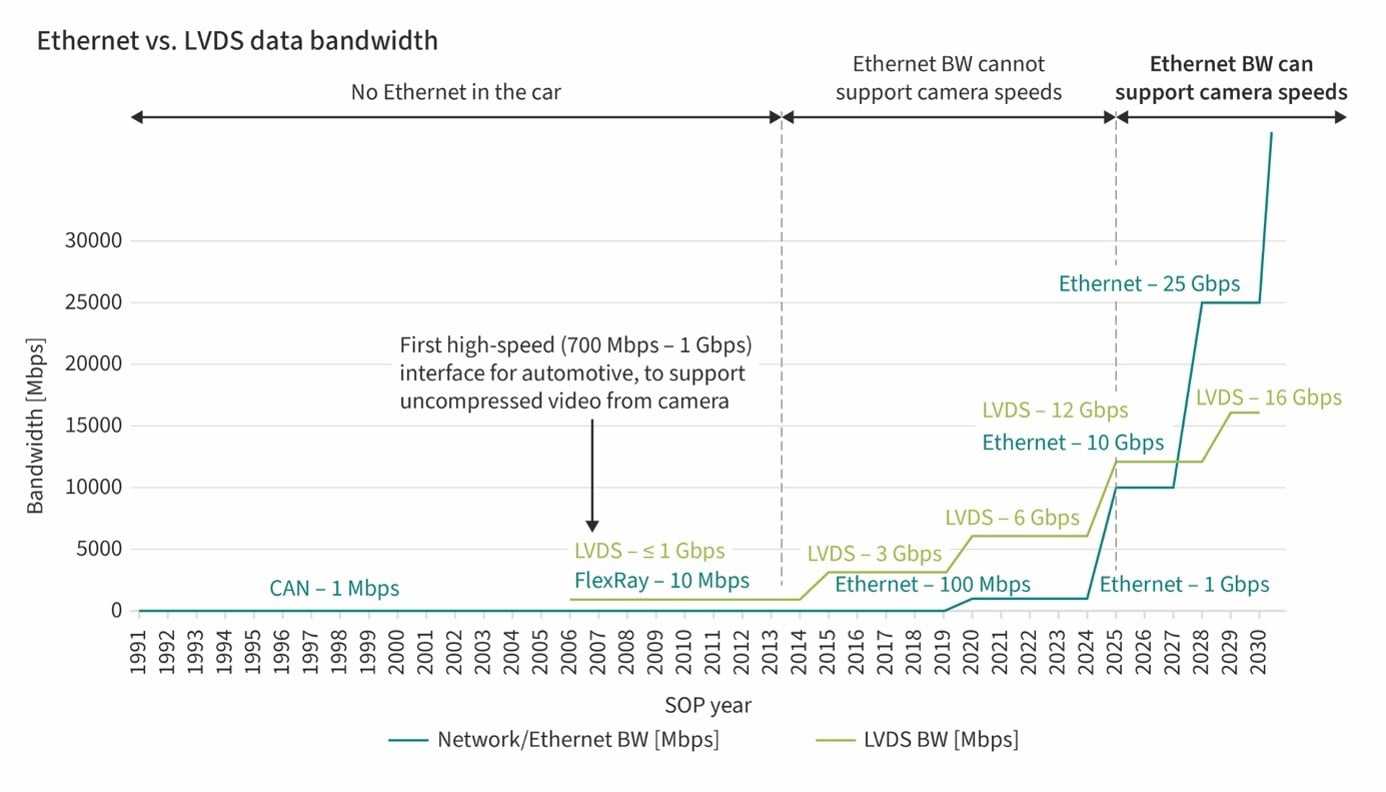
Today, high-data-rate cameras (Fig. 1) continue to rely on proprietary point-to-point (P2P) serializer links based on low-voltage differential signalling (LVDS) technologies such as Gigabit Multimedia Serial Link (GMSL) or Flat Panel Display Link (FPD-Link). These links terminate at system-on-chip (SoC) devices and operate outside the Ethernet fabric, restricting stream sharing, path redundancy, and dynamic bandwidth allocation for high-value perception data.
Extending Ethernet to the sensor Edge resolves this limitation and enables a unified, programmable SDV network from camera to central compute.
Converting vision to Ethernet at the sensor Edge
As shown in Figure 2, the introduction of MultiGig automotive single-pair physical layer (PHY) devices at 2.5, 5, and 10Gbps closes the bandwidth gap that previously forced cameras onto proprietary serializer links. At these data rates, Ethernet efficiently transports high-resolution, low-latency video directly from the sensor.
An Ethernet camera bridge converts sensor output into standardised Ethernet frames at the source. IEEE 1722 defines the Audio Video Transport Protocol (AVTP), which encapsulates time-sensitive media streams at Layer 2. The bridge functions as an AVTP talker, segmenting each video frame into protocol data units tagged with stream identifiers and sequence numbers. Downstream processors operate as listeners and reconstruct frames deterministically.
Each packet carries a presentation timestamp synchronised through the Generalised Precision Time Protocol (gPTP) under IEEE 802.1AS. This mechanism provides precise alignment with radar, LiDAR, and inertial sensors. Notably, accurate cross-sensor time correlation is critical for sensor fusion and trajectory prediction.
Deterministic transport and resilience over Ethernet
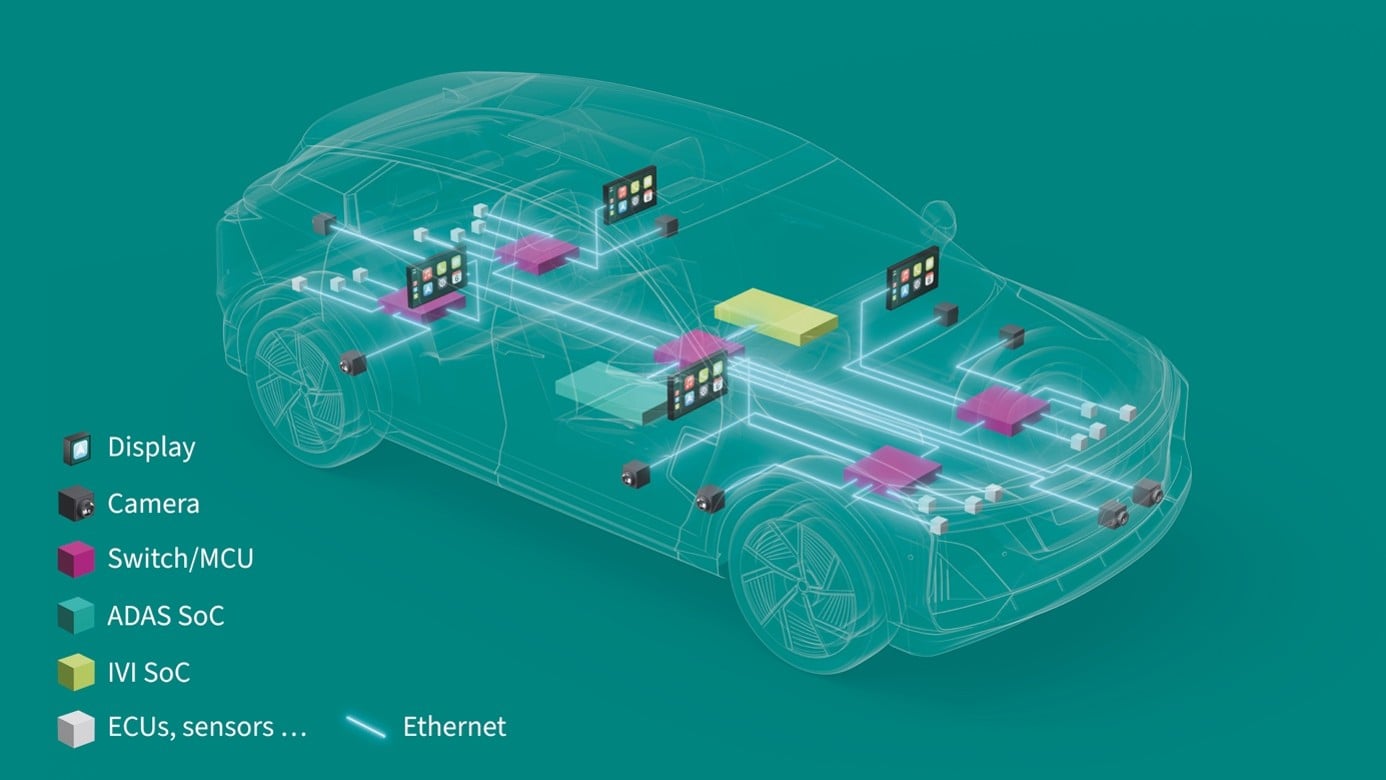
Once encapsulated as Ethernet traffic (Figure 3), video streams operate within deterministic network frameworks. Time-Sensitive Networking (TSN) traffic shaping and time-aware scheduling enforce bandwidth guarantees across traffic classes, while virtual local area network (VLAN) prioritisation maintains predictable delivery during peak utilisation.
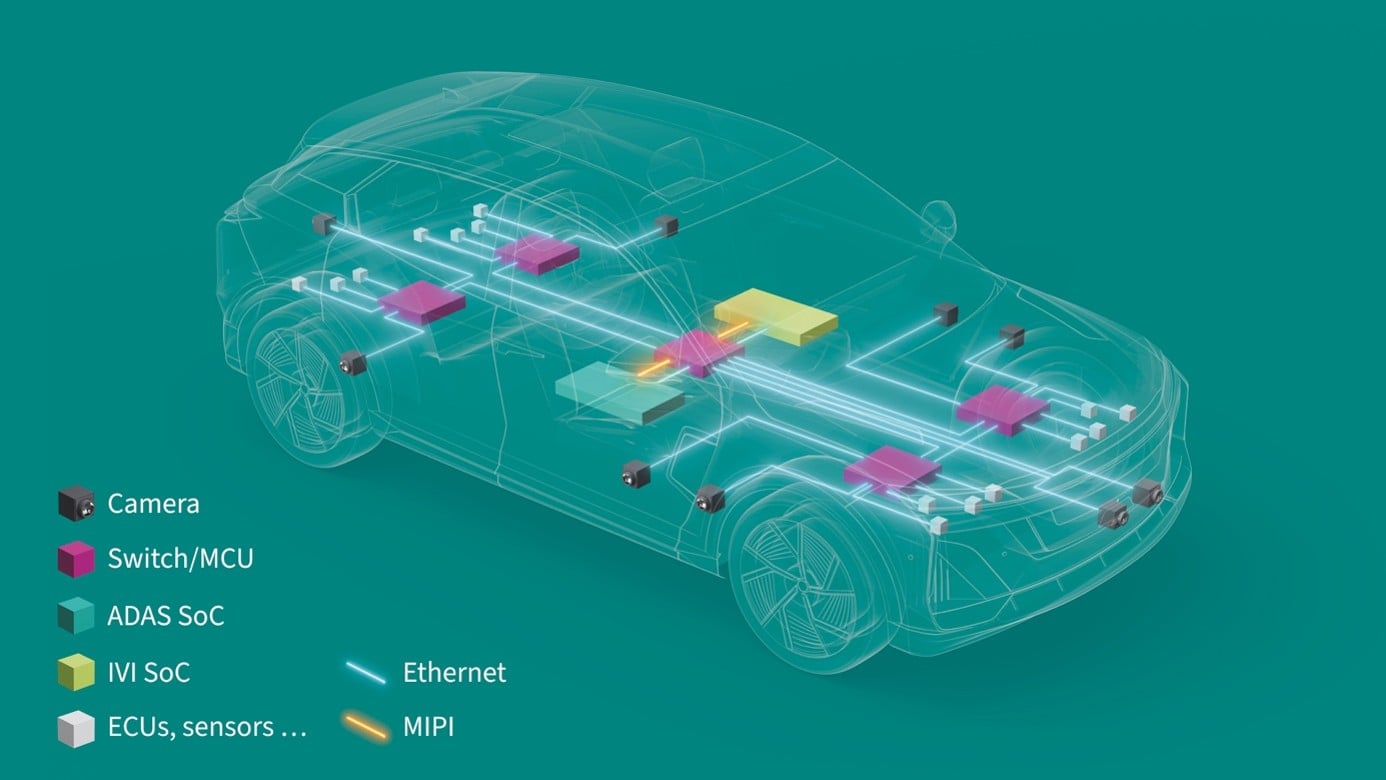
Unlike point-to-point serialiser links, Ethernet switching enables a single video stream to multicast to multiple compute nodes without source duplication. Advanced driver assistance systems (ADAS), infotainment processors, and data logging subsystems can subscribe concurrently. When cameras output Ethernet natively, they can connect to central switches or to zonal switches using short cables. In this architecture, stream distribution is a configurable network parameter rather than a fixed physical connection.
Redundancy mechanisms further improve resilience. IEEE 802.1CB frame replication and elimination support duplicate transmission across diverse paths. If a link or switch segment fails, the receiving node reconstructs the stream without interruption. This capability supports functional safety objectives without parallel proprietary wiring.
Programmability, control, and ecosystem integration
Control and configuration of Ethernet camera streams operate through IEEE 1722.1. Processors discover camera bridges, establish stream connections, and transmit commands such as exposure or mode adjustments. General-purpose input/output (GPIO) events can be time-stamped to the network clock, enabling synchronised triggering across multiple sensors.
This architecture transforms cameras into programmable network endpoints. Software can reassign streams, add subscribers, and adjust bandwidth reservations without physical rewiring. Adding a camera is enabled by provisioning bandwidth within the switch fabric rather than redesigning serializer chains. As features evolve, the network accommodates new perception traffic without structural modification.
Because cameras operate within the Ethernet framework, they leverage standardised security, monitoring, and power mechanisms. IEEE 802.1AE MACsec secures data in transit; Operations, Administration, and Maintenance (OAM) functions provide link visibility; and Power over Data Line (PoDL) or coax (PoC) deliver power to edge devices. Established Ethernet conformance testing, electromagnetic compatibility verification, and multivendor interoperability programs further reduce reliance on proprietary validation flows.
Ethernet end-to-end with native high-speed Ethernet in SoCs
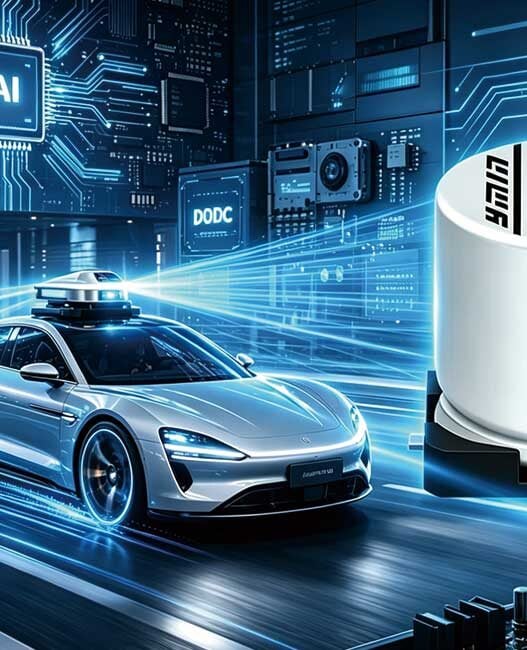
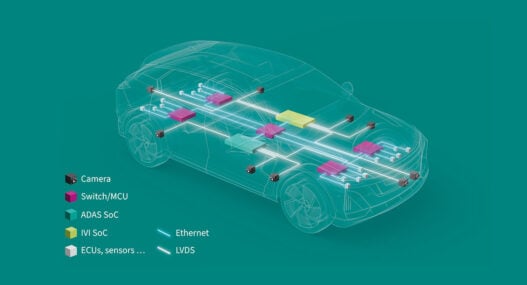
Automotive SoC devices increasingly integrate native high-speed Ethernet ports operating at 10Gbps and scaling to 25Gbps, enabling Ethernet End-to-End connectivity within the in-vehicle network, as shown in Figure 4. These interfaces reduce reliance on external deserializers and reduce the number of interface pins on the SoC.
Integrated hardware engines depacketise IEEE 1722 streams and transfer video directly to image signal processors or graphics accelerators and store frames in memory through direct memory access (DMA) mechanisms. Offloading these functions from the general-purpose central processing unit (CPU) lowers latency and frees computational resources for perception algorithms.
These high-speed Ethernet ports on the SoC consolidate bandwidth into fewer lanes than parallel camera interfaces such as Mobile Industry Processor Interface Camera Serial Interface-2 (MIPI CSI-2). A few 25 Gbps Ethernet ports can aggregate multiple camera or radar streams, lowering pin count, simplifying package routing, and reducing printed circuit board (PCB) complexity.
Because Ethernet supports switching and multicast, a single Ethernet switch can distribute a camera stream to multiple SoCs. Adding or reallocating streams is enabled by software configuration within the network fabric rather than hardware redesign. The SoC operates as a high-throughput, time-synchronised node within a scalable communication infrastructure.
Optimising camera links with IEEE 802.3dm asymmetric PHY
Although symmetric MultiGig PHYs defined under IEEE 802.3ch enable high-bandwidth camera transport, camera traffic is inherently asymmetric. Video flows predominantly from sensor to processor, while upstream traffic consists primarily of control and status signalling.
IEEE 802.3dm addresses this imbalance by defining asymmetric single-pair automotive Ethernet PHYs that deliver high downstream data rates for uncompressed video while supporting lower upstream bandwidth for control traffic. The objectives specify downstream rates of 2.5, 5, and 10Gbps with upstream rates near 100Mbps.
Matching link capacity to actual traffic patterns reduces silicon area, lowers power consumption, and eases thermal constraints in compact camera modules. Smaller PHY implementations enable more efficient sensor packaging while maintaining deterministic transport characteristics.
IEEE 802.3dm builds on existing automotive Ethernet frameworks and maintains Layer 2 compatibility with TSN. It targets cable reaches of approximately 15 meters and supports both shielded twisted pair and coaxial media. Optional features such as PoDL and PoC remain applicable for edge devices.
From isolated links to a programmable vehicle network
Replacing proprietary serializer chains with a unified Ethernet fabric enables deterministic transport, precise synchronisation, configurable redundancy, and standardised observability across the full communication path. Native high-speed Ethernet integration within SoCs, together with emerging asymmetric PHY specifications, improves efficiency at both architectural and physical layers.
These advances support scalable bandwidth, software-driven reconfiguration, and lifecycle adaptability throughout the vehicle platform. As SDV architectures consolidate compute into zonal and centralised domains, perception computation increasingly shift via software updates rather than hardware redesign. A standards-based Ethernet fabric allows video streams to be reassigned, duplicated, prioritised, and secured through configuration changes within the network infrastructure.
This flexibility reduces structural dependencies between sensors and processors and supports long-term feature evolution over successive vehicle platform generations. Rather than anchoring perception data to fixed serializer chains, Ethernet functions as a programmable communication fabric that accommodates new algorithms, updated safety requirements, and increasing data rates.