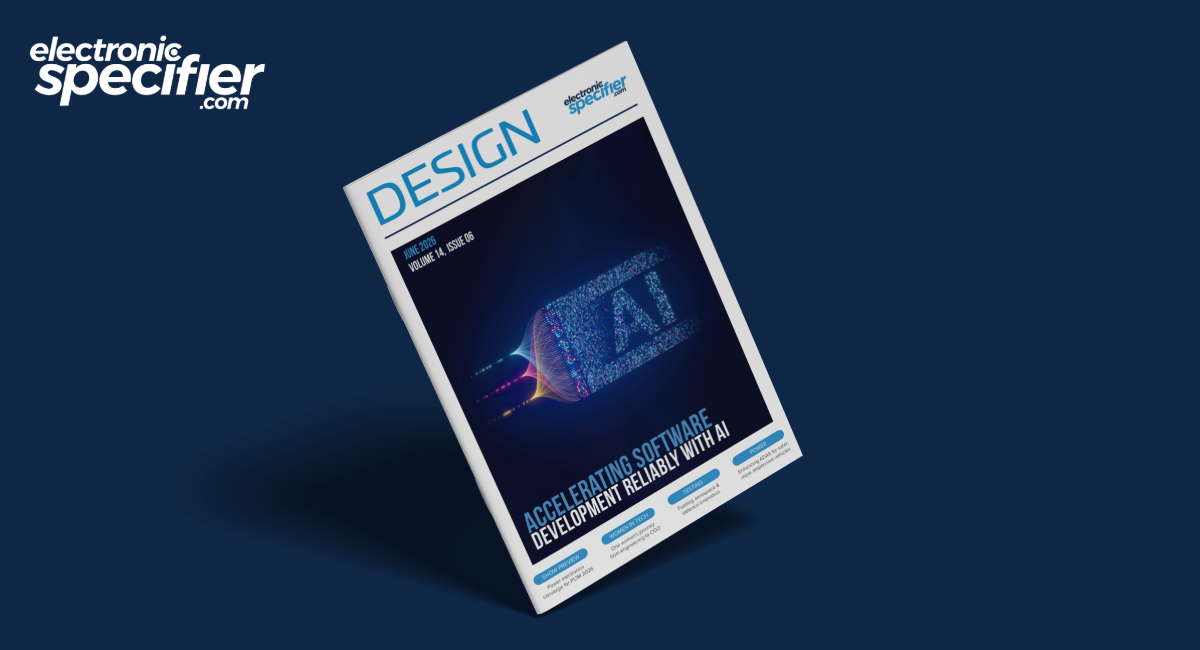





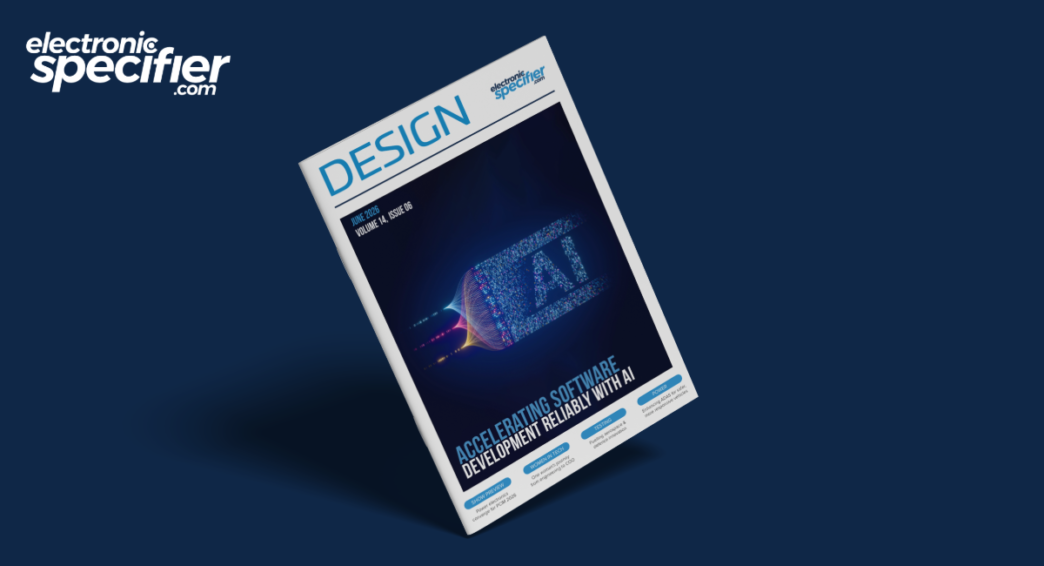
Electronic Specifier is pleased to announce the release of its June issue, an edition addressing some of the most exciting developments currently facing the electronics and technology sectors.
Spanning aerospace and defence, e-mobility, power, test & measurement, and a special PCIM show preview, this issue brings together expert analysis, industry perspectives, and technical insight to inform professionals across the design and engineering community.
Inside, you will find all the details you need to navigate Nuremberg for PCIM 2026. When the doors open, the power electronics community will gather for what promises to be the most expansive PCIM Expo & Conference to date. Running from 9-11th June 2026, the event will spread across approximately 40,000 square metres of exhibition space and welcomes more than 650 companies from 27 countries.
Returning heavyweights including Mitsubishi, Onsemi, Sumida, and Toshiba will share the floor with a raft of first-time exhibitors such as Allegro MicroSystems, Analog Devices, Iwatani, NHK Spring, and Moteon. With over 120 new companies joining the roster, the 2026 edition promises a notably broader and more diverse product landscape, spanning power semiconductors, test and measurement technologies, automation solutions, and specialist materials stretching into the aviation sector.
The headline addition for 2026 is the brand-new AI & Data Centres Stage – the first dedicated platform at PCIM to address the twin forces of artificial intelligence and data centre energy management. It promises to be an informative show.
For this issue’s Women in Tech column, our Associate Editor, Sheryl Miles, speaks with Karen Keenan, COO of Delft Circuits. Keenan has a career that spans engineering, consulting, and operations – each progression building experience and expertise. She is now COO of Delft Circuits, expanding the company’s quantum fabrication infrastructure in the Netherlands.
You’ll also find great articles in our regular Test & Measurement section from Rohde & Schwarz and TestEquity on easy power sequencing and ripple noise analysis with MXO oscilloscopes and accelerating aerospace & defence innovation through faster, more resilient test & measurement. Aerospace and defence development cycles are changing rapidly. Programmes focused on unmanned aerial systems (UAS), counter-UAS technologies, electronic warfare, and secure communications are now moving at a pace that traditional validation processes were never designed to support.
Our regular Power section spotlights features from Toshiba and Molex. Since the early days of electrical distribution, fuses have played a critical role in protecting circuits from overcurrent conditions. While traditional fuses offered simplicity, they lacked flexibility and intelligence. Modern applications, ranging from industrial automation to consumer electronics, require advanced protection features such as adjustable current limits, thermal shutdown, and fast response to faults. This article explores how silicon-based fuses meet these demands, delivering smarter, safer, and more efficient circuit protection than conventional solutions.
Advanced driver assistance systems (ADAS) are pushing the limits of vehicle power needs. 48V systems are answering this demand, providing the enhanced energy needed for safer and more responsive vehicles. But how do 48V electrical systems enable the advanced capabilities of ADAS? Find out inside the issue!
The automotive industry is also undergoing an unprecedented transformation driven by electrification. By 2031, battery electric vehicles (BEVs) are forecasted to dominate the market with a 44% share, pushing traditional internal combustion engine (ICE) vehicles to a minority position. This rapid shift, alongside the sustained presence of hybrid electric vehicles, which are forecast to take a 32% share by 2031, as a practical and affordable transition technology, demands a revolution in component engineering. Dominik Pawlik, Product Portfolio Director – Power Interconnects, ENNOVI looks at how to build reliability into EV electronics.
We, of course, have a special article focusing on AI – a topic of great interest in the industry at the moment. AI can be a powerful tool in developing functionally safe and secure systems, especially ones based on multicore SoCs. However, with the growing complexity in embedded software and the pressure to deliver and release software faster, improper use of AI can lead to increased safety and security risks. Jay Thomas, Senior Director of Field Engineering, TASKING explores how AI can accelerate software development in a manner that developers can trust.
Read the June issue below: