



At a keynote on the future electronics stack for space transportation, Kate Underhill, Future Space Transportation Propulsion Architect at the European Space Agency (ESA), argued that intelligence, connectivity, and autonomy, rather than raw propulsion, will define the next era of getting into, moving around, and returning from space.
A self-confessed rocket engine enthusiast, Underhill kicked off with this message: “The laws of physics have not changed,” she said, pointing out that the physical principles behind today’s engines are the same ones that carried the first launchers into orbit in the 1960s. What is changing, and changing fast, is everything around the engine: the onboard intelligence, the power systems, the sensors, and the software.
From bespoke launches to space logistics
Today’s European launchers are, in Underhill’s words, largely bespoke vehicles. A single launcher carries its payload end to end, to whichever orbit the customer needs. ESA’s projected future looks more like terrestrial logistics: a hub-and-spoke model.
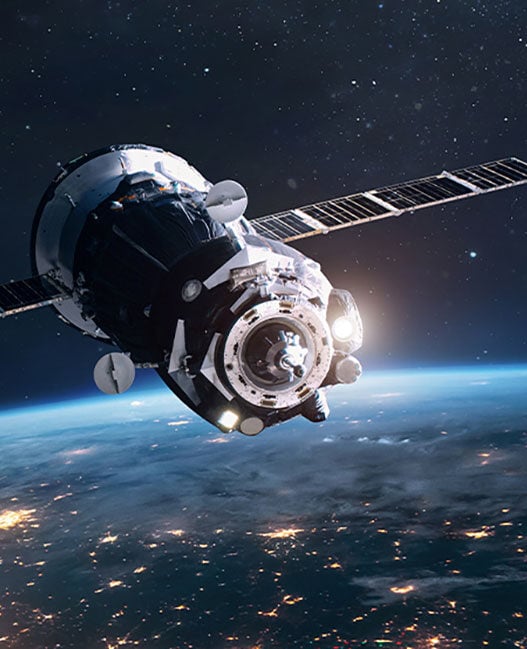
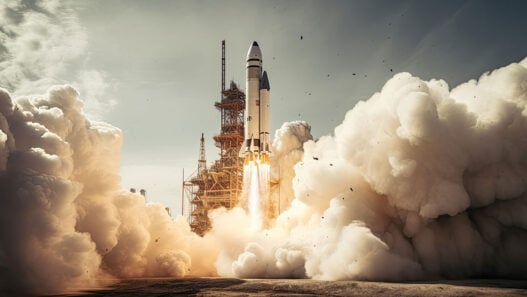
“A launcher is basically a delivery truck,” she explained. In that model, reusable launchers would shuttle cargo to low Earth orbit as a staging post. A fleet of in-space vehicles would then handle the “last mile”: moving satellites to their final orbits, refuelling them, repairing damage from debris, and de-orbiting dead spacecraft to keep space usable for everyone.
The economics behind this shift are stark. Launch costs that once sat around $10,000 per kilogram could fall to as little as $30 per kilogram if SpaceX’s ambitions for Starship are realised. Underhill noted that European launch plans currently run at a handful of flights a year, while the US is targeting up to 1,000 launches a year by the end of the decade. That kind of routine, airline-like access demands industrialised production, rapid turnaround, and maintenance, none of which the traditional, near-handmade approach can deliver.
Smarter, but not too smart
Underhill noted how basic launcher electronics still are. Ariane 5’s upper stage ran on open-loop control, following a pre-programmed flight sequence with precise timing, classic fault detection, isolation, and recovery (FDIR), and a fully independent flight termination system. “This is electronics. This is software, but this is not AI,” she said.
It’s basic, but effective – Ariane 5 placed the James Webb Space Telescope on such an accurate trajectory that its expected operational life was extended from around 10 years to around 20.
She also recalled the cautionary tale of Ariane 5’s maiden flight, when flight software reused from Ariane 4 could not cope with the more powerful vehicle’s sensor data and the launcher had to be destroyed. The lesson, she said, is that software must be tested in a realistic environment before it flies.
The space sector deliberately runs about a decade behind consumer electronics. That is a product of a uniquely hostile environment: cryogenic temperatures down to 20 kelvin alongside components near 1,000°C, intense vibration and shock, depressurisation from one bar to vacuum in minutes, radiation, and tight limits on electromagnetic interference. Every added electronic function also brings new demands for power, harnessing, and mass.
Underhill highlighted several areas where the electronics industry could help: wireless sensors to cut cabling mass, vibration energy harvesting, compact high-peak-power electronics for concepts such as laser ignition, and more capable processors to close the gap with commercial technology. Her guiding principle was pragmatic. Add intelligence where it pays its way, and where a simple system works, “keep it stupid.”
AI across design, build, and operation
ESA is exploring AI at every stage of the lifecycle. On the design side, that includes using AI to identify new alloys, such as a high-strength copper with good thermal conductivity for engines. It also includes generative design, topology optimisation, and simulation-driven product development that replaces extensive physical test campaigns with a handful of confirmation tests.
In manufacturing, additive techniques are already transforming parts. Underhill described an injector head that traditionally comprises more than 200 individual parts and can now be printed as one. That shifts the challenge to quality assurance: how to evaluate in-process monitoring data layer by layer, and how far to trust automation over human inspection. Trust was a recurring theme. In launch, a part failure can mean the end of the mission, so humans must still understand and sign off on what AI produces.
The bigger prize is the engine as “a data generating machine.” Underhill pictures a future of integrated sensors embedded during printing, a digital twin for every individual engine, automated checkout on the test bench, and predictive maintenance based on each component’s cycle history. “It’s hardware, but it’s clever hardware now,” she said.
With enough flight and test data, AI could also spot faint early-warning signals that humans miss, such as a pressure wobble preceding cavitation in a turbopump spinning at tens of thousands of rpm. A vehicle could then shut down a failing engine before it fails catastrophically and redistribute thrust among the remaining engines to complete the mission.
Putting the control centre on board
Autonomy becomes essential once vehicles operate in orbit. With mega-constellations putting tens of thousands of satellites into low Earth orbit, and objects travelling at around 8 to 10km/s, humans can no longer stay in the loop for every decision. “The control centre needs to move on board,” Underhill said.
ESA has defined graded levels of autonomy, from simply executing commanded programmes through to full autonomy. It is working out which level each operation needs, from cooperative docking to capturing tumbling, uncooperative debris. Europe already has a strong heritage here, as the Automated Transfer Vehicle (ATV) docked autonomously with the International Space Station.
The longer-term vision is a software-defined spacecraft. A multi-purpose in-space vehicle could operate for 10 to 15 years, with new missions such as refuelling one day and servicing the next uploaded as software.
The importance of electronics
Underhill framed space as part of the everyday economy. The average European relies on around 45 satellites a day for weather, navigation, and the timing behind bank transfers. It is also a matter of strategic autonomy. She pointed to gaps in European supply, notably semiconductors and power electronics, and to growing concerns about secure design data and dual-use technology.
The opportunity runs both ways. “If electronics can work in space, then they can work in lots of different other areas as well,” she said, citing hydrogen aviation and renewable energy.
Her closing message to the electronics community was simple: the engines may obey the same old physics, but the future of space transportation will be won on electronics.