





Aerospace and defence development cycles are changing rapidly. Programmes focused on unmanned aerial systems (UAS), counter-UAS technologies, electronic warfare, and secure communications are now moving at a pace that traditional validation processes were never designed to support.
For engineering teams, the challenge is no longer simply about meeting fixed specifications or proving compliance. Systems must now be tested for resilience, survivability, and operational readiness in increasingly complex operating environments. In practice, this means systems are no longer validated in isolation, but under conditions where interference, rapid iteration, and evolving mission requirements are the norm rather than the exception.
One of the most significant shifts in this space is the growing importance of the electromagnetic spectrum. Modern defence systems rely heavily on secure communications, radar, electronic intelligence, and RF-based sensing. At the same time, electronic warfare threats and spectrum congestion are intensifying, creating a far more hostile operating environment. In practical terms, this can mean a communications or sensing system performing as expected in a controlled lab environment, but exhibiting degraded performance when exposed to competing signals, noise, or dynamic spectrum conditions during deployment testing.
This changes how validation needs to be approached. It is no longer enough to assess performance only under controlled laboratory conditions. Engineering teams must now understand how systems behave under interference, signal degradation, and spectrum competition, where performance margins are far less predictable.
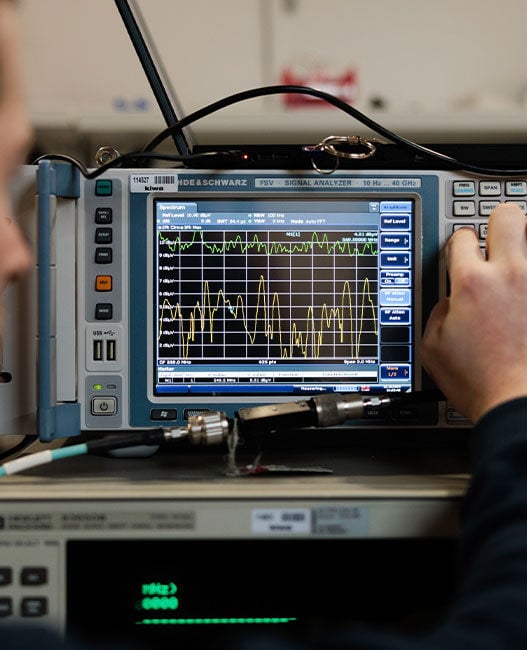
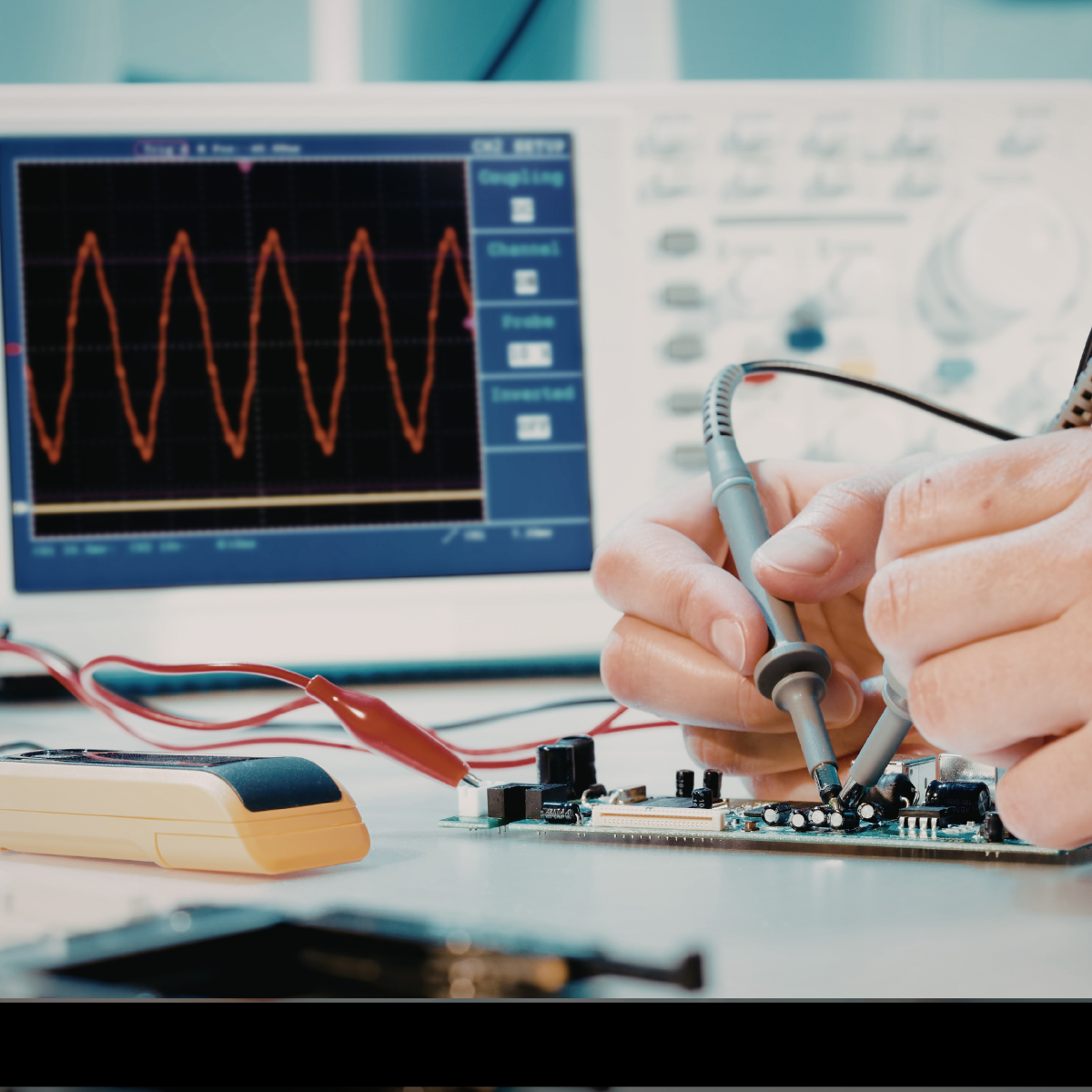
As a result, RF and microwave test capabilities are becoming central to aerospace and defence development. Spectrum analysis, signal generation, and high-performance oscilloscopes enable engineers to assess signal integrity, resilience, and communication reliability with far greater precision. These tools are particularly critical where secure communications and fast, accurate decision-making are non-negotiable.
At the same time, the expansion of UAS and counter-UAS programmes are putting further pressure on traditional test cycles. Unlike legacy aerospace platforms, many of these systems are being developed iteratively, with frequent software updates and rapidly evolving hardware requirements. In this environment, validation cannot be a late-stage checkpoint; it has to move with development.
This creates a growing gap between the speed of innovation and the speed of validation. Engineering teams are under pressure to avoid testing bottlenecks while still maintaining confidence in performance before systems are deployed into operational use.
To address this, organisations are increasingly prioritising more flexible and scalable approaches to test and measurement. Access to the right equipment at the right time, whether for RF analysis, power measurement, signal validation, or environmental testing, is becoming increasingly important as programme timelines tighten. Flexibility in test infrastructure allows teams to respond more quickly to changing programme needs without sacrificing accuracy or repeatability.
However, speed alone does not solve the problem. Aerospace and defence systems must still perform reliably in harsh, real-world environments where failure is not an option. Environmental testing, therefore, remains a core part of the validation process, particularly as systems become smaller, more integrated, and more thermally stressed.
Thermal cycling, vibration testing, and environmental simulation all play a crucial role in exposing weaknesses that may not appear during early development. By identifying these issues sooner, engineering teams can reduce costly redesign cycles and avoid failures later in deployment.
There is a clear shift towards bringing testing further forward in the design process. Earlier validation helps identify issues when they are easier and less costly to resolve, improving confidence before systems move into production or operational deployment. In fast-moving defence programmes, this directly reduces risk and supports more predictable delivery timelines.
At the same time, calibration and traceability remain essential. As systems become more advanced and tolerances tighter, measurement accuracy is critical. Reliable calibration ensures consistency across development, manufacturing, and maintenance, supporting both quality assurance and long-term performance.
The aerospace and defence sector is entering a period where resilience, speed, and adaptability are tightly interconnected. Modern test and measurement solutions are helping bridge the gap between rapid innovation and dependable operational performance – enabling engineering teams to move faster, without losing confidence in the systems they deliver.
In this context, access to the right test and measurement capability becomes a practical enabler of progress rather than a back-end consideration. Being able to access and apply the right test capability at the right stage of development helps engineering teams stay aligned with fast-moving programme demands. Just as important is the understanding of how those tools are used in context, ensuring results remain reliable, repeatable, and relevant to real operating conditions. This combination of equipment availability and application expertise that TestEquity demonstrates helps support the kind of faster, more confident validation that modern aerospace and defence programmes increasingly depend on.
This article originally appeared in the June’26 magazine issue of Electronic Specifier Design – see ES’s Magazine Archives for more featured publications.