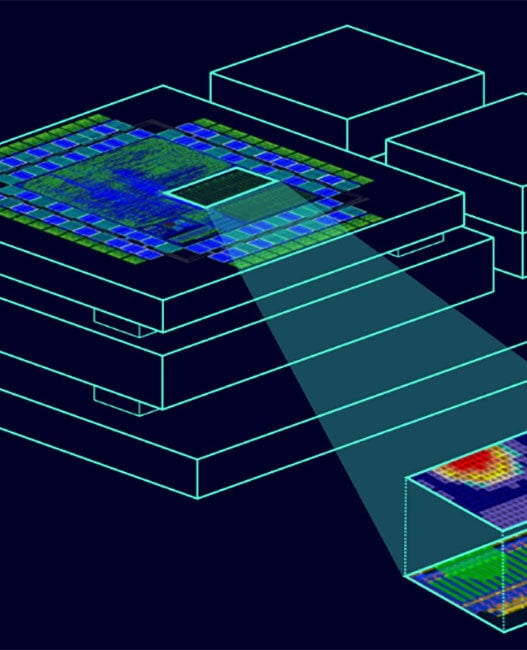








As electronic systems become increasingly compact, powerful, and mission-critical, thermal management has evolved from a supporting function into a strategic element of system design. Ensuring reliable performance is no longer only about removing heat – it is about controlling thermal behaviour before instability affects operation.
Across industries, electronic systems are expected to deliver consistent performance under increasingly demanding conditions. From industrial automation and telecommunications to embedded systems and advanced computing applications, maintaining thermal stability has become essential for reliability, efficiency, and long-term operational success.
This is the foundation behind ‘Too Cool to Drift’, an initiative from nVent SCHROFF focused on highlighting the importance of thermal management in modern engineering. The initiative addresses a critical reality: system performance rarely declines without warning. Instead, issues often develop gradually through thermal imbalance, inefficient airflow, rising hotspots, and operating conditions that push components beyond their ideal range.
Thermal instability often develops gradually rather than through sudden failure. Uneven airflow, localised hotspots and changing operating conditions can create small variations that impact system performance, measurement accuracy and long-term component reliability.
Known as thermal drift, these subtle changes can impact reliability, accelerate component degradation, and create challenges in applications where consistent performance is essential. By addressing these hidden risks, Too Cool to Drift positions thermal management as a key factor in achieving system stability and operational confidence.
Beyond cooling capacity: engineering thermal stability
Traditional approaches to cooling often focus on one question: how effectively can a system remove heat? However, today’s technologies require a broader approach. The challenge is not only lowering temperature – it is maintaining controlled and predictable thermal conditions throughout the system lifecycle.
Modern electronic architectures depend on optimised airflow, effective heat dissipation, and solutions designed around specific operational requirements. A well-engineered thermal strategy can help prevent performance variations, improve reliability, and support systems operating in demanding environments.
nVent SCHROFF solutions are designed to support effective thermal management through advanced enclosure technologies, airflow optimisation, and application-specific cooling approaches. These solutions help engineers develop systems that maintain stability while meeting the increasing performance demands of modern applications.
Effective thermal management is not only about removing heat, but also about maintaining predictable system behaviour throughout the product lifecycle. By controlling thermal conditions, engineers can improve reliability, protect component lifespan, and support higher-performance electronic architectures.
The objective is not simply to cool equipment – it is to create systems where thermal performance is controlled, predictable, and engineered for reliability.
Making invisible risks visible
One of the biggest challenges in thermal management is that many issues remain unnoticed until they begin to affect system performance. Equipment may continue operating while internal temperature variations gradually reduce efficiency, shorten component lifespan, or limit future scalability.
Too Cool to Drift highlights the importance of understanding thermal behaviour as a dynamic factor that influences the entire system. Temperature is more than a measurement; it affects efficiency, reliability, and operational continuity.
This is particularly important in aerospace & defence applications, where reliable operation under demanding conditions is essential, and in test & measurement environments, where thermal variations can influence measurement stability and repeatability.
By increasing awareness of thermal stability, nVent SCHROFF encourages engineers and technical decision-makers to consider thermal management as a fundamental part of system architecture rather than a final design consideration.
Supporting the engineers behind tomorrow’s systems
The message behind Too Cool to Drift is relevant for professionals responsible for designing, integrating, and maintaining reliable electronic systems, including electrical engineers, embedded system designers, OEM integrators, and engineering managers.
For these audiences, thermal management directly impacts business and operational outcomes. A carefully designed thermal approach can help reduce risks, improve system availability, extend equipment lifetime, and support more efficient performance.
A proactive thermal strategy can also reduce maintenance risks and enable the development of more reliable and scalable electronic systems.
As electronic systems continue to become smaller, smarter, and more connected, engineers must consider not only current operating requirements but also future challenges, changing workloads, and evolving environments.
From heat management to thermal intelligence
The future of cooling is not only about managing heat – it is about managing behaviour.
Thermal engineering has become a fundamental discipline for creating reliable, high-performance systems. By understanding and controlling thermal conditions, organisations can improve confidence in their technology and build solutions prepared for long-term performance.
Through Too Cool to Drift, nVent SCHROFF reinforces a proactive approach to thermal management: preventing instability before it occurs and transforming cooling from a reactive necessity into an engineering advantage.
As electronic systems continue to become smaller, smarter, and more powerful, thermal management is becoming a fundamental part of system design rather than simply a cooling requirement. By understanding and controlling thermal behaviour, engineers can create reliable, future-ready solutions that deliver consistent performance in demanding environments.
Learn more about thermal management solutions from nVent SCHROFF: Precision Cooling for High-Performance Electronics | nVent SCHROFF