








Back in December 2024, Google announced its quantum chip – Willow. It claimed that it could solve a theoretical problem that would take the world’s fastest computers ten septillion years (that’s a ten with 25 zeros on the end) to solve, in just five minutes.
At the time, the chip was mostly experimental.
Fast forward a little more than a year, and scientists from King’s College London have become the first UK academic research team to gain access to this cutting-edge sliver of tech from Google as part of a scheme launched with the UK’s national quantum lab in December 2025.
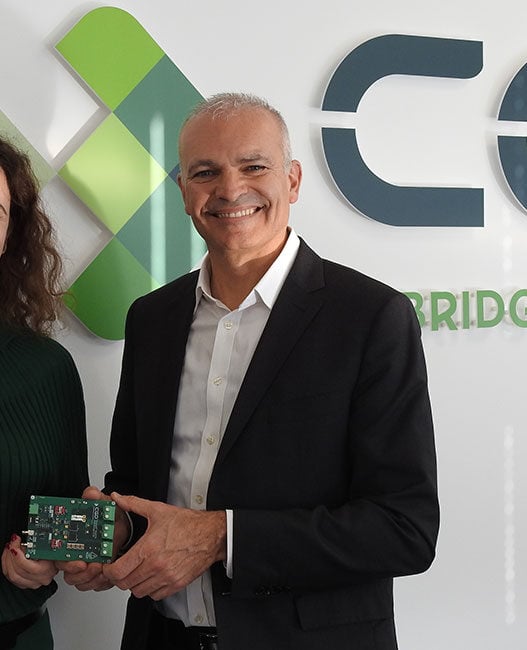
Led by Dr Eleanor Crane, Lecturer (Assistant Professor) in Quantum Computing in the Department of Physics at King’s College London, and co-led by Dr Alexander Schuckert from ENS Paris, the team hope to harness the power of Willow to do good things with quantum in the real world, whether that is material science, energy systems, or medical treatments.
How they won access
The National Quantum Computing Centre (NQCC) and Google Quantum AI launched a competitive call for proposals to accelerate progress toward practical quantum advantage. The King’s team was selected, marking the first time Google has formally partnered with a British government institution to share its premium quantum hardware – a significant moment not just for King’s, but for UK science.
Charina Chou, Chief Operating Officer of Google Quantum AI, praised the King’s College team for presenting a research proposal that stood out in what was a highly competitive selection process.
What the research actually involves
The selected project will study quantum analogues of neurons – essentially, mathematical models that mirror how brain cells behave – and explore how quantum computing could help simulate complex neural dynamics.
But the ambitions don’t stop at the brain. The team plans to use Willow’s capabilities to work toward better solar cells, more efficient energy grids, and potential treatments for currently incurable diseases. At its core, the work is about using quantum hardware to simulate the fundamental processes that underpin nature – things like photosynthesis and molecular bonding – which classical computers struggle to model accurately because of the complexity involved.
Dr Crane described the project as lighting “a torch” for future scientists, hoping to lay out the building blocks required for simulating life’s fundamental processes, enabling new discoveries in materials, chemistry, biology, and other branches of technology.
About the Willow chip
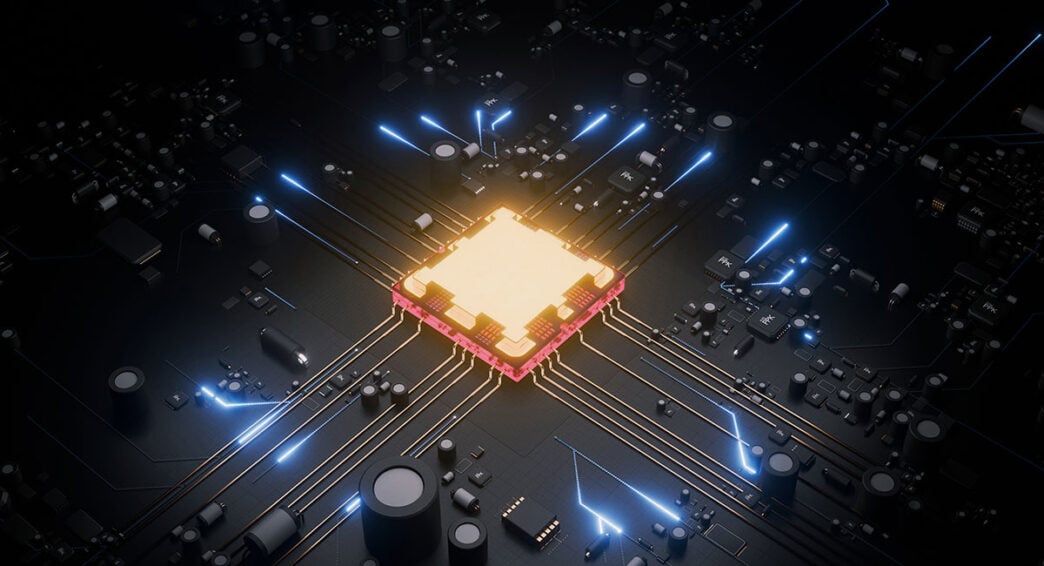
Willow is a superconducting quantum processor built with 105 physical transmon qubits, and it succeeds Google’s earlier Sycamore chip. Willow was the first piece of hardware to demonstrate below-threshold quantum error correction, meaning that as more qubits are added to the system, errors are suppressed rather than compounded – a problem in quantum computing and one that many researchers considered a major barrier to real-world usefulness.
The bigger picture
Dr Michael Cuthbert, Director of the NQCC, noted that the partnership demonstrates the exceptional health of the UK’s quantum ecosystem, which is backed by a £2.5 billion government funding commitment.
The UK is serious about competing to become a quantum superpower on the global stage – and the King’s win suggests that investment is beginning to bear fruit.
For now, however, quantum computers are not about to replace the laptop on your desk. They are built for a specific class of deeply complex problems that traditional machines cannot crack. But that gap between complex industry use and real-world, everyday problem-solving is closing.