






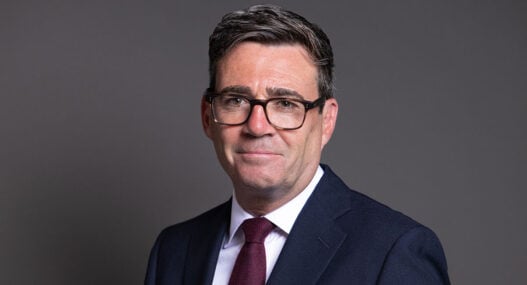
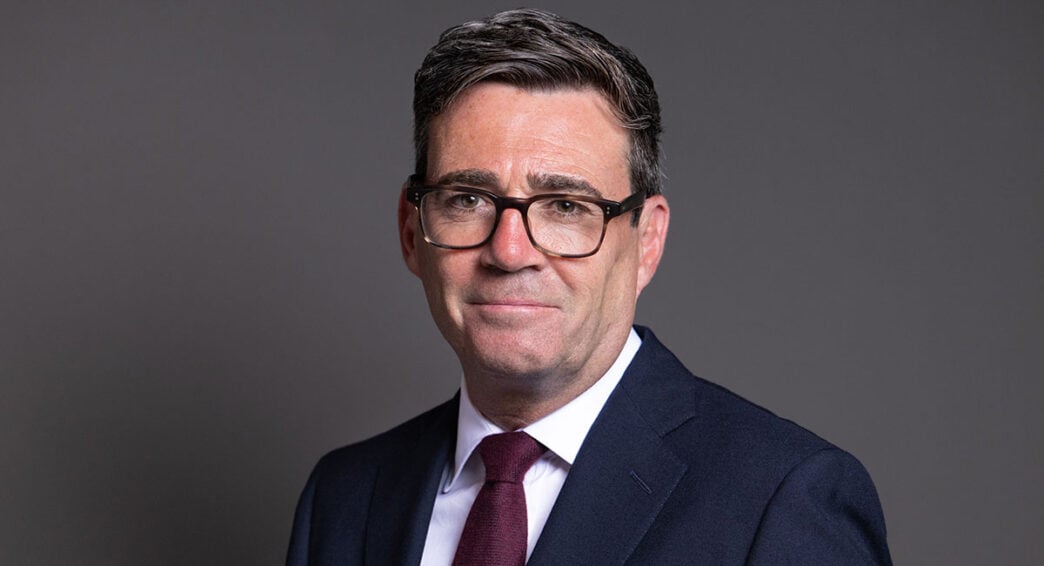
Andy Burnham officially became the UK’s new Prime Minister on 20th July, succeeding Keir Starmer. In his first public speech outside No.10, Burnham promised “a circuit-breaker for Britain” and vowed to build “a new political model.”
As Westminster adjusts to the change, industry voices are already weighing in on what his appointment could mean for businesses, digital regulation, and the wider tech landscape.
A new era of opportunity for SMEs?
Derek Ryan, CEO for North West Europe at Bibby Financial Services, believes Burnham’s focus on local communities and small businesses signals a meaningful shift for SMEs, though he cautions that early positive signals need to be backed by substance.
“Andy Burnham’s positive noises about rebalancing business rates will be welcomed by smaller high street retailers and SMEs,” Ryan said. “But we know from our own research that business rates cripple small businesses across sectors. This policy initiative needs to go further if the new Prime Minister is serious about delivering on his promise to create ‘good growth in every postcode’.”
He also welcomed reports of a proposed reduction in employer National Insurance contributions but flagged that implementation will be decisive. “Last year’s increase in NI contributions halted many SME leaders’ investment and growth plans in their tracks, so the proposal to lower this tax would clearly make a significant positive difference. But the devil will be in the detail – not least the views of any new Chancellor. And who Mr Burnham picks as his new Chancellor, matters hugely because stability, not radical change, is what businesses need to invest with confidence.”
Keith Griffiths, Founder and CEO of The Entrepreneur Festival, argued that Burnham’s leadership marks a defining moment for UK businesses, but that tax policy alone won’t solve the country’s deeper scaleup problem.
“Any serious tax reform must answer one question: does it help businesses start, scale, and invest?” Griffiths said. “Entrepreneurs don’t just need lower taxes – they need certainty, stability, and an environment where ambition is rewarded. The UK has no shortage of entrepreneurial talent, but we still have a scaleup challenge.”
He added that supporting founders to access investment, build skills, and reinvest experience into the next generation is just as important as tax reform itself, alongside cultivating “a culture where entrepreneurship is recognised as a driver of jobs, growth, and opportunity.”
What might digital regulation look like under Burnham?
James Clark, Partner at law firm Spencer West LLP, set out three areas to watch:
AI regulation. Clark suggested Burnham’s administration could depart from the UK’s traditionally light-touch, pro-innovation approach to AI. He pointed to comments Burnham made in a May 2026 CNBC interview, where he said “you can’t just leave it [AI] to the market” and warned that failing to establish “strong public control” over industry, including AI, risked mired the UK in “toxic, divisive politics like the US”
Frank Böhmer, CEO of Ninox, shares the view that AI regulation is shaping up to be the defining tech policy question of Burnham’s appointment – but warns the bigger risk may be overcorrection: “Andy Burnham has talked about taking a tougher line on big tech, but AI is probably going to be the issue that defines tech policy over the next few years and there’s a real risk we end up over-regulating the industry.
“You only have to look at Europe’s AI Act to see how over-regulation can add significant complexity for businesses, where it has also raised genuine concerns about stifling innovation and falling behind regions like the US and Asia.
“There absolutely needs to be protection around privacy, security, and the use of personal data. But the UK also needs to create the conditions for innovation to thrive and give businesses the confidence to invest, experiment, and build while keeping regulation focused on the tangible risks rather than throwing up barriers that just slow everything down.
“AI is likely to be one of the biggest drivers of growth over the next few years and getting that balance right could end up being one of the defining challenges of Burnham’s time as PM.”
Cyber resilience. The Cyber Security and Resilience (Network and Information Systems) Bill, introduced to Parliament in late 2025, has cross-party support and is unlikely to see material changes under Burnham. Clark noted the priority now is ensuring the Bill’s progress doesn’t stall, particularly given the UK already lags the EU’s NIS 2 directive amid rising AI-enabled cyber threats.
Online safety. The under-16s social media ban and related platform restrictions, introduced under the Children’s Wellbeing and Schools Act 2026 in the final days of Starmer’s government, are expected to continue under Burnham. Clark noted that questions remain over timing and the precise scope of restrictions beyond the headline ban.
Backlash over plans to scrap DSIT
The most concerning story of Burnham’s early appointment so far centres on reports that he has asked officials to draw up plans to abolish the Department for Science, Innovation and Technology (DSIT), folding its responsibilities into the Department for Business and Trade and the Department for Culture, Media and Sport. A Labour source told the Financial Times the department “needs to be mainstreamed” and that there was “a sense that DSIT has not been firing on all cylinders.”
The proposal, first reported ahead of Burnham officially taking office, has triggered a swift and largely negative response from across the tech sector. techUK CEO Julian David and Startup Coalition executive director Dom Hallas wrote to the incoming PM warning it would be “the wrong change at the wrong time,” arguing that DSIT’s value lies in bringing researchers, AI practitioners, innovators, and policymakers together under one roof – “a single front door that gives the tech sector clarity, pace, and a government partner that understands technology.”
Matt Clifford, a former AI adviser to both Keir Starmer and Rishi Sunak, was blunter still, calling the plan “a big mistake” and warning that “tying up our most senior science and tech officials in a reorg wastes time and energy that’s desperately needed for the actual substance.”
Tony Kounnis, CEO of Face Int UK & Europe, echoed those concerns, framing the risk specifically around facial recognition technology (FRT) regulation: “The start of Andy Burnham’s premiership is inevitably going to trigger a lot of change. However, while attention will focus on how the new PM tackles major economic and social challenges, there are many other policy areas requiring urgent attention, and technology is one, particularly the rapidly advancing facial recognition technology market. That’s why news that he’s considering abolishing DSIT is surprising; it would mark a notable shake-up for the UK’s tech industry.
“As an industry valued at £1.2 trillion, it’s crucial we don’t take our foot off the gas now. Technology, one of the UK’s priority sectors, is vital to economic growth. Any delays to sector investment and policy development caused by the redistribution of DSIT’s responsibilities could be costly.
“With a change in leadership, it’s important that any departmental changes don’t cause further disruption to much-needed progress where the regulation of facial recognition technology (FRT) is concerned. As FRT becomes more widely used by police and businesses, the public has also been voicing concerns around excessive surveillance and what it means for their privacy. People expect FRT to be deployed responsibly and with strong safeguards in place – that has to be the message for Burnham and policymakers.
“Whether by police or in the private sector, the use of FRT should be accompanied by a clear explanation of why it is being used, what problem it is solving and how people’s data is being protected. Amidst the many things in the PM’s in-tray, implementing a plan to bring forward a responsible and progressive approach to FRT regulation must feature on the to-do list; we have to ensure the public’s concerns are respected as the FRT rollout continues at pace.”
The plans have not yet been signed off, and some in the industry are hopeful Burnham may still reconsider before any formal announcement.
A circuit-breaker moment?
For an industry watching closely for signs of direction, the tension is clear: does a “circuit-breaker” mean a genuine reset in how government partners with technology and engineering businesses, giving the sector the stability and clarity it has been asking for? Or does it risk becoming another interruption in the current, adding to a decade of departmental reshuffles and policy flux that firms have had to plan around rather than rely on?