



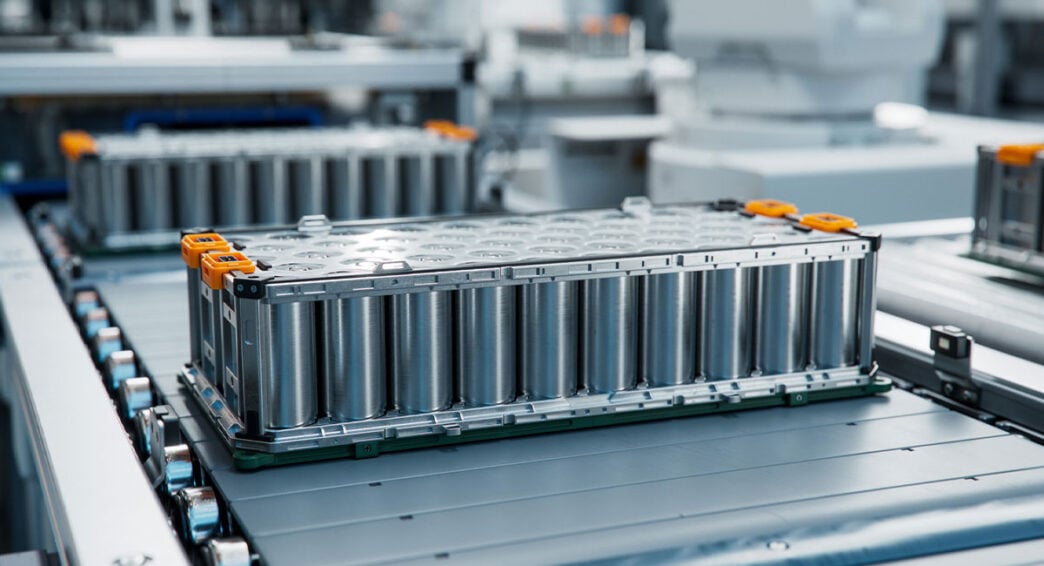
Immersion cooling, while not a new idea in electric vehicle batteries, has not been widely adopted. Why is this the case, and what steps can be taken to resolve existing challenges?
As electric vehicle (EV) adoption accelerates into the mainstream, consumer expectations are rising fast. Drivers want shorter charging times, longer and predictable range, and greater affordability without sacrificing safety, reliability, or performance. Delivering on these demands requires higher pack voltages, ultra-fast charging speeds, and more compact, energy-dense battery assemblies.
But with greater power comes more difficult thermal management challenges. While conventional cooling methods may involve a coolant fluid, this fluid only makes indirect contact with the cells through an intermediate air or cold plate that transfers the heat. As the market advances and seeks to deliver higher performance, innovative technologies are needed to keep pace with demand.
One possible solution is immersion cooling: a technique where the coolant makes direct contact with the battery cell, usually by directly submerging the battery cells in dielectric fluid (non-conducting) to deliver uniform, high-efficiency heat removal.
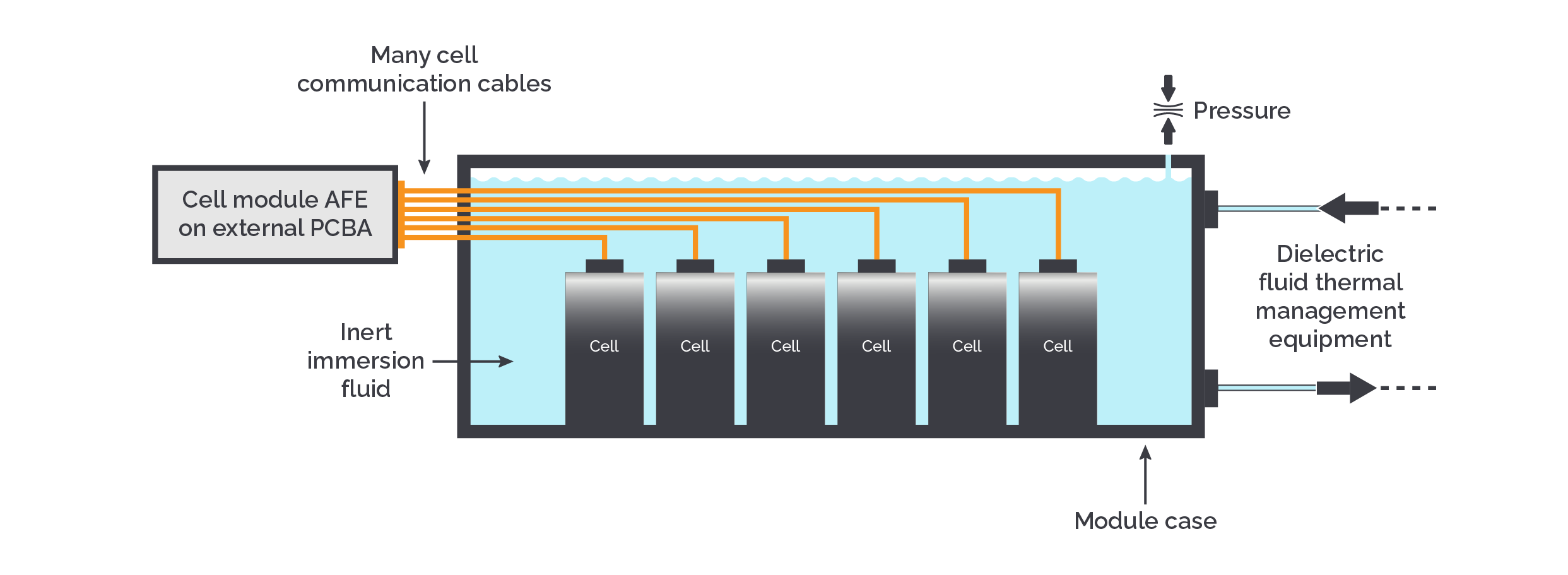
Initial findings suggest significant potential, as evidenced by a Ricardo and TotalEnergies project reporting 40% faster peak charge rates, 48% greater power density, and prolonged battery life due to improved thermal management.
In other applications such as the latest generation of data centres, the industry sees immersion cooling as the ultimate solution for thermal management. These data centres require immense amounts of power, where more than 100kW of heat can be generated by each rack. While crypto miners have already adopted immersion cooling for electronics, it has not yet been scaled to large data centres or batteries. However, the mix of high-power electronics in a dielectric coolant is a clear industry parallel, and the learnings can help accelerate adoption in the wider battery industry.
Nevertheless, widespread adoption has yet to materialise, largely due to a number of system and manufacturing-level challenges. In this article, we’ll take a closer look at these hurdles, and also discuss the possible advantages of immersion cooling, along with technologies that can enable it.
Why hasn’t immersion cooling taken off in EVs?
Despite its clear thermal advantages, immersion cooling has yet to see widespread adoption in EV battery packs primarily due to architectural and system-level barriers.
Most current battery pack designs rely on traditional wired battery management systems (BMS), which connect to individual cells using numerous voltage sense leads, thermistors, and connectors. These components are difficult to package and seal within immersion-cooled environments.
Moreover, while dielectric fluids are electrically non-conductive, prolonged exposure can still compromise seals, corrode certain materials, and place stress on systems — particularly in dense, tightly packed assemblies. Therefore, every component and surface in contact with the fluid needs to be considered. Sealing and protecting a complex network of wires and connectors in such conditions introduces considerable design and manufacturing overhead.
There are commercial challenges too. Dielectric fluids require rigorous qualification to ensure long-term thermal stability, chemical compatibility, and operational safety in automotive applications — adding cost, complexity, and validation burden for OEMs. With limited industry standards to support implementation, most immersion-cooled battery systems remain bespoke and high risk.
Timing has also played a part. In the early stages of EV adoption, when production volumes were low and battery pack designs were still evolving, more ‘unknown’ cooling technologies were not a priority. OEMs rightly focused on more immediate design and manufacturing challenges.
But the context has changed, and as battery architectures mature, consumer expectations continue to rise, and ultra-fast charging infrastructure becomes more widespread, the thermal demands placed on battery systems are intensifying. Immersion cooling is no longer a theoretical innovation; it is becoming a timely solution for the next generation of EV batteries.
Is now the right time for immersion cooling?
Several converging developments are shifting the market landscape in favour of immersion-cooled battery systems, transforming what was once a speculative solution into a commercially credible path forward.
Manufacturers are now looking to optimise designs
After years of optimising battery performance and scaling production, OEMs are increasingly focused on refining system-level efficiency. Pressure is mounting to enhance energy density, shorten charge times, and reduce cost per kilowatt-hour — all while maintaining safety, reliability, and manufacturability.
Immersion cooling offers a promising route to meet these demands in two areas, firstly through more efficient heat transfer, enabling faster pre-conditioning, charging, and higher performance batteries, and secondly, better integration as immersion cooling removes the need for separate cold plates, cooling vanes, heat pipes etc. These structures are single purpose — for example thermal, structural, containment, electrical isolation, safety etc. In EV battery packs, materials are often required to perform several functions if they are to justify their weight and volume. Placing the coolant in direct contact with the cell enclosures removes the need for additional thermal and isolation materials, bringing the pack energy density (kWh/kg, kWh/l) close to that of the constituent cells.
Confidence in immersion cooling is being re-evaluated
Early in the EV era, the idea of submerging high-voltage battery packs in liquid — even non-conductive coolant — was widely seen as an unnecessary risk. Concerns about fluid ingress, seal failure, and unknown failure modes made the approach difficult to justify when so many other factors relating to EV battery design needed to be defined.
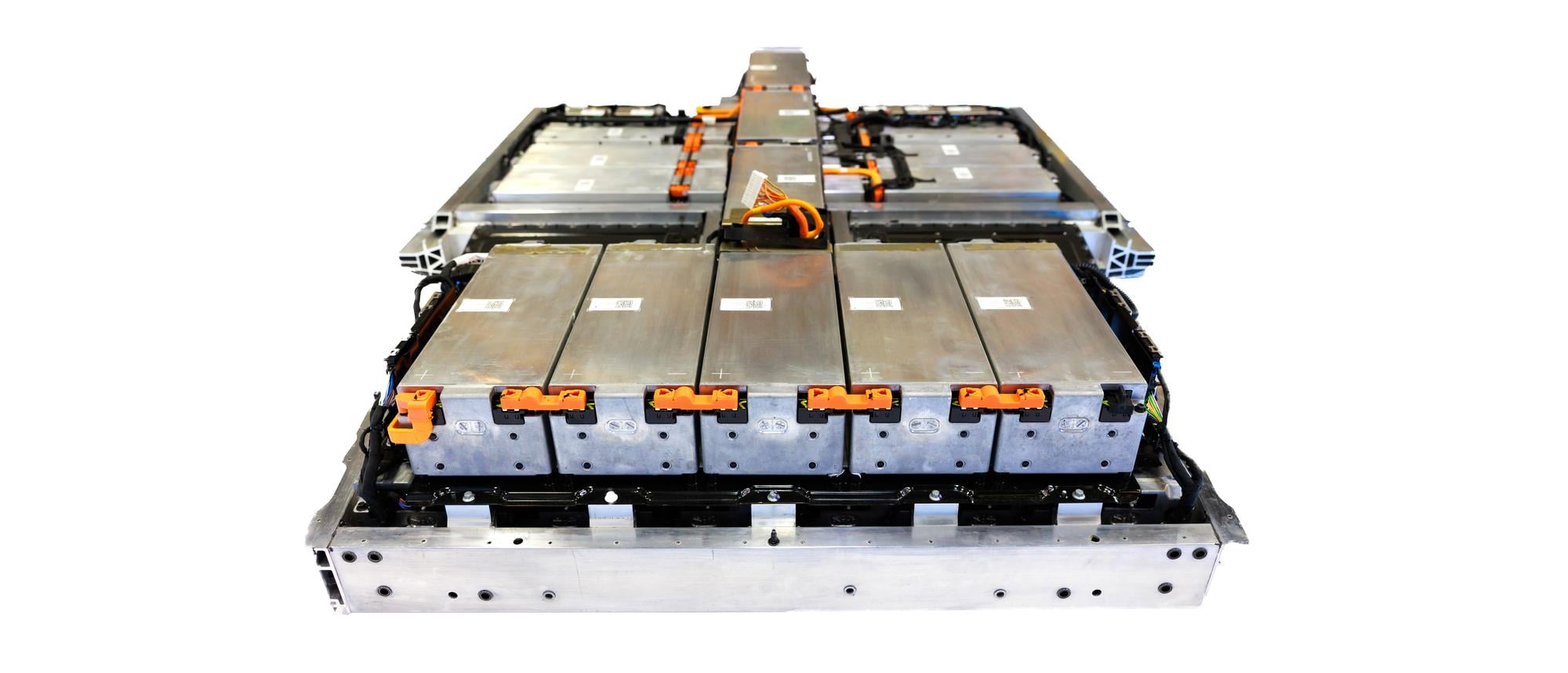
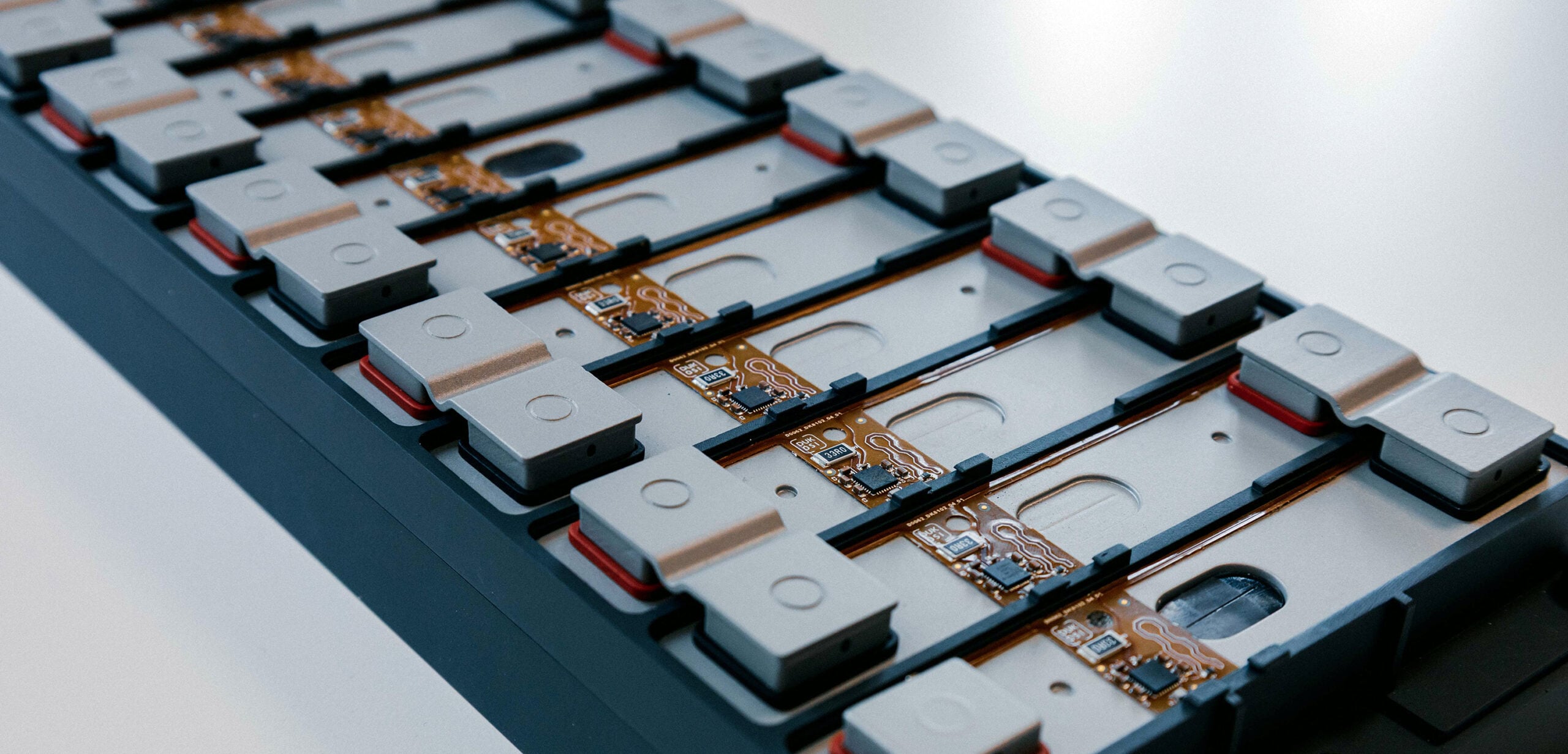
However, as battery chemistries have stabilised and system-level design practices matured, these fears are no longer as absolute. Engineers now have better tools, materials, and modelling techniques to assess and control the risks. Immersion cooling is still demanding to implement, largely due to the wiring complexity associated with high-voltage batteries, but it’s increasingly viewed as a legitimate option, rather than a radical concept.
Technical evidence continues to strengthen the case
Across research and industry trials, immersion cooling has demonstrated clear advantages over traditional thermal management methods. Some dielectric fluids in lab conditions have delivered heat transfer rates up to 10,000 times greater than air. This dramatically improves temperature uniformity across cells, reducing hotspots and enabling tighter thermal control.
Early field demonstrations have largely mirrored lab tests, indicating that immersion cooling can enable faster charging, higher peak power, and reduced degradation — strong indicators of commercial potential.
New supporting technologies are arriving
The traditional challenges of immersion, from sealing densely wired harnesses to managing thermal sensors and connectors, are now being addressed by next-generation battery architectures. Thanks to new solutions entering the market, engineers can now move away from complex wired systems, significantly reducing the number of wires, connectors, and components, enabling easier construction of sealed, compact battery packs suitable for use with dielectric fluid.
The role of Dukosi’s DKCMS in enabling immersion-cooled batteries
The reality is that, while immersion cooling is extremely promising, it creates a number of specific battery pack design challenges that must be resolved for it to become a widespread solution. One company whose technology can address these challenges is Dukosi, whose Dukosi Cell Monitoring System (DKCMS) is already enabling a new generation of high-performance batteries with a novel architecture that can simplify designs using immersion cooling.
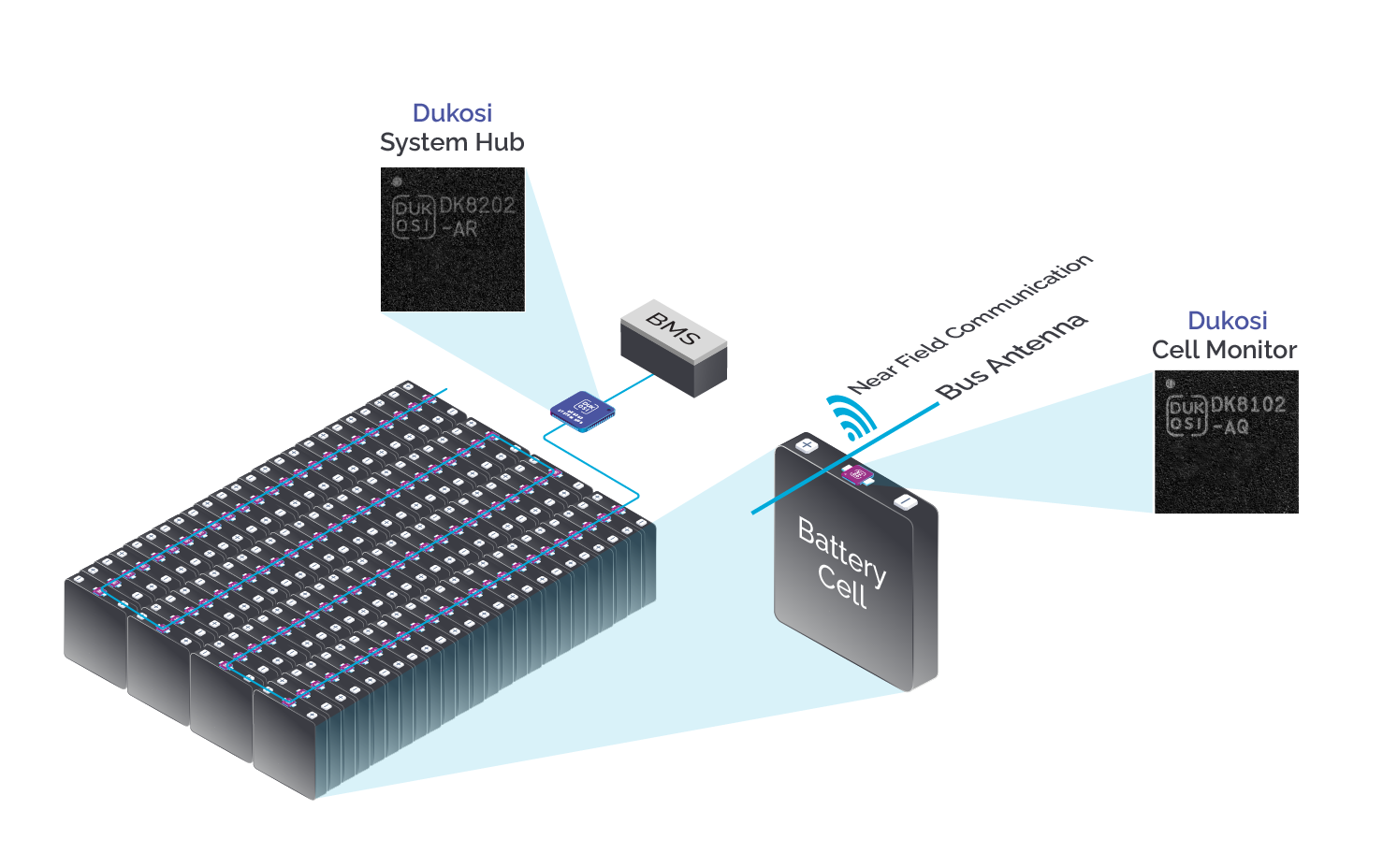
Rather than relying on traditional wired connections between each cell and the BMS, DKCMS replaces this with its novel contactless communication. It uses a DK8102 Cell Monitor installed on each cell to measure voltage, temperature (up to three measurement points supported), and then networks up to 216 of them via a single bus antenna wire to the DK8202 System Hub, which relays the combined cell data to the vehicle’s BMS.
This unique solution simplifies integration while maintaining high-fidelity, accurate monitoring from every cell. Contactless communication is facilitated using C-SynQ, Dukosi’s proprietary protocol that’s expressly designed for high-performance battery packs, with the contactless design enabling full galvanic isolation, eliminating the need for long voltage sense wires, thermistor harnesses, or even module control boards inside the battery pack.
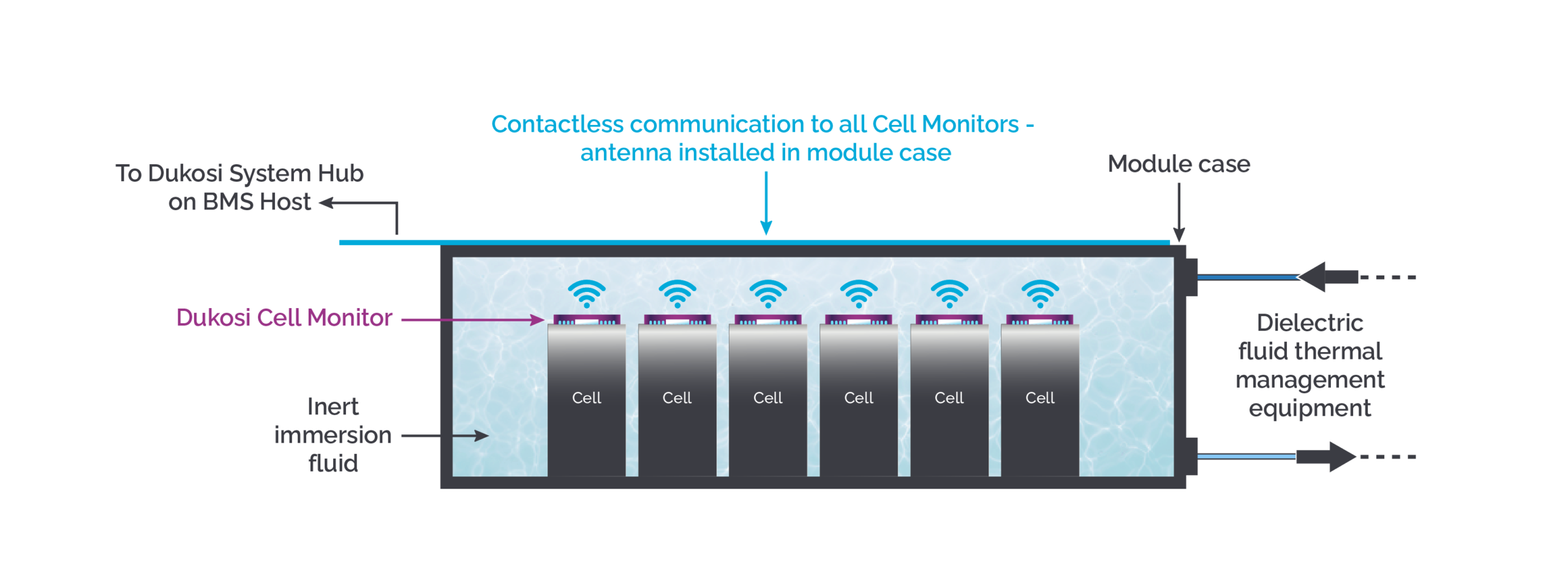
This shift from wired to contactless means the Bill of Materials (BOM) component count can be reduced by up to 10× compared to conventional wired battery architectures.
For immersion-cooled batteries, DKCMS helps to streamline the internal layout – it can even remove the need for cell modules and support newer cell-to-pack or cell-to-chassis architectures, improving dielectric coolant flow and reducing potential failure points — essential factors for designing safe, reliable, and manufacturable immersion-cooled battery packs.
DKCMS supports ‘no wires’ battery designs: a class of immersion-cooled batteries
The contactless approach solves many of the integration pain points that have historically made immersion designs difficult to execute. DKCMS’ operation in dielectric fluids has been validated through in-house testing, confirming its compatibility with immersion environments with no change in communication performance.
Dukosi customers are independently developing DKCMS-based battery designs with immersion cooling techniques. These activities indicate commercial viability and provide a clear pathway for industry adoption, where it can enable enhanced pack safety, improved thermal management, and simplified manufacturing processes to be realised.
Wider system and sustainability benefits
DKCMS enables far more than just simplified integration. Its ability to collect highly accurate, synchronised voltage and temperature data at the cell level, rather than at the module level as is typical in wired systems, provides deeper, more actionable insights into individual cell behaviours.
This granularity supports improved State of Health (SoH) estimations, earlier fault detection, and more accurate cell balancing, allowing engineers to safely extract more usable energy from each cell — all critical for next-generation EVs where efficiency and reliability are paramount.
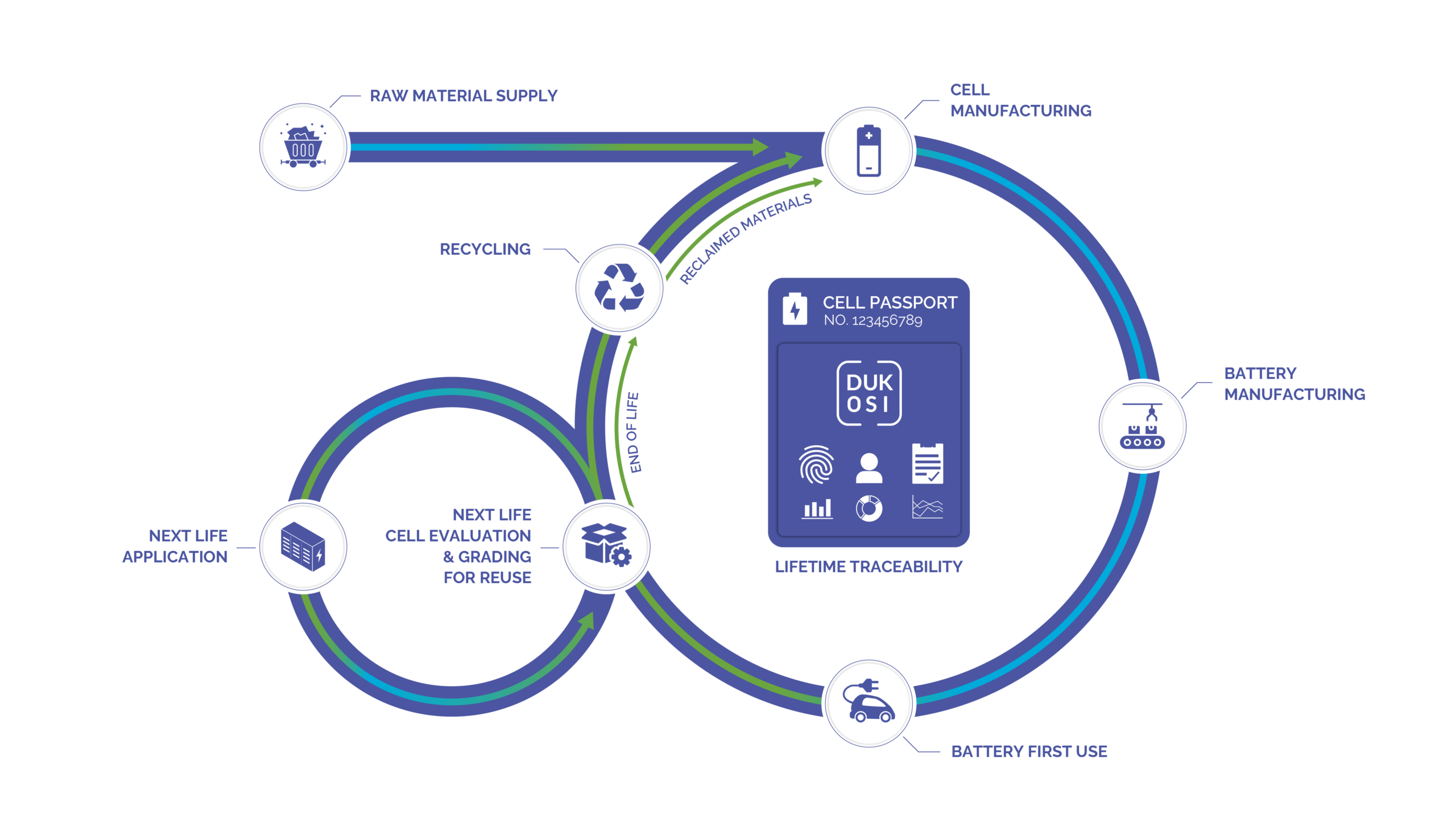
These cell-level insights also play a growing role in supporting emerging sustainability regulations and initiatives. By storing data at the cell level, DKCMS supports the requirements of the EU Battery Passport, and similar global traceability regulations.
Unique designs like immersion cooling systems, however, make reuse of whole batteries more difficult, as next-life applications must embrace the battery and its cooling system wholesale. DKCMS enables more effective second-life deployment because it allows the cells inside the battery to be extracted, accurately graded, and reused in a new battery if necessary, allowing for more flexibility while keeping the essential data traceability on-cell.
This allows cells to be reused in less demanding applications such as battery energy storage systems (BESS) and improves the feasibility of eventual material recovery when recycling. In doing so, DKCMS helps to lay the foundation for a more effective circular battery economy.
Conclusion
As EVs evolve, so must the battery systems that power them. Meeting rising expectations around performance, safety, and sustainability will require engineers to rethink not just how batteries operate, but how they’re built and managed throughout their lives — down to the cell level.
While DKCMS’s inherent system benefits are significant on their own, its contactless, flexible architecture also opens the door to new design paradigms. Novel technologies such as immersion cooling — previously considered unviable due to wired system complexity — become far more feasible, allowing engineers to deliver safer, more reliable, and more effective battery packs for the demands of tomorrow.
This article originally appeared in the April’26 magazine issue of Electronic Specifier Design – see ES’s Magazine Archives for more featured publications.