





Anna Wood, Editor at Electronic Specifier, picks her top 5 AI products released in June 2026.
Microchip launches 3.3kV HV‑D3 mSiC power modules
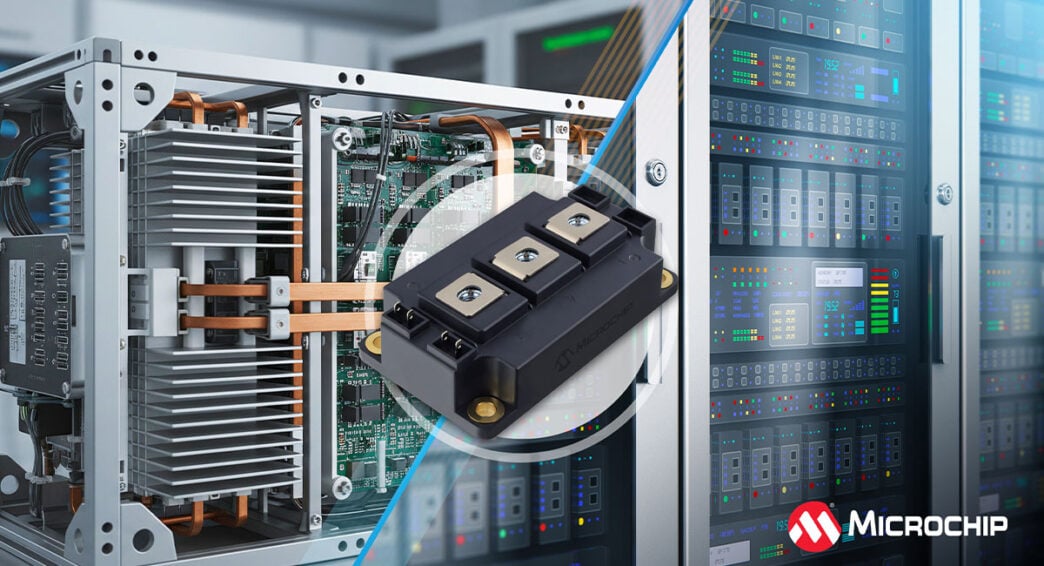
Microchip Technology announces the availability of its new 3.3kV HV‑D3 mSiC Power Modules, designed to simplify and accelerate the adoption of solid-state transformers (SSTs) in AI hyperscale data centres and other high‑voltage power applications. The new modules integrate 3.3kV silicon carbide (SiC) mSiC MOSFETs and Schottky diodes in an industry‑standard 62mm package, enabling efficient power delivery from the medium‑voltage grid directly to the server rack.
As AI data centres continue to scale, token generation is limited by power availability, while efficiency is a defining factor for return on investment. Traditional architectures based on bulky, low‑frequency transformers add complexity, increase losses and limit flexibility. Solid-state transformers represent a foundational shift in power delivery, reducing conversion stages and enabling higher system efficiency. The industry’s shift toward higher-voltage DC rack distribution in next-generation AI facilities further amplify the value of SSTs, which are intended to deliver regulated DC directly from the medium-voltage grid with fewer conversion stages.
Advantech delivers lightweight Edge AI inference with Intel Core series 3 processors

Advantech announced the integration of Intel Core Series 3 processors into its next-generation portfolio of industrial-grade embedded boards and Edge AI systems. This collaboration strengthens the long-standing partnership between Advantech and Intel, enabling efficient and balanced boards and edge systems designed for lightweight Edge AI inference applications.
Built on Intel 18A process technology, Intel Core Series 3 introduces a hybrid CPU design with up to 6 cores (2 Performance-cores and 4 Efficient-cores), delivering up to 1.2x higher single-thread performance compared to previous-generation processors. With a new Xe3 graphics engine and integrated Intel NPU 5.0, the architecture enables distributed AI acceleration across CPU, GPU, and NPU, achieving up to 40 TOPS of total AI performance.
Kontron launches VX33211 3U VPX GPU board for AI
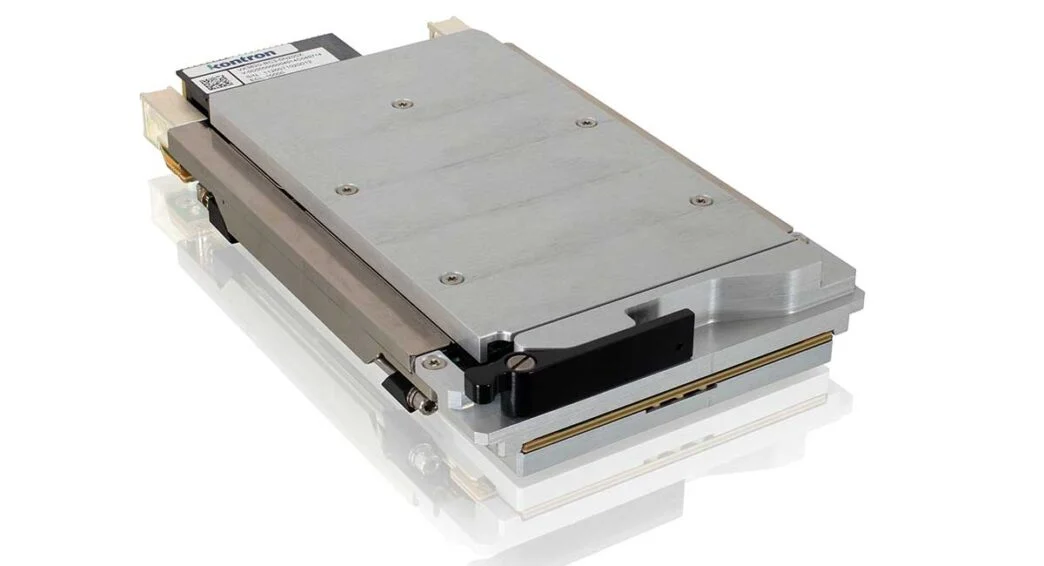
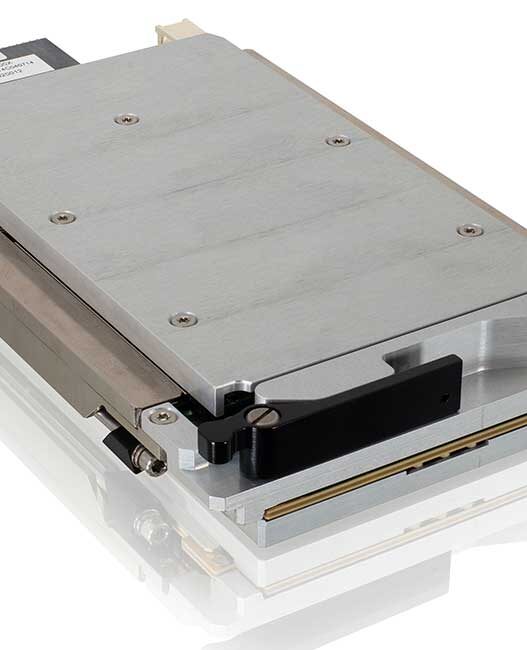
Kontron announces the VX33211, a high-performance 3U VPX GPU board designed to deliver advanced graphics, AI inference, sensor processing, and GPGPU acceleration in rugged embedded environments.
Powered by the NVIDIA RTX PRO 2000 Blackwell Embedded GPU, the VX33211 brings high-performance GPU acceleration into a compact 3U VPX form factor. This enables system designers to run compute-intensive workloads such as artificial intelligence, real-time image processing, and parallel computing directly at the Edge within mission-critical defence and aerospace platforms.
Delivering up to 13.78 TFLOPS FP32 performance, the VX33211 features 3,328 CUDA cores, 104 Tensor Cores for AI inference and deep learning, and 26 RT Cores for real-time ray tracing. With 8 GB of GDDR7 memory and up to 384 GB/s bandwidth, the VX33211 supports high-throughput data processing for demanding applications.
Danish startup cuts AI data centre power losses by 50%
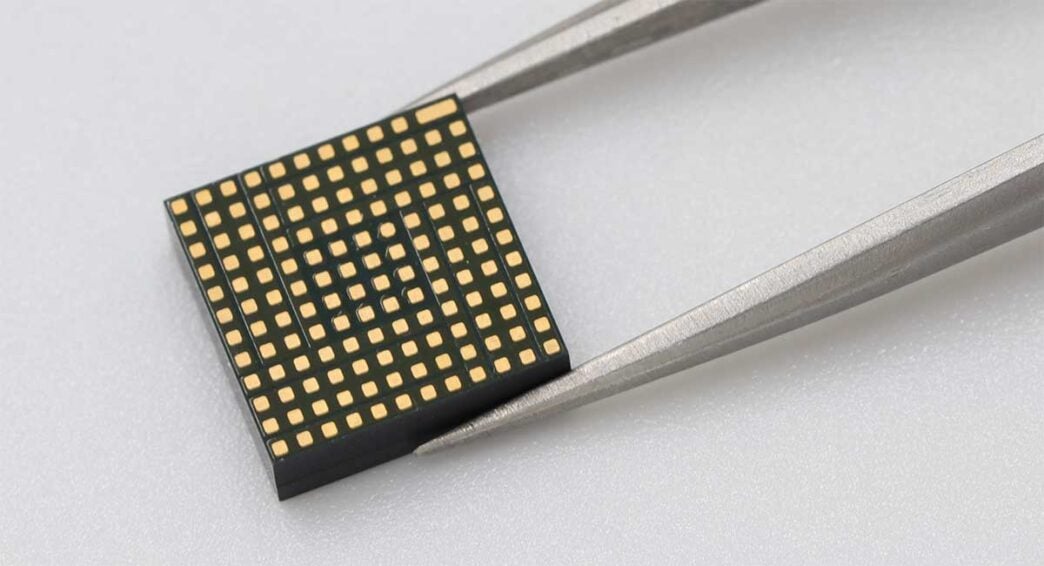
At PCIM 2026, Lotus Microsystems, a developer of advanced vertical power delivery and thermal management solutions, will introduce the first low-profile platform designed to solve electrical, thermal, and mechanical constraints as a single, co-engineered system.
vStrata is a unified power delivery and thermal management platform designed to significantly reduce both power conversion losses and heat generation in AI data centres.
The industry is shifting toward Vertical Power Delivery (VPD) to solve last-inch distribution losses, but existing solutions treat power and thermal challenges as separate problems. vStrata solutions address both simultaneously using proprietary silicon Power Interposer Technology (PIT), bringing power directly beneath the processor while managing thermal load at the same point.
Latency and signal integrity challenges in AI data centres

As AI workloads continue to scale, data centre architects are increasingly constrained by limited signal reach and rising latency, which can leave valuable memory resources underutilised across large GPU clusters. These challenges are amplified as interconnect speeds increase. At 64GT/s (giga transfers per second), signal integrity limitations can restrict system scale and burden server architectures. In response, Microchip Technology has released XpressConnect PCIe 6.0 and CXL 3.1 retimers to enable memory expansion and resource disaggregation in large-scale AI fabrics.
The retimers are designed to extend signal reach beyond conventional PCIe Gen 5 and Gen 6 electrical limits, enabling more flexible system designs across complex baseboards, riser cards and cabled interconnects. The retimers are engineered to help address these challenges by enabling higher bandwidth connectivity while supporting the stringent thermal and power budgets required in modern AI fabrics. XpressConnect retimers achieve a pin to pin latency of less than 12ns, approximately 80% lower than PCIe 6.0 specifications. This low latency performance helps improve utilisation of AI accelerators and GPUs by reducing data stalls in high density AI clusters.
For more AI product news, and the latest on the electronics industry, check out the other articles on the website.