

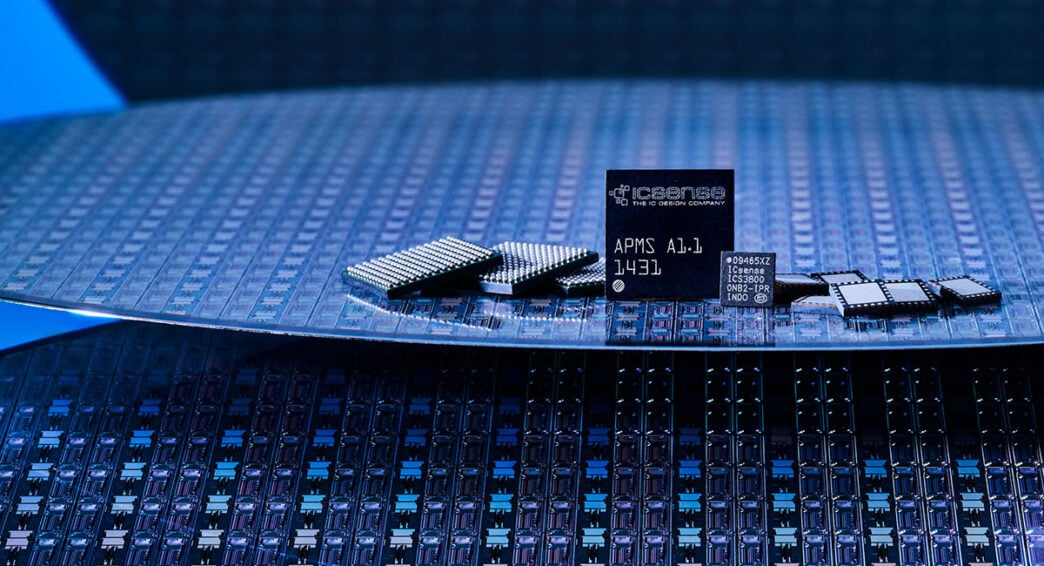
Leuven-based ASIC design & supply firm, ICsense has reported 30% revenue growth, thanks to growing demand for custom ICs as supply chain consolidation reduces options for lower-volume production.
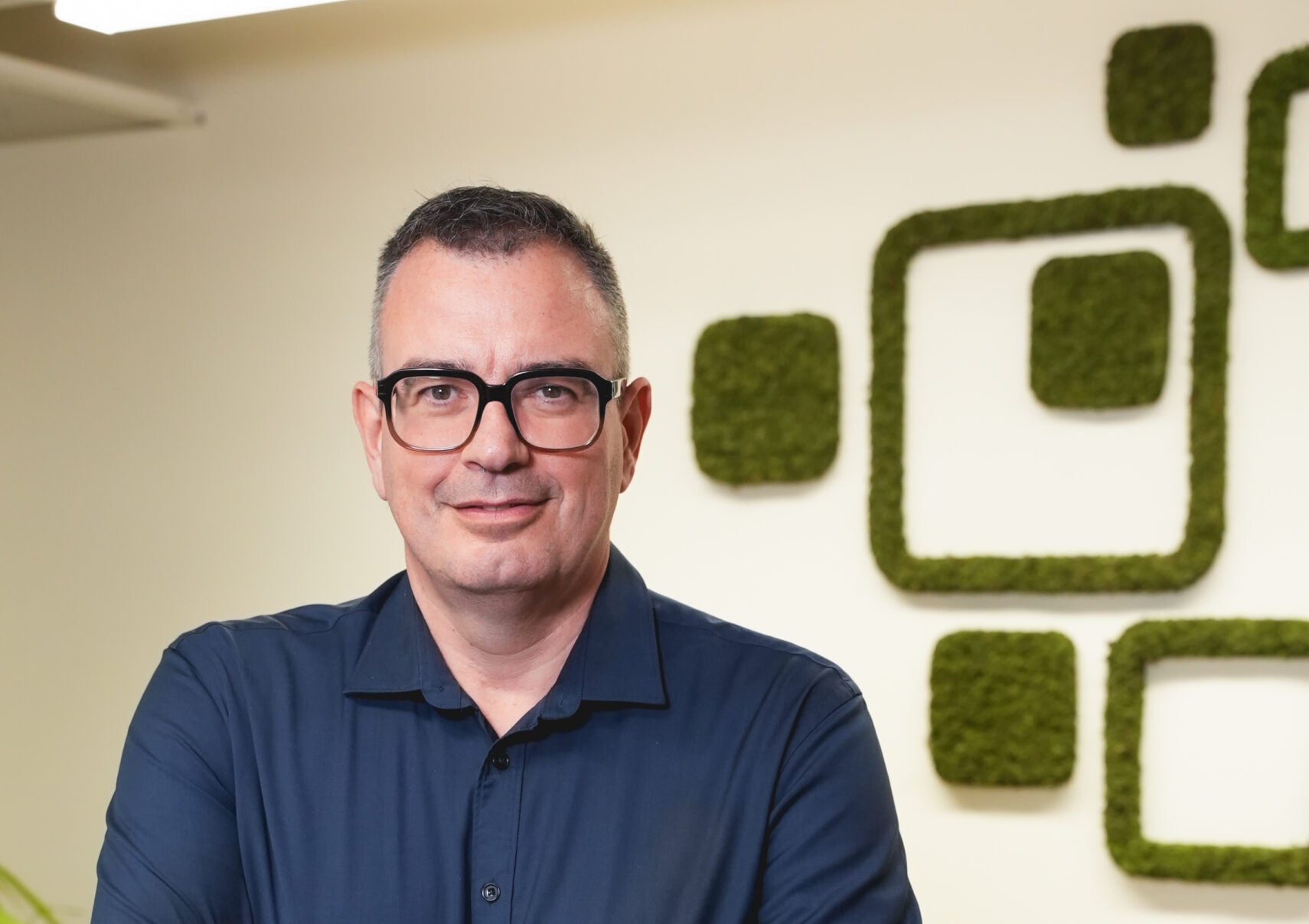
Talking to Electronic Specifier at Microelectronics UK at London Excel in September 2026, ICsense co-founder & Chief Business Development Officer (CBDO), Wim Claes said that the company had just reported its strongest ever financial year performance, with year-over-year revenue increasing by 30% and profit over 50%. As well as strong business from the US – with more than half of revenue coming from that market – the UK, with its renowned design and R&D capabilities, is an important market, Claes told Specifier.
Semiconductor supply chain gaps are widening
Claes attributed this growth to the company’s success in addressing a widening gap in the semiconductor supply chain as foundry consolidation and changing process technologies make specialised analogue, mixed-signal, and ASIC production harder for customers to navigate, particularly as larger foundries increasingly focus on volume supply.
In the face of accelerating hyperscaler data centre and AI-infrastructure build-out, Claes told Specifier that he expects this trend to continue as part of a mid-to-long-term structural shift.
The semiconductor industry is increasingly split between companies chasing this high-volume production and a growing number of specialised applications that need something different: highly customised chips, often at lower volumes, with the ability to move from design into reliable production. To meet this need, ICsense has evolved from being primarily an engineering design house into an independent fabless company able to take specialised ICs all the way from design to supply, serving quality-focused customers across sectors that have become disillusioned by larger foundries consolidating and prioritising newer nodes.
Claes said: “We have delivered the strongest results in our 22-year history. This achievement is testament to our amazing team, which has also expanded by 10%, to more than 125, alongside the company’s revenue and EBITDA growth. We continue to build long-term relationships with customers as their needs evolve in response to the wider changes taking place across the semiconductor industry. As the market continues to consolidate, larger semiconductor companies and foundries are increasingly focused on high volume projects and advanced process nodes. This can leave customers developing specialised, lower-volume ASICs with fewer options for a partner able to support them from design through to production.”
Fab independence
ICsense’s fab independence is central to this model; keeping the development closely connected by working with multiple foundries allows it to respond nimbly should any of them change or discontinue manufacturing processes. The company’s independence from any single foundry is becoming increasingly important as global semiconductor supply chains face unprecedented challenges.
“The expansion of our business and its profitability is driven by increased chip supply, as well as significant investment in production, test equipment, and cleanroom capabilities. We expect to continue investing in advanced manufacturing and testing infrastructure over the next five years as we scale our design and supply capabilities,” concludes Claes.
Medical applications demand is critical
The growth is supported by demand across target markets such as medical ASICs, including BCI (brain-computer interfaces), neuromodulation systems, neural recording devices, and implantable neurotechnology, where specialised electronics are vital.
Medical is the company’s fastest-growing sector, now representing close to 60% of business, with its demands for miniaturisation and high-voltage, low-power chips – as well as closed-loop intelligent systems that combine sensing and stimulation on the same ASIC. Claes talked about applications including vagus nerve stimulation (VNS), which sends electrical impulses to treat specific conditions – likened to a ‘pacemaker for the brain’ – and hypoglossal nerve stimulation to treat obstructive sleep apnea, as well as retinal protheses (or ‘bionic eyes’), implantable electronic systems designed to partially restore sight by converting visual scenes into electrical signals capable of stimulating surviving retinal neurons.
ICsense’s ISO13485 certification helps position it as a go-to partner for medical electronics with significant experience in this area, with US companies increasingly looking to European specialists for niche analogue and mixed-signal capabilities that can be difficult to find domestically.