





Texas Instruments’ latest collection of resources continues to push the boundaries of embedded system design. From a new family of 5V microcontrollers purpose-built for industrial and consumer applications, to ultra-low-power MCUs optimised for cost-sensitive designs, TI is expanding its MSPM0 ecosystem to address a wider range of real-world engineering challenges – without forcing designers to sacrifice performance, security, or power efficiency in the process.
These resources, the first in a four-part series, highlight the system-level thinking that underpins modern product development. Topics span motor drive and functional safety for the next generation of humanoid and mobile robots, hard real-time Linux integration on the AM64 platform, power consumption benchmarking for AM62x processors, and cybersecurity compliance for embedded Linux under the EU’s Cyber Resilience Act. Alongside these technical deep-dives are practical tools for designers, including evaluation modules, system-on-module solutions, and real-world case studies.
Explore the full articles linked below for in-depth guidance from TI’s engineers and ecosystem partners.
What’s new in 5V MCUs?
Despite the move to lower supply voltages in general-purpose system designs, 5V circuitry continues to be a popular design approach due to the physics of signal-to-noise and the ubiquity of 5V sensors. However, selecting a 5V MCU doesn’t mean that you need to compromise on modern MCU benefits like performance, low-power consumption, or security. With the MSPM0H321x is a family of MCUs, designers can meet the design challenges of 5V systems while enhancing system security, power efficiency, and performance.
So, what’s new with the MSPM0H321x family of 5V MCUs?
MSPM0H3216
32MHz Arm Cortex-M0+ MCU with 5V supply, 64KB flash, 8KB SRAM and 12-bit ADC.
MSPM0H321x microcontrollers (MCUs) are part of the MSP highly-integrated 5V power supply and 32-bit MCU family based on the enhanced Arm Cortex-M0+ core platform operating at up to 32MHz frequency. These cost-optimized MCUs offer high-performance analog peripheral integration, support extended temperature ranges from -40°C to 125°C, and operate with supply voltages from 4.5V.
Case study: Johnson Controls & TI
Advancing security in buildings.
Imagine a world where buildings have greater access to reliable security and safety, enabling you to remotely control your door lock for a visitor or receive an alert if the front door of your business opens while you’re away. To make this possible, connectivity is essential to detect intrusion or prevent unexpected incidents.
Recognizing the role that wireless connectivity has in everyday life, Johnson Controls developed the PowerG protocol, a Sub-1 GHz two-way wireless protocol that enables low-power, long-range communication in products that increase security in buildings and enable cost savings for end users.
AM62x Power Consumption
This application note discusses the power consumption for common benchmarks and system application usage scenarios for the AM62x Sitara processors. The metrics contained in this document serve to provide users with a better understanding of AM62x active power and low power metrics: making it easier to determine a suitable configuration to meet a given power budget.
An engineer’s guide to humanoids & mobile robots
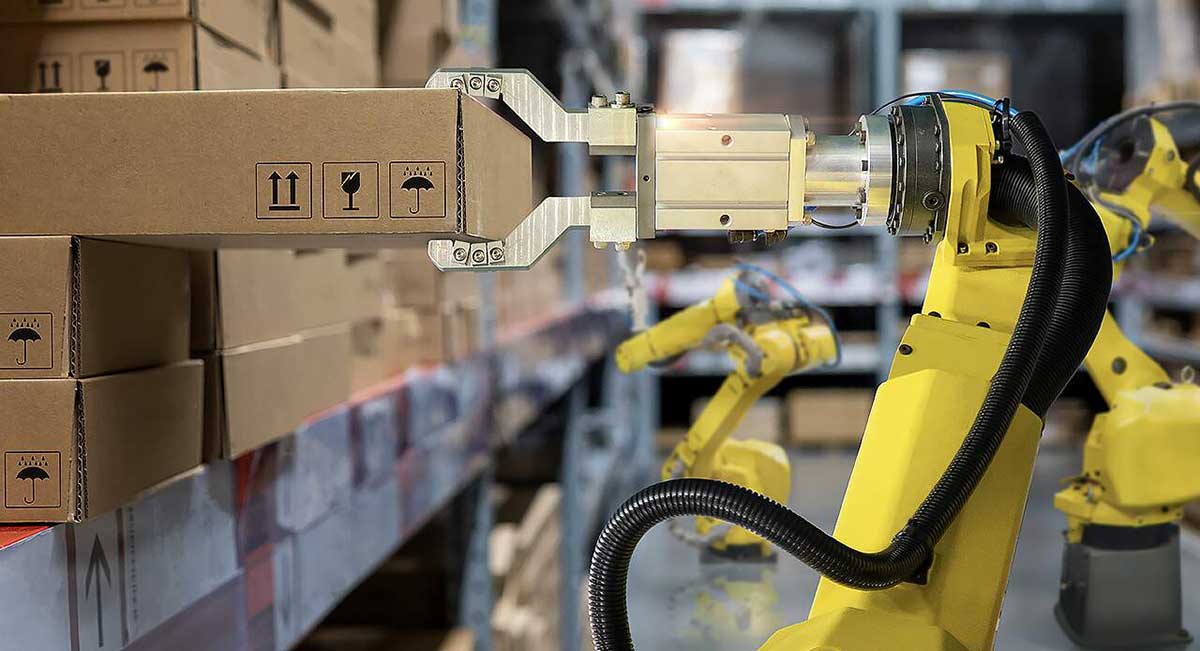
From autonomous mobile robots in warehouses to humanoid robots in factories and service settings, these machines are transforming the way we work and live. As designs grow more complex, TI is helping engineers bring next-generation robots to life faster—with advanced semiconductors and system-level expertise. Explore key design insights grouped by subsystem to jump-start your development.
Power Stage Implementations for Humanoid Robots
While similar to other robots currently in factory and service roles, humanoid robots are designed to mimic human movement with a high number of degrees of freedom (DOF) and fast response time (in milliseconds) to the surrounding environment. This creates a challenge for robotic system engineers as they solve key power-related design challenges in the many motors throughout these robots.
Functional Safety Support for Arm-based Microcontrollers and Processors
This white paper introduces functional safety concepts such as the hazard analysis and risk assessment, random and systematic faults, safety element out of context and IEC 61508 SIL and ISO 26262 ASIL ratings. Examples are provided of how the AM243x MCU and AM64x processor series assist system integrators in achieving functional safety goals through the use of an on-chip safety MCU and safety diagnostics.
Streamlining CRA Compliance: End-to-End Vulnerability Management for Embedded Linux with Torizon
As the Cyber Resilience Act (CRA) reshapes cybersecurity expectations across the EU, device makers face new obligations to monitor, triage, and address software vulnerabilities throughout the lifecycle of their products. For many embedded teams, meeting these requirements – without dedicated security experts – can be a major challenge. In this on-demand webinar, Texas Instruments (TI) and Torizon, will show how their combined solution simplifies CRA readiness by enabling continuous CVE monitoring, automated analysis, and secure patch delivery for embedded Linux devices.
MSPM0C1104
24MHz Arm Cortex-M0+ MCU with 16KB flash, 1KB SRAM, 12-bit ADC.
MSPM0C110x microcontrollers (MCUs) are part of the MSP highly-integrated ultra-low-power 32-bit MCU family based on the enhanced Arm Cortex-M0+ core platform operating at up to 24MHz frequency. These cost-optimized MCUs offer high-performance analog peripheral integration, support extended temperature ranges from -40°C to 125°C, and operate with supply voltages from 1.62V to 3.6V.
TQ System on modules (SOMs) for TI Processors
Thomas Mauer from TI’s industrial marketing team visits with TQ-Group to discuss their system on modules (SOMs) and how they simplify designs for TI processors.
The TQMa67xx is an advanced system on module (SOM) based on the TI AM67 family of processors. This SOM can be used to reduce development time for image processing applications.
TMDSCNCD2800137
TMS320F2800137 evaluation module controlCARD.
TMDSCNCD2800137 is a low-cost evaluation and development board for TI C2000™ MCU series of TMS320F280013x devices. It comes with a HSEC180 (180-pin high-speed) edge connector and, as a controlCARD, is ideal for initial evaluation and prototyping. For evaluation of TMDSCNCD2800137, a 180-pin docking station TMDSHSECDOCK is required and can be purchased separately.
Hard Real-Time Meets Linux on the TI AM64 Platform | PHYTEC x IBV x TI
Starting with PHYTEC’s AM64 System-on-Module (SoM), the session demonstrates how IBV’s industrial protocol integration — including EtherCAT, PROFIBUS, and EtherNet/IP — enables deterministic, real-time communication in industrial and automation environments.
Whether you are evaluating a new microcontroller for a power tool, designing safety-critical industrial automation, or navigating the evolving landscape of embedded cybersecurity regulation, this collection offers both the technical detail and the broader context needed to move your design forward. There is something in TI’s resources for everyone.