





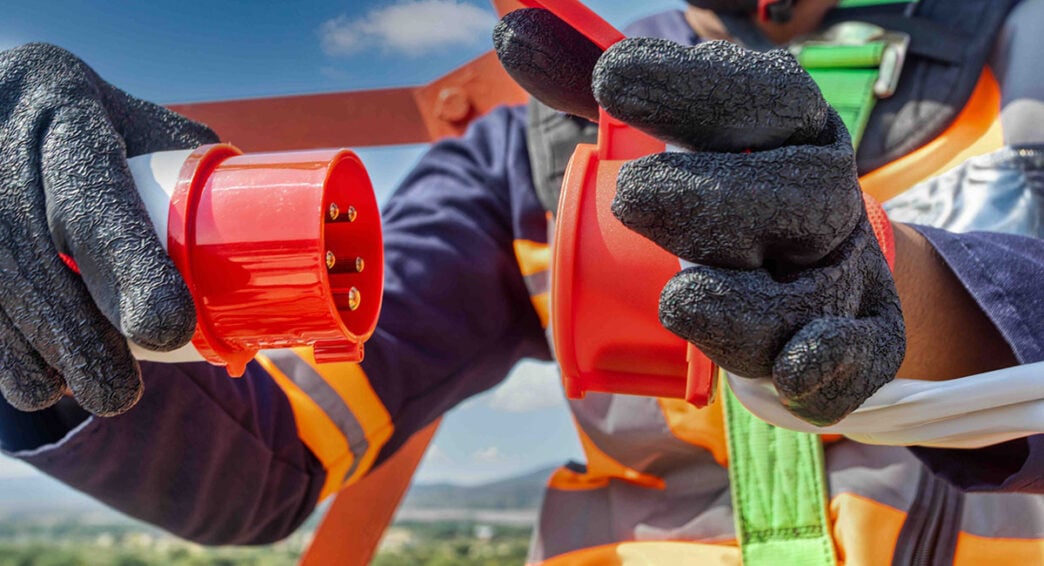
Every year, countless industrial incidents trace back to something deceptively simple: a connector plugged in the wrong way, a latch left unengaged, or a housing that allowed moisture to creep in. These lapses lie at the core of multiple severe accidents involving arc flashes, electric shocks, or equipment fires. For engineers, the connector is the interface where design, material science, human ergonomics, and safety converge in real time. Here, Brad Cunningham, Director of Industrial Products at PEI-Genesis explores how connector design features can reduce human error and improve safety in industrial power systems.
Industrial power systems are growing more complex and decentralised, with connectors mated and unmated thousands of times a year during installation, maintenance, and reconfiguration. Each interaction between a worker and a live or potentially live interface introduces an opportunity for error and in high-energy environments, even a minor lapse can have severe consequences. Recognising how humans actually handle connectors is therefore fundamental to designing safer industrial workplaces.
Secure locking mechanisms
When connectors are used in industrial power distribution, such as switchgear, heavy motors, or busbars, secure mechanical engagement is essential. Without precise locks that ensure full insertion – often with audible or tactile cues – connectors may be only partially mated.
In partial mating, contact resistance increases, contacts heat, insulation degrades, and an arc-flash event becomes much more likely. In many accidents, investigations show that the connector appeared seated but internally missed the full mechanical interlock; then under load or vibration the connection loosened or shifted, leading to failure.
To avoid these issues, industrial connectors now employ dual-stage locking, secondary safety latches, or interlocks that prevent power delivery until full engagement is verified. For example in mining equipment or overhead crane systems, the interlock can be mechanical or electromechanical, where a switch that monitors lock engagement must close before the power circuit can be energised.
Engineers designing such systems must specify not only the locking force and durability – number of cycles before fatigue – but also the feedback mechanisms, such as clicks, visual indicators, and locking pins that allow maintenance crews to know reliably whether the connector is safely locked.
Ergonomic and visual differentiation
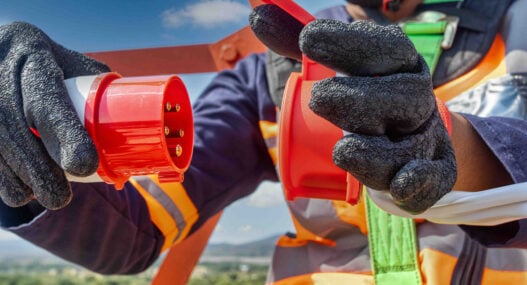
The most hazardous moments in industrial environments come under duress: limited lighting, adverse weather, heavy gloves, limited visibility of components, tight schedules, or elevated vibration. A connector that is symmetric on one axis might be mistakenly inserted in the wrong orientation, or small grips requiring dexterity that is unavailable when using protection gloves. Without visual and tactile guidance, mis-mating becomes more likely. Such errors are especially insidious because they may not immediately induce a fault: they degrade performance, leading to local heating, then sudden failure or fire much later.
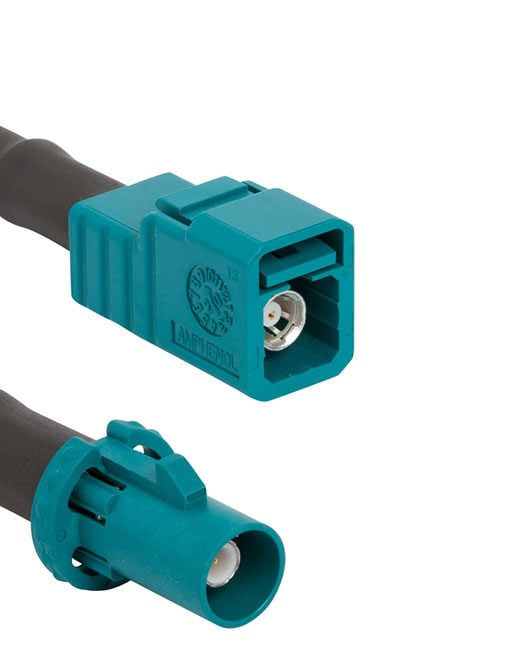
Visual differentiation helps to prevent these errors. Connectors should have highly visible moulded orientation keys, asymmetrical shapes to prevent incorrect insertion, colour coding for voltage class, and large textured grips for gloved handling.
Ergonomics also includes weight, handle shape, and the force needed to mate/unmate. Considering these factors at the outset ensures that connectors remain easy and safe to use even in challenging real-world conditions. Design that anticipates gloves, slippery surfaces, awkward angles, or tired hands reduces both mis-mating and physical strain injuries.
Environmental sealing and material resilience
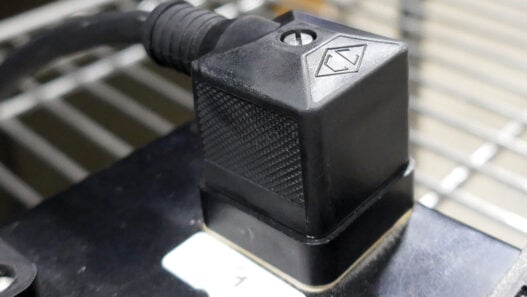
Even with robust locking and intuitive ergonomics, connectors can become hazardous if their housings allow moisture, dust, or chemicals to penetrate. Conductive contamination or internal corrosion can raise contact resistance and create hidden paths for current leakage, leading to shock or equipment failure. Industrial environments such as food processing plants and offshore platforms routinely expose connectors to high-pressure wash-down, salt spray, abrasive dust, and vibration.
Specifying connectors to the correct ingress protection (IP) rating and using flame-retardant, chemically resistant housings transforms them from potential weak points into durable safety barriers. Marine-grade alloys, UV-stable seals, and UL94-certified polymers ensure that even under the most aggressive conditions, the connector maintains its integrity and keeps operators insulated from high energy. This environmental resilience is as much a human-protection feature as it is an electrical-performance requirement.
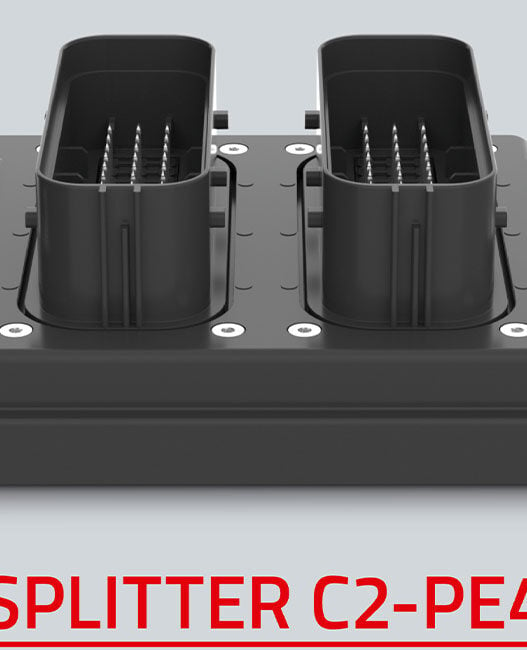
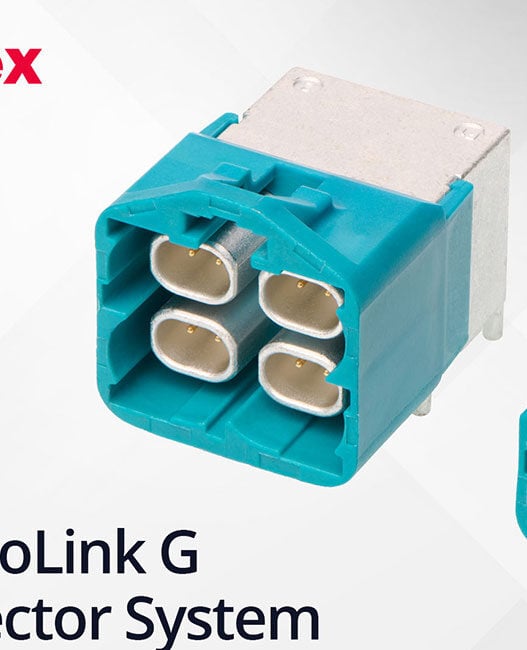
PEI-Genesis offers a range of industrial-grade connectors specifically designed for harsh and high-energy environments. These include sealed power and control connectors with high IP ratings, flame-retardant housings, and ergonomic features such as keyed orientations and tactile locking feedback. We also provide rapid, made-to-order assembly, and engineering support to help plant operators and OEMs specify connectors that enhance both electrical performance and operator safety.
Connector safety is ultimately a human factor issue. Secure locking mechanisms reduce the risk of partial engagement, ergonomic, and visual differentiation minimise mis-mating under pressure and environmental sealing with resilient materials shields operators from hidden hazards.
By considering how connectors are actually handled on the factory floor and embedding protective features into their design, engineers transform a common interface into a safety-critical component. In doing so, they protect the people who keep industrial operations running.