

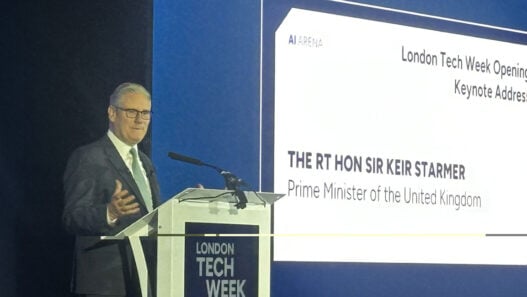


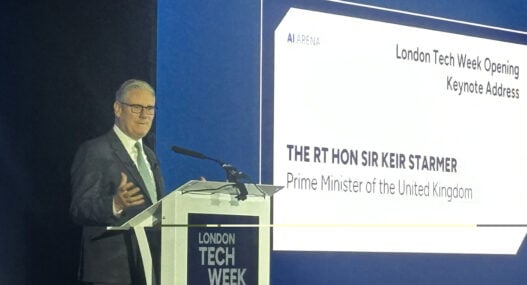
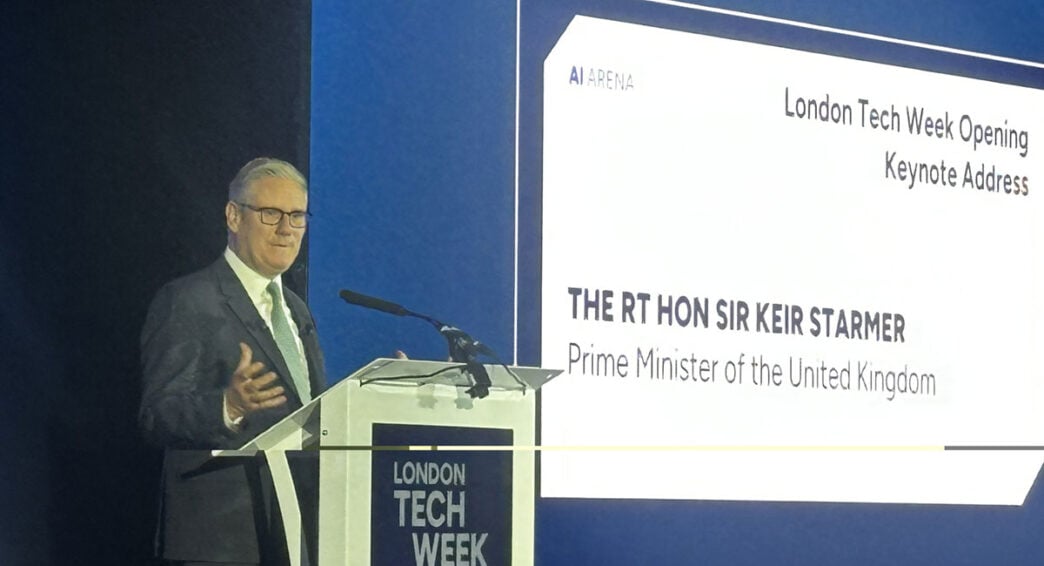
At London Tech Week (LTW) 2026, Prime Minister Sir Keir Starmer pledged an AI-powered future for all of Britain. Addressing attendees during his keynote, Starmer set out the ambitious future for a tech-focused UK, because, he said, “it is coming”.
During his address, it was clear that artificial intelligence is and must be more than an economic opportunity. It must be a political choice. One that the prime minister says his government intends to make in favour of working people across the whole country. Ensuring longevity and safety of the tech and the people on the receiving end of it.
Britain’s tech standing
Britain is the third-largest technology economy in the world, with its startups raising nearly half of all European tech investment this year. A “profound achievement” that belongs to the entrepreneurs and innovators, many of whom were in the room.
This growth is deliberate. Companies such as Inflection AI, which is expanding its operations in Britain and creating 1,000 jobs over the next three years, and AMD, which announced it is investing £2 billion in the UK over the next five years, are just two examples, Starmer said, of the global confidence being placed in British talent. The government isn’t blindly grabbing for a tech future UK for headlines’ sake, it is actively simplifying regulation, attracting global talent through a new taskforce, unlocking pension and insurance capital, and opening trade routes worldwide.
There is only one path for the future of technology
There are, said Starmer, three possible responses to the AI revolution. Britain could ignore it entirely, an option he dismissed immediately. Or, it could strip away all guardrails and let the market run unchecked, risking concentrated wealth, community displacement, and an unsafe online environment for children. Or, thirdly, he said, it could pursue what he called the “Labour approach”, which is backing British businesses to create the jobs and technologies of the future, while ensuring the rewards are felt in communities across the country, not just in a handful of boardrooms or postcodes. And it is this path that requires an active industrial strategy. Where government is not just a regulator, but a partner.
A major new investment in AI infrastructure
Sovereign computing capability is key to the UK’s future. This includes a commitment to purchase specialist AI chips worth approximately £400 million, to provide a generational opportunity for Britain’s most promising AI startups. Alongside this, the government announced it will scale up its existing AI computing systems into a national capability, feeding into a broader multi-billion-pound infrastructure programme.
This way, Starmer argues, the future implementation of technology capability is deliberate and not left to chance, enabling the UK to build the foundations.
Skills, jobs, and communities
Addressing the workers and communities anxious about what AI means for their futures, Starmer said to progress against a target set at last year’s Tech Week, which was to equip 7.5 million workers with AI training by 2030. He reported that 1.7 million people have already received that training within the year.
He also announced a new AI Job Coach tool designed to help unemployed people find work, update their CVs, and re-enter the workforce by way of a practical illustration of his argument that AI must be made to serve ordinary people.
Starmer argued that the real prize of this technological revolution is community renewal: new investment, new skilled jobs, and new hope in areas that have felt left behind. His message, ultimately, was that Britain’s task is to take the reins and lead on its future.