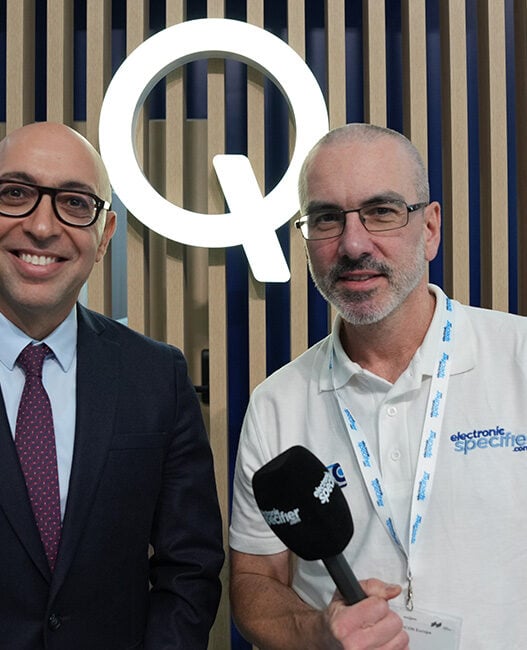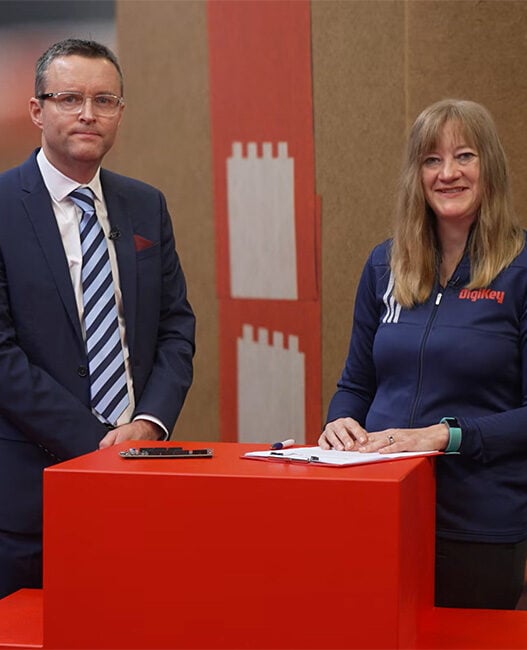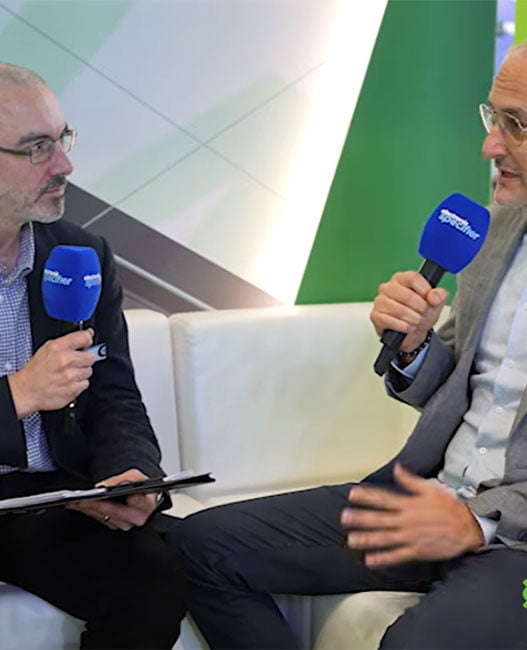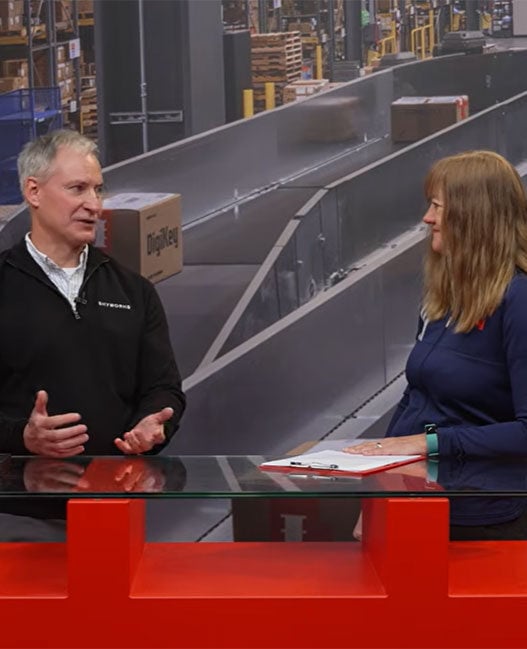


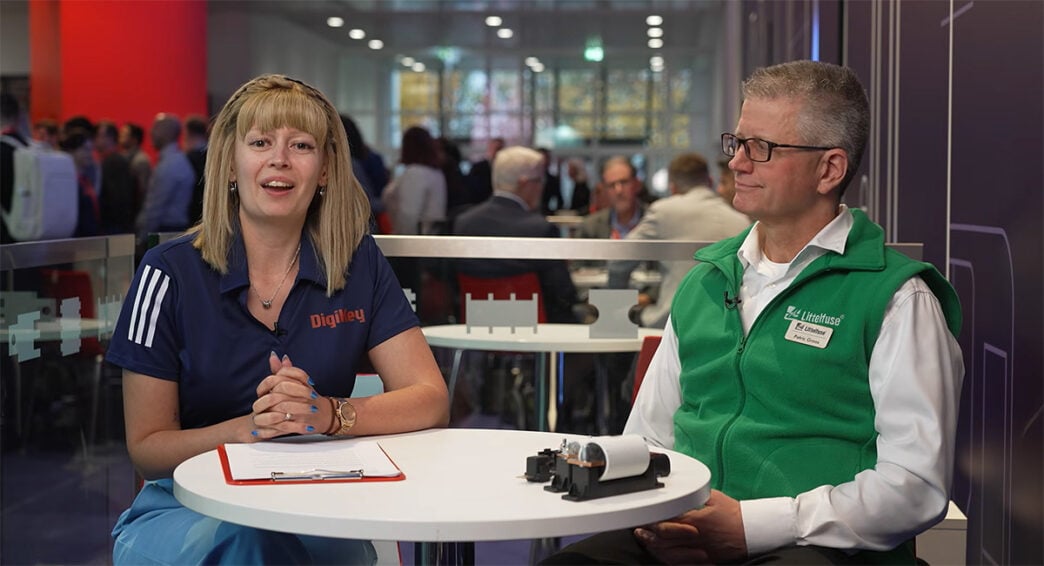
At electronica 2026, Paige Hookway sat down at the DigiKey booth with Patric Gross, Global Business Development/Technical Marketing, T&L CV, Littelfuse Europe, to talk about transportation. With electrification, rising voltages, and ever more electronics in every vehicle, the industry is changing fast, and Gross shared how Littelfuse is helping engineers keep up.
From fuses to a multi-technology supplier
“Littelfuse started with fuses. That’s where the name comes from,” said Gross, talking about the company’s roots. Today, Littelfuse is a multi-technology supplier and manufacturer with production around the globe, offering everything from small components up to complete boxes for commercial vehicles and data centres. “We are known for safe and efficient distribution of electric power. That’s Littelfuse,” Gross said.
What customers need right now
Supply chain pressures aside, Gross sees two major trends in customer demand. The first is the integration of functions as engineers take more of a total-system view. The second is a strong push toward off-the-shelf parts that still offer modularity and flexibility.
That second trend is closely tied to rising voltages. Newer, higher-voltage platforms often ramp up at lower volumes, which changes the economics of custom parts. “Making a big mould tool, it’s too costly. So they want to have standard parts,” Gross said.
Higher voltages, and why low voltage still matters
As more loads are electrified, power levels in distribution units go up, and so do voltages. Gross traced the evolution from 42V, 48V, and 80V systems to today’s mid-voltage range of around 96V in commercial vehicles and passenger cars, with EVs running at 500V and 1,000V – and talk of going even higher. The challenge, he said, is combining off-the-shelf modularity, flexibility, and scalability with these new power demands.
While high voltage gets most of the attention as the growth market, Gross agreed that low- and medium-voltage protection deserves more of it. “You cannot run your hi-fi or entertainment system on high voltage,” he said. AI and driver-assistance systems also run at lower voltages, and with customers wanting to monitor every state of the vehicle, low-voltage content keeps growing, bringing higher consumption, more channels, and more protection. Looking further ahead, he suggested vehicles may one day move toward even lower-voltage distribution: “Most digital equipment in a vehicle is running on five or 3.3 volts. So let’s see what the future brings.”
Current sensing: balancing accuracy and cost
Accurate current sensing is essential for knowing a battery’s state of charge and state of health, and therefore how much range is left. It also matters for protection. When a system must distinguish between lower and higher current ranges, insufficient accuracy can cause protection to trip in the wrong range.
But Gross stressed that precision isn’t everything. “Accuracy is important but it’s not all, because accuracy and, let’s say, cost, they’re kind of competing,” he said. OEMs and distributors need to weigh whether they truly need high accuracy or simply a certain level of it, and save cost accordingly.
Modularity in practice
In the past, engineers worked to a single customer specification. Today’s demand for off-the-shelf products requires a different approach. “You cannot do exactly what one customer wants, but what the market wants. It’s a market focus,” Gross explained.
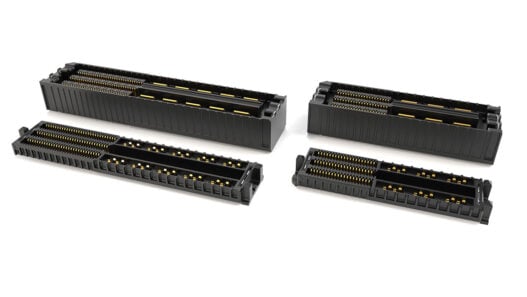
He demonstrated this with Littelfuse fuse holders for MEGA and MIDI fuses. Covering the different voltage ratings and fuse types would normally take four holders, but by adjusting the stud spacing Littelfuse needs just two; one with an M6 stud and one with an M8 stud. The holders can also be plugged together, allowing distributors to deliver a complete system with busbars at the back and different fuse ratings. “So this is flexible, it’s modular, but it’s a standard part,” he said.
The same thinking applies on the high-voltage side, where Littelfuse offers holders for standard fuse sizes designed to support low-volume, off-the-shelf use for prototypes and slow ramp-ups, which are common in EVs. The holders are easy to access and fit with busbars, and one can be adjusted in size to suit different fuse stud spacings, so OEMs can design their own box while keeping only a few standard parts in stock.
Function integration
Gross noted that the Asian market is currently three to five years ahead when it comes to integrating more functions into a single component. For customers, the benefits include saving space and housing material, managing one part number and its documentation, and having a single point of contact if something fails. For Littelfuse, it means bringing its expertise to bear, and “if you’re designed in with a component that combines a lot and you can tweak it to the customer need … then it’s not so easy to design you out again,” he said. Integration can also reduce production and testing costs.
Take a current sensor combined with a MEGA fuse as an example, he said, it saves space, is easy to assemble and can fit into tight spots. If the fuse does blow, the sensor must be replaced too, but fuses in the high-current path seldom blow, and when they do, it usually signals a bigger issue anyway. This approach is a new trend, mainly in passenger cars but increasingly in commercial vehicles as well.
Beyond transportation
These technologies aren’t limited to vehicles. Littelfuse contactors started out in xEV passenger cars and commercial vehicles, but major customers now come from data centres and battery energy storage systems (BESS), which share the same high-current, high-voltage requirements. Apart from the vehicle-specific MEGA fuse sensor, Littelfuse’s sensors are built on common technology for all markets, and the same is true of its boxes and solid-state power semiconductors, which are used in energy, wind, and solar applications. “So, we’re not limited to a market,” Gross said.
Watch the full interview here: