
For years, the robotics lifecycle has suffered from a costly bottleneck: the friction of transitioning neural networks from digital simulations to physical hardware. As Embodied AI demands faster deployment cycles, engineers are turning to open-source hardware ecosystems to finally bridge this sim-to-real gap.
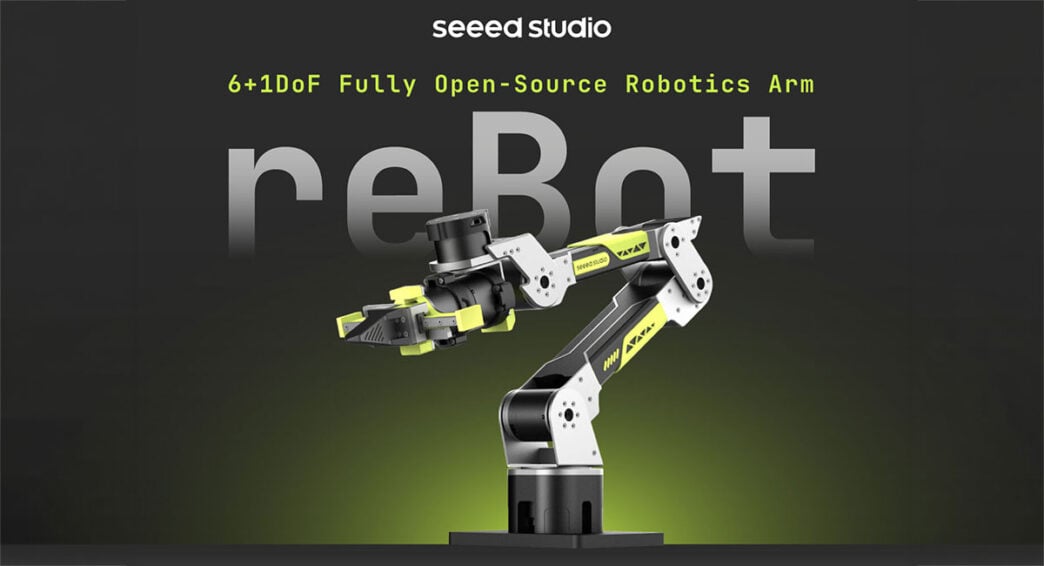
Historically, developing intelligent robotic systems forced design engineers into a difficult trade-off. They either had to invest heavily in closed-source, vendor-locked industrial platforms, or compromise on precision by using fragile, hobbyist development kits. Today, the rise of powerful Edge computing alongside highly accessible, modular hardware platforms – such as Seeed Studio’s reBot series – is redefining rapid prototyping, enabling developers to move smoothly from algorithmic learning to physical execution.
The dynamics of Sim-to-Real: scaling from virtual to physical ecosystems
At the heart of modern intelligent robotics lies the ‘Sim-to-Real’ paradigm. While training deep reinforcement learning policies inside physics engines requires massive datasets scaled over millions of simulated environment steps, fine-tuning pre-trained Vision-Language-Action (VLA) models relies on highly specialised, lower-volume physical and virtual demonstration workflows.
Conducting these exhaustive experimentation loops entirely on physical hardware is highly inefficient, costly, and risks mechanical failure. Therefore, engineers rely heavily on physics engines and simulation environments like NVIDIA Isaac Sim, MuJoCo, or open-source reinforcement learning frameworks.
However, the transition from a perfect virtual environment to the chaotic physical world introduces what engineers call the Simulation Gap. This gap is caused by subtle discrepancies in friction, mass distribution, latency, and sensor noise that cannot be perfectly modelled digitally.
To bridge this gap successfully without rewriting the software architecture, the underlying hardware must fulfil three core engineering principles:
- Software-hardware transparency: the robotic platform must offer native compatibility with open-source middleware like ROS2 (Robot Operating System) and modern robotics and AI frameworks such as LeRobot and the Pinocchio dynamics library. This allows kinematic matrices and joint control loops calculated in simulation to map directly to physical actuators
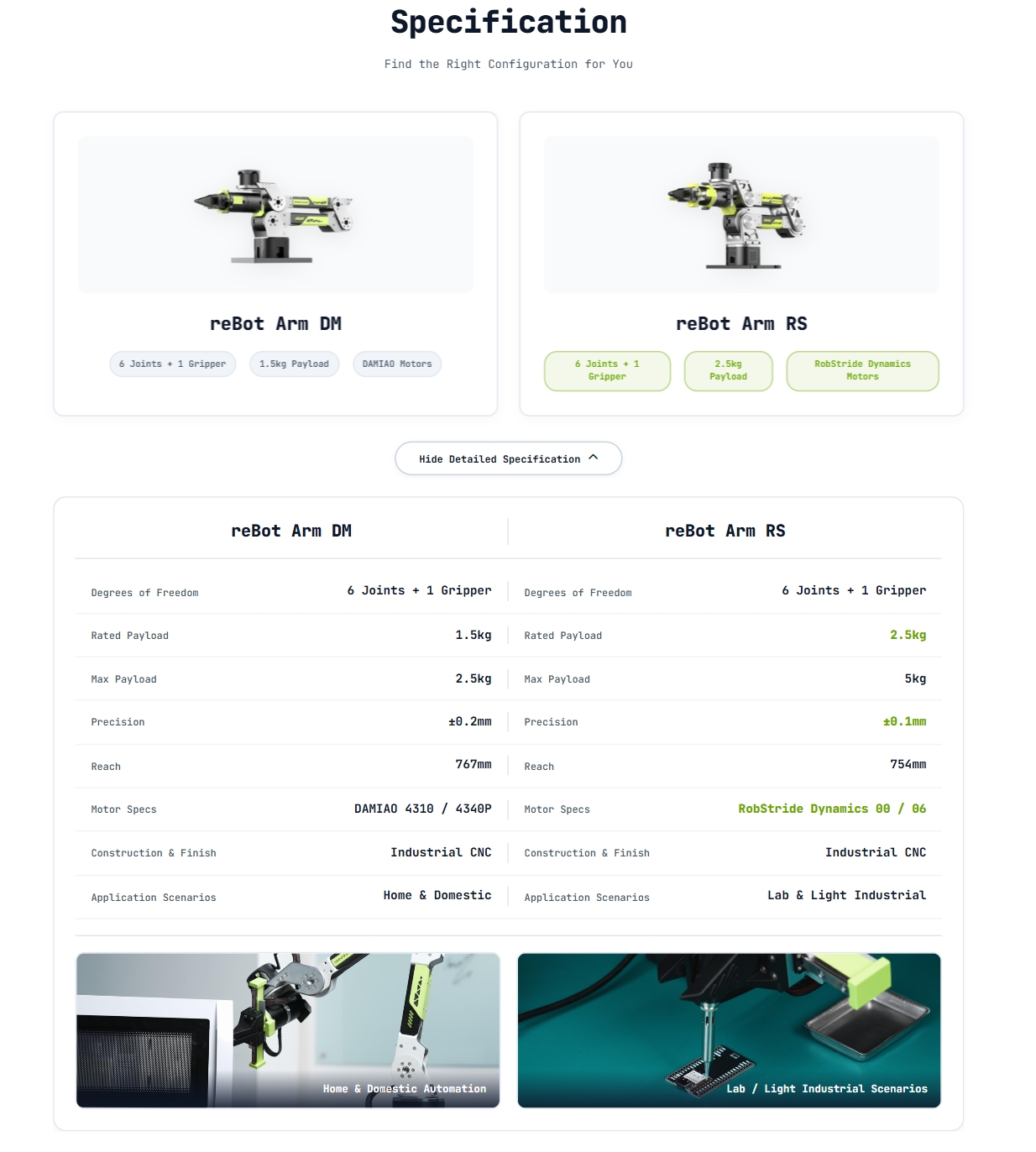
- Mechanical determinism: high physical repeatability is non-negotiable. If a robotic arm has unpredictable backlash or structural flex, the policy trained in simulation will fail in the real world. Actuators must deliver consistent torque and published repeatability specifications of ±0.2mm for B601-DM and ±0.1mm for B601-RS
- Edge compute integration: Embodied AI requires low-latency, real-time inference at the Edge. The robotic hardware must easily interface with embedded AI modules (such as NVIDIA Jetson platforms) to process vision algorithms and spatial data locally without cloud dependency
By aligning modular open hardware with open software frameworks, engineering teams can significantly compress their validation timelines, transforming robotic arms from rigid automated tools into dynamic, learning-capable Edge nodes.
Selecting the optimal hardware architecture – reBot-DM vs. reBot-RS
When transitioning a robotic policy from simulation to physical reality, selecting the appropriate hardware platform depends entirely on the design objectives, required torque density, and control loops. A mismatch at this stage can introduce unpredictable mechanical latency or backlash, causing the physical deployment to fail even if the simulation environment was mathematically flawless.
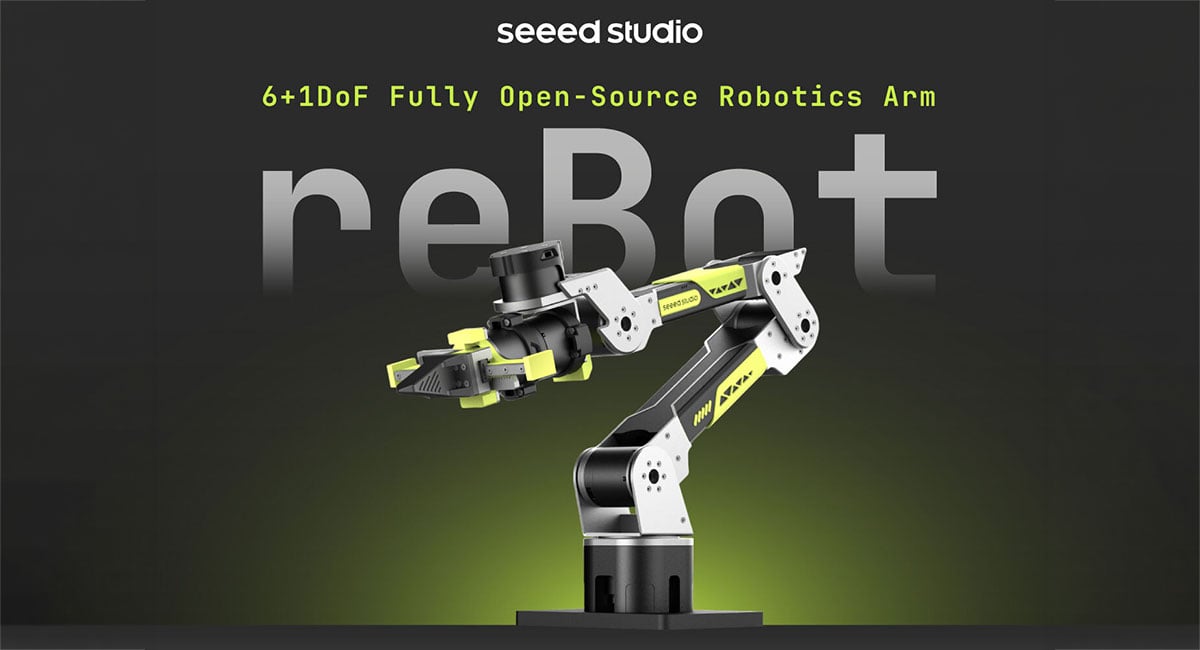
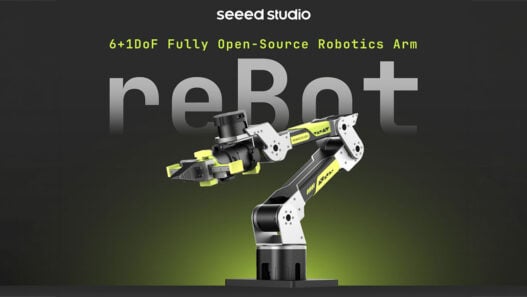
To lower the barrier to entry for embodied intelligence research, Seeed Studio developed the reBot Arm B601 series. Both versions feature closely related mechanical designs, but with different actuator and control architectures.
Balancing accessibility and precision: the core actuator choice
- reBot Arm B601-DM (versatile robotics & learning): this configuration is engineered as an accessible, entry-level platform for general development, learning, and algorithmic testing. It integrates Damiao joint motors, making it the ideal sandbox for students, researchers, and developers who need to validate software stacks, interface with Python SDKs, or run initial ROS2/LeRobot teleoperation workflows without industrial-grade budgets
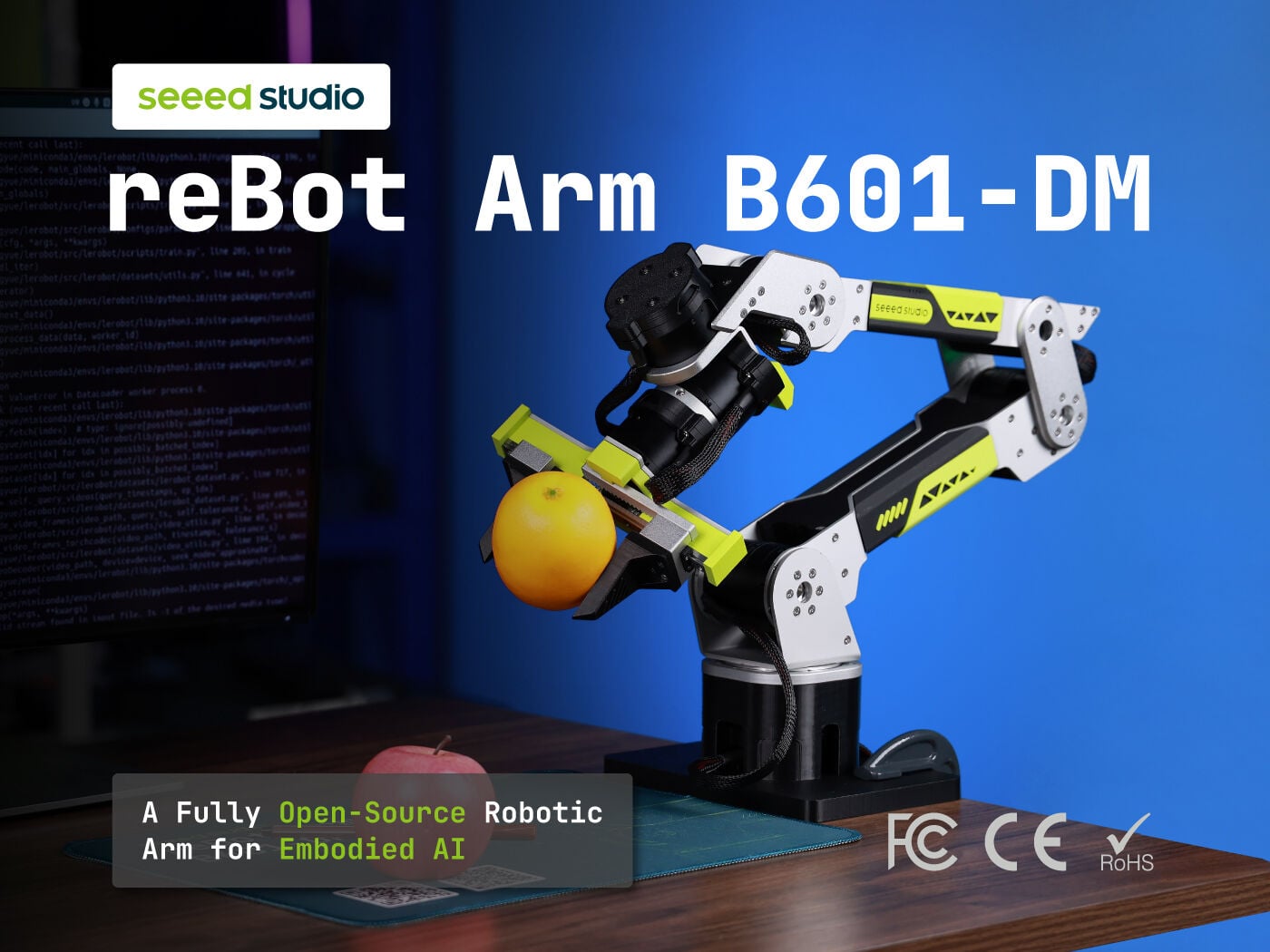
- reBot Arm B601-RS (advanced high-performance experimentation): targeted at advanced developers, labs, and automation engineers, this model is built for high-performance applications requiring rigid physical repeatability and precise control loops. It upgrades the entire kinematic chain with integrated RobStride quasi-direct-drive (QDD) actuators (including RobStride 06 and RobStride 00 modules). Operating primarily in low-latency MIT control mode, it provides the determinism required for complex physics models and advanced spatial experiments
Technical comparison matrix
The table below outlines the core engineering specifications to help developers determine which version aligns best with their specific deployment constraints:
| Technical Feature | reBot Arm B601-DM | reBot Arm B601-RS | Optimal Engineering Use Case |
| Primary Actuator Ecosystem | Damiao (J4340P / J4310) | RobStride QDD Actuators | Determines torque curves and control architecture. |
| System Voltage Input | 24V DC / 15A | 48V DC / 12.5A | Specifies the power supply required by each version. |
| Control Interface | USB-to-CAN Serial (via DM_Tools) | PCAN-USB (1Mbps SocketCAN bus) | Affects bus latency and middleware compatibility. |
| Primary Control Modes | Native Position / Speed Loops | Low-latency MIT Mode (Direct Torque & Impedance Control) | MIT mode on the RS allows dynamic force interaction and precise compliance tuning. |
| Target Audience | General Development & Learning | Advanced Robotics Experimentation | Direct alignment with project complexity and accuracy needs. |
| Hardware Procurement | Explore B601-DM Edition | Explore B601-RS Edition | Direct hardware paths for setup and validation. |
Architectural integration and calibration
Both platforms converge on software usability through the MotorBridge platform. This unified middleware abstracts the underlying hardware differences, offering developers one-click zero-point calibration, real-time parameter writing, and model visualisation across Windows, Linux, and macOS. By maintaining a closely related mechanical design and shared software ecosystem, a developer can seamlessly scale up from basic kinematic validation on the B601-DM to complex, high-precision Embodied AI testing on the B601-RS while reusing much of the same development workflow and software tooling.
Developers can explore the reBot Arm B601 hardware options, open-source repository, and step-by-step technical guides through Seeed Studio.
SenseCraft Robotics: an all-in-one robotics development & management platform
Once the physical hardware is calibrated, the primary bottleneck shifts to infrastructure deployment. Designing an end-to-end pipeline for Embodied AI requires developers to manage fragmented workflows – ranging from synchronous telemetry logging and dataset serialisation to scaling GPU compute and managing model checkpoint regression. To streamline these operational layers, Seeed Studio developed SenseCraft Robotics, bringing device setup, demonstration recording, dataset preparation, model training, and real-robot validation into a guided desktop workflow.
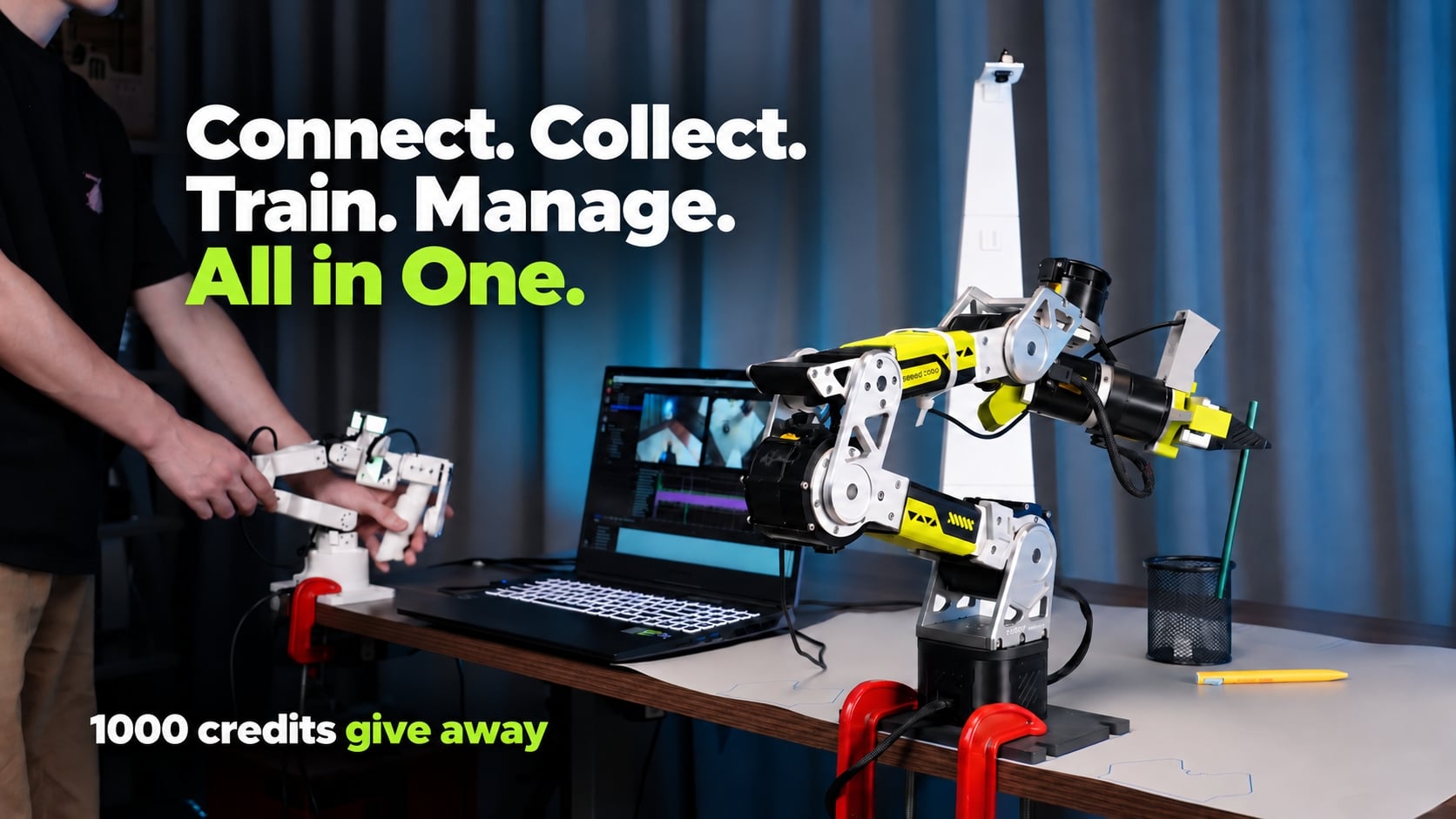
The platform manages the complete robot learning lifecycle through seven core technical operational modules:
1. Device setup and calibration: the platform guides users through device setup and calibration, with automatic device detection, hardware self-checks, and calibration-file matching. Users complete the physical connections and calibration positioning before verifying teleoperation
Video demonstration: reBot Dual Arm Teleoperation Workflow
Multi-unit kinematic coordination and dual-arm real-time synchronisation under the open-source reBot-DevArm ecosystem
2. Demonstration collection: during manual teaching cycles, the platform records demonstrations in the standard LeRobot dataset format (including joint positions, synchronised video feeds, and task labels). The platform natively supports diverse hardware setups, including a reBot Arm 102 leader paired with either a B601-RS or B601-DM follower, as well as SO-ARM100/101 leader-follower configurations
3. Dataset preparation: collected telemetry is structured directly within the environment. Dataset repair can remove corrupted episodes and trim videos with inconsistent frame counts before training
4. Training algorithms and Cloud resources: SenseCraft Robotics offers local and cloud training options for supported workflows, including ACT, SmolVLA, GR00T N1.7, and π0.5. Cloud training uses pooled GPU resources across multiple regions and GPU types
5. Project and training output management: projects organise the robotics development workflow, with training outputs managed by training tasks
6. Imports and Hugging Face integration: the platform supports ZIP archive import and downloads of Hugging Face datasets. Models and datasets can be exported to Hugging Face, where users can use its version management capabilities
7. Local deployment and real-robot validation: after training, users can deploy a supported model directly on their Windows or macOS computer and validate it with a compatible robotic arm setup
[Device Setup] ➔ [Demonstration Collection] ➔ [Dataset Preparation] ➔ [Training] ➔ [Local Deployment] ➔ [Real-Robot Validation]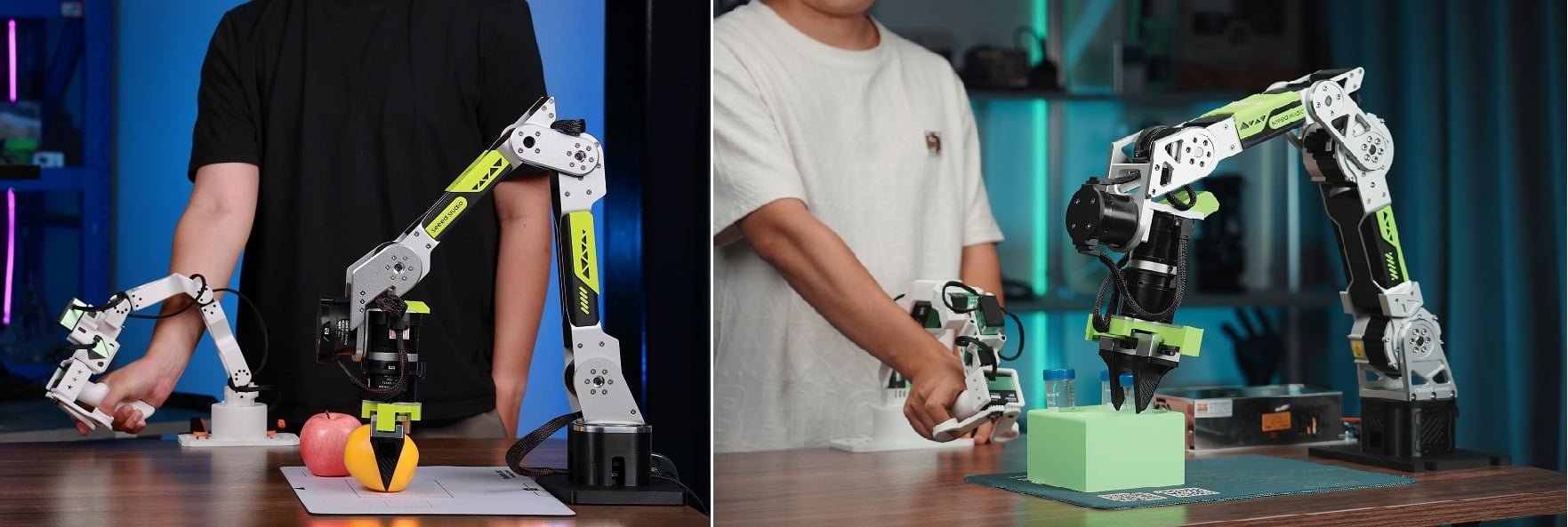
Video demonstration: ROS2 Visual Capture Workflow on the reBot Platform
Real-time execution of the ROS2-based visual capture system for synchronising spatial telemetry within the open-source reBot-DevArm ecosystem.
Together with supported robotic arms, SenseCraft Robotics connects device setup, demonstration recording, training, and real-world validation in one workflow.