



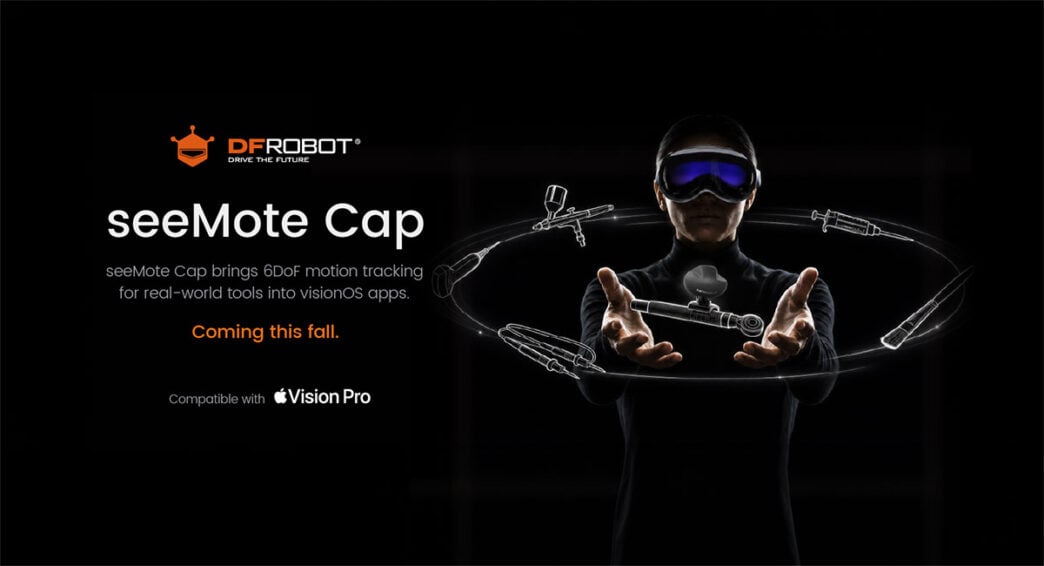
Spatial computing is pushing forward into professional, industrial, and creative environments. To bridge the gap between digital and physical surroundings, DFRobot has officially introduced the new seeMote hardware series, featuring the seeMote Cap and seeMote Cube modules.
The vision behind seeMote
Spatial computing, despite its visual advancements, presents a critical limitation by relying on mid-air gestures, lacking tactile feedback and mechanical resistance. To achieve precision in professional environments, a physical layer is required to activate muscle memory and provide stability, complementing the visionOS interface with haptic control and ergonomic security.
The grand challenge of purely virtual interfaces is that they break the connection with physical objects, limiting the use of muscle memory and manual precision accumulated in real-world practice. By interacting only with gestures, the user loses texture, weight, and physical resistance, creating a gap where the digital experience feels isolated from real-world motor skills.
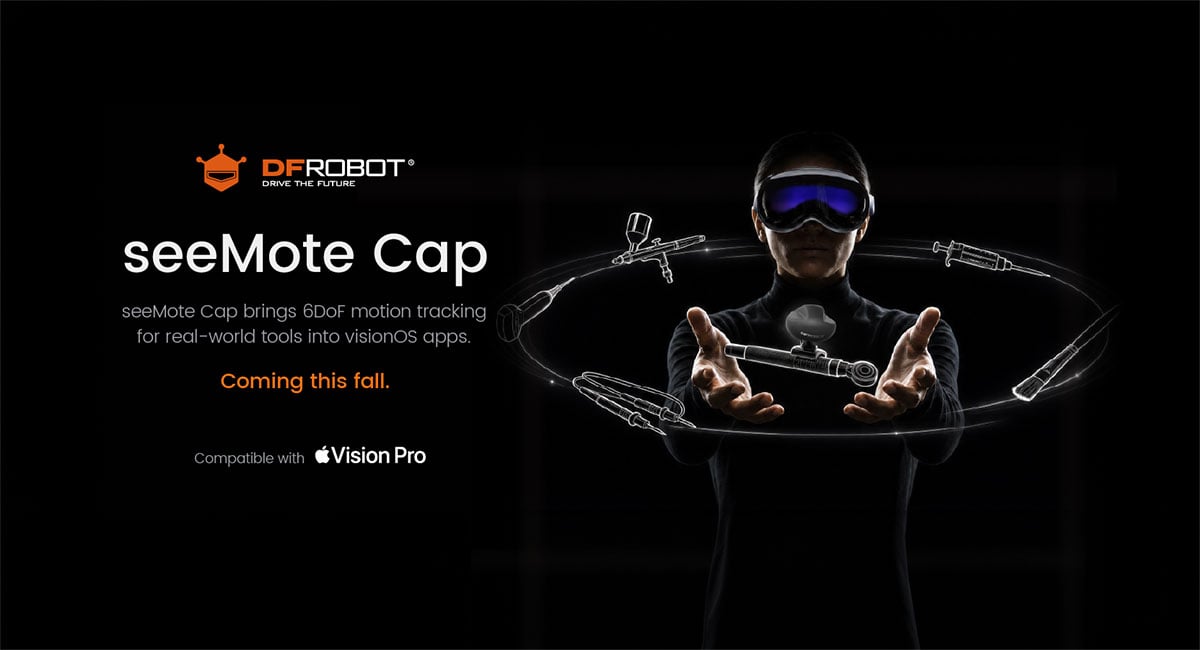
The seeMote series connects physical objects with visionOS by equipping real-world tools with 6DoF spatial tracking, transmitting their position and orientation wirelessly. This allows Apple Vision Pro interfaces to recognise and replicate tangible elements in real time, converting static objects into dynamic controls within the digital environment.

Two complementary approaches to spatial interaction
The seeMote series addresses two key needs in spatial development: transforming everyday tools into interactive devices and prototyping new control patterns.
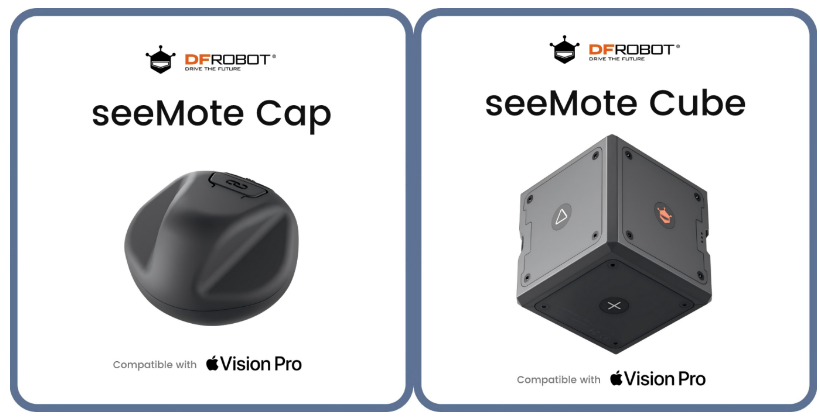
seeMote Cap (Tracking Real Tools): this is a compact spatial tracking module designed to physically attach to real-world objects such as pencils, screwdrivers, laboratory instruments, or training tools. Once mounted, it provides the object with 6 degrees of freedom (6DoF) motion tracking, transmitting position, orientation, and motion data. This allows users to maintain the grip and muscle memory of their real tool while operating within the digital environment of visionOS.
seeMote Cube (Flexible Control Prototyping): focused on teams that need to create direct interaction experiences from scratch. This compact handheld device comes equipped with physical buttons and haptic technology, serving as a flexible canvas for designing custom interfaces, specific workflows, and interactive spatial controls.

Developer opportunities & potential applications
The seeMote series opens the door to a new generation of spatial computing experiences that overcome the limitations of traditional gaming controllers, enabling purpose-driven interaction design. By decoupling control from a generic ‘plastic controller’ shape and transferring it to any real-world tool – or a customisable haptic modular block – developers can design hyper-realistic workflows for medical, engineering, or advanced manufacturing simulations. This completely transforms how users interact in visionOS, allowing the digital interface to mould itself organically around the specific trade and specialised tools of the user.
The series empowers sectors beyond conventional entertainment, focusing on productivity and technical education:
- Industrial training and guided repairs: tracking real mechanical tools (like wrenches or screwdrivers) in simulations that guide the user step-by-step through spatial instructions
- Medical and laboratory education: integrating surgical training or analysis instruments into interactive procedural learning environments
- Design review and simulation: detailed manipulation, annotation, and inspection of 3D content with a much more natural physical context
- Spatial content creation: new mechanical alternatives for artists and designers to sketch, trigger events, or control spatial scenes directly
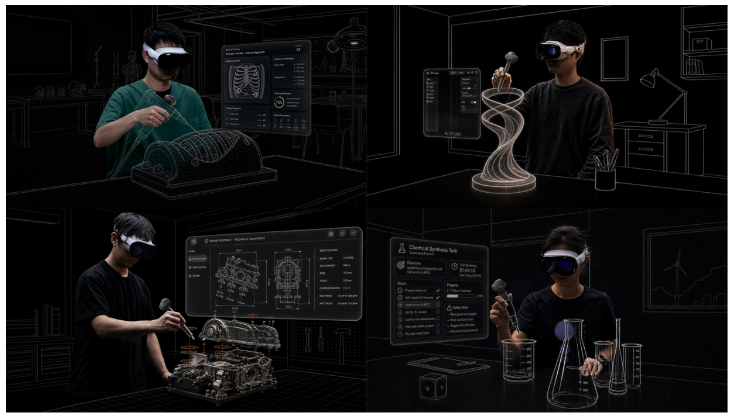
visionOS application development process with seeMote
Integrating physical hardware into spatial computing requires a structured workflow. seeMote series streamlines the spatial app development process into four main phases:
- 1Hardware binding & calibration: developers physically attach the seeMote Cap to the target tool or either hold the seeMote Cube to establish their initial positioning within the spatial environment
- Data ingestion & mapping: the hardware transmits real-time tracking, orientation, and input data wirelessly, allowing developers to map physical actions into visionOS applications
- Interaction design & haptics: designers program the contextual behaviours. For example, triggering a specific haptic pulse on the seeMote Cube when a virtual wire is correctly connected, or rendering a digital holographic overlay on top of the physical tool tracked by the seeMote Cap
- Testing & optimisation: running real-time simulation loops to test latency, tracking fidelity under different lighting conditions, and ergonomic comfort. This helps developers evaluate whether the digital response aligns with real-world tool handling and user expectations
Conclusion: shaping the future of spatial interaction
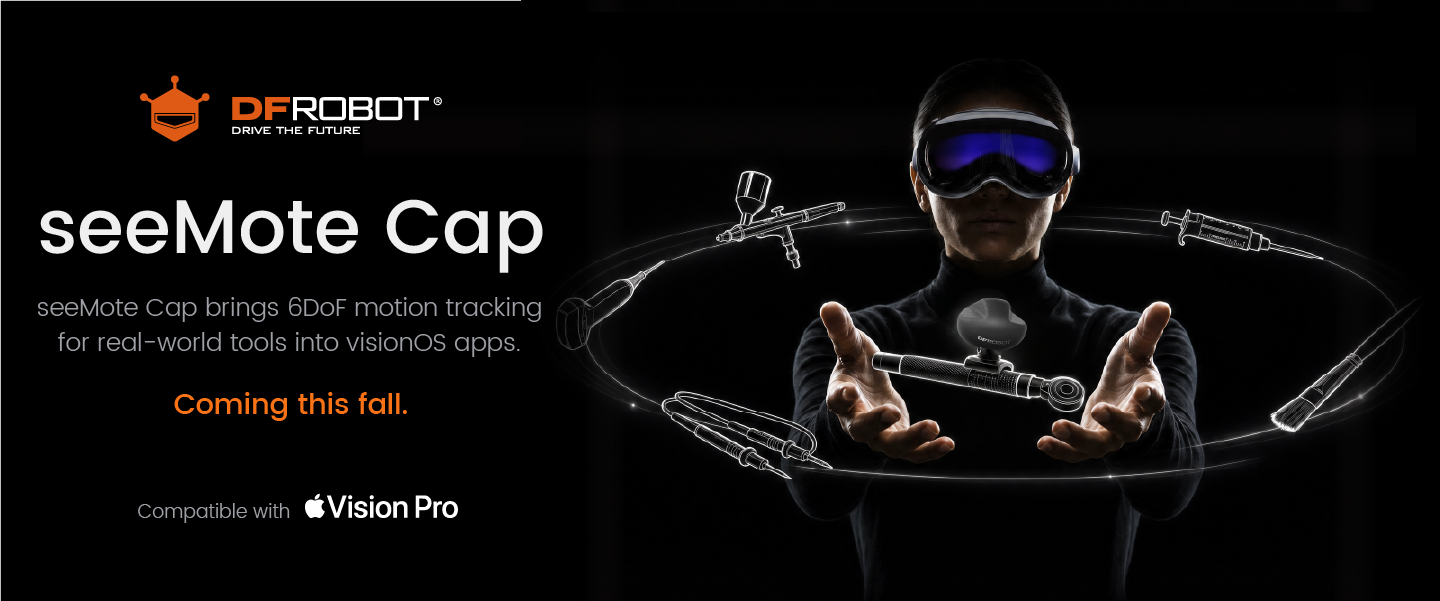
The seeMote series marks a significant shift in how developers can approach spatial computing by delivering a tangible connection to visionOS. By introducing the seeMote Cap and seeMote Cube, DFRobot effectively bridges the gap between digital interfaces and physical tools, moving beyond the constraints of gesture-only tracking and generic plastic controllers.
Preparing for its official launch in the fall of 2026, seeMote offers the developer community an early, practical framework to build hyper-realistic, purpose-driven applications. Whether targeting industrial training, surgical simulations, or advanced 3D design, seeMote empowers creators to design spatial experiences where human muscle memory and professional tools work in perfect harmony with the virtual world.