







If a medical professional needs access to a patient’s brain activity, brain-computer interfaces (BCIs) can provide it. However, BCI today forces patients to choose between going inside the skull for a good signal, which requires neurosurgery and leaves hardware in the brain, or staying outside the head, which avoids surgery but means much worse access to brain activity.
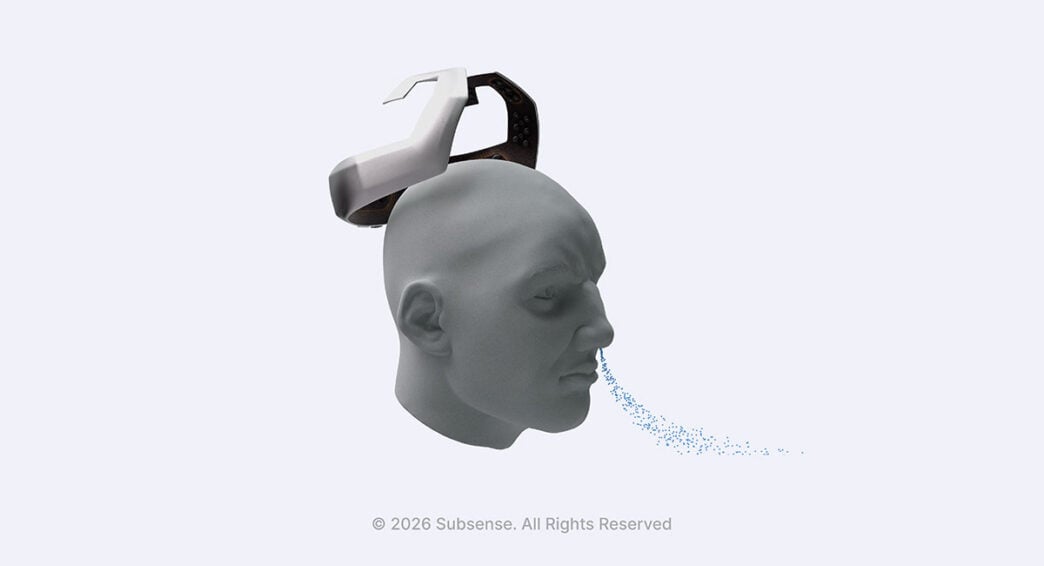
Subsense, a neurotechnology startup, is trying to change that by getting implant-grade proximity to neurons without opening the skull. The company is preclinical (not yet tested on humans) and it aims to prove that having to choose between those two options doesn’t need to be the only choice. It is developing a bidirectional BCI platform, designed to both record and modulate brain activity, in which the only thing that comes near the brain is a nanoparticle delivered intranasally. Testing is currently in mice, with large animals the next major step. Aleksandrova says that nothing it has is “tested, authorised, or approved.”
The EEG ceiling
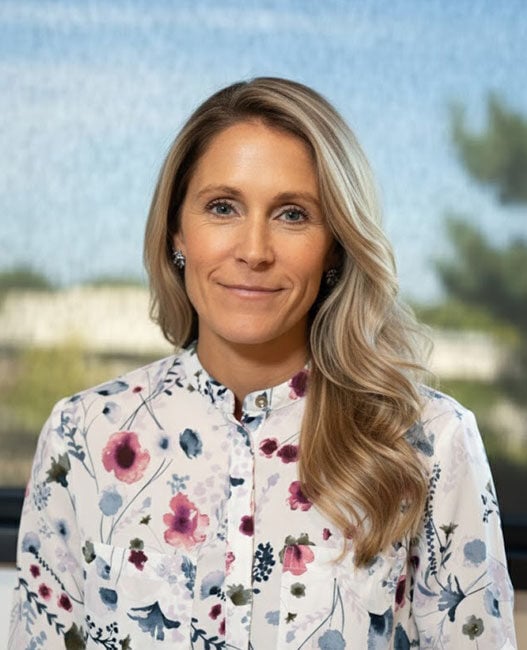
Co-Founder and CEO Tetiana Aleksandrova has spent about eight years building BCI companies. Her first, Neiry, worked with electroencephalography (EEG), a painless, scalp-based test that records the brain’s electrical activity through small discs attached to the head. It is here that she learnt where the ceiling is for EEG.
“You are listening through the skull, and past a certain point the signal is simply not there, however good your electronics get.”
The alternative is to go where the neurons are, but that means surgery, and surgery rules people out. “The people I keep thinking about are the ones the choice leaves out. Many of them have conditions serious enough to need real intervention and will never be candidates for an implant. The field has very little for them right now,” she says.
In Parkinson‘s, she says, deep brain stimulation works, but it requires surgery and an implant, so “most people who could benefit never get there.”
Subsense’s answer is to change where the system divides: “We are trying to take the best property of an implant, proximity to neurons, without bringing the implanted electronics and the surgery with it.” The optics, magnetics, and electronics sit outside the body in a wearable, whilst the nanoparticles are positioned near the neurons.
Aleksandrova contrasts this with other approaches. Neuralink puts the interface inside the skull, which she says buys excellent signal at the cost of a surgical procedure. Conixion stays entirely outside, which any patient can use but limits readings to what the surface shows. “Both are solving real parts of the problem,” she says. She also points to optical, ultrasound, and magnetic work at the edges of the field, but says “the centre of the first is still that choice.”
Two particles for two jobs
The platform uses two classes of particles, one for reading brain activity and one for influencing it.
Plasmonic particles handle sensing. Their optical response, how they react to light, changes with local electrical activity, and that change is what gets read out. Magnetoelectric particles handle stimulation. An external magnetic field strains a magnetostrictive core, a material that changes shape in a magnetic field, and a piezoelectric shell, a material that generates an electric charge when strained, converts that strain into a local electric effect, which can influence nearby neurons.
Aleksandrova says the two sides are being designed together. “Sensing and stimulation are being designed as one system rather than one bolted onto the other.” Today the two halves map onto different diseases. The stimulation side is being developed for Parkinson’s, while the reading side is for amyotrophic lateral sclerosis (ALS), where people can lose movement and eventually speech, while, she says, many “keep the ability to form what they want to say long after they lose the means to say it.” The aim is to decode the intent and turn it into communication.
One surgical problem becomes several engineering ones
The obvious challenge is that removing surgery doesn’t remove the need to reach the brain. “You still have to get close to neurons. You just have to do it without opening the skull, and that turns one surgical problem into several engineering ones at once: delivery, targeting, getting energy in and signal out through tissue.”
The company isn’t starting from scratch. She says that independent groups have published on the individual building blocks, from magnetoelectric effects to optical sensing of electrical activity to nanoparticle delivery into the brain. But much of that literature doesn’t transfer to a system like this, so a large part of the work is judging what applies and then making it work in a living animal at the precision required of a clinical application.
“Those are hard problems,” she adds. “They are also measureable ones, which is the kind of hard that I am happy to take on.”
Using AI to search the design space
Most AI in BCI is applied downstream, on neural data that has already been collected. Subsense, however, uses it upstream, on the design of the particles themselves.
The number of possible designs runs into the millions once composition, geometry, and surface chemistry are counted, and a laboratory can build and test only a tiny fraction, she explains. If “guess, build, and measure” is the only method, “you spend years on one corner of the space and never learn what you missed,” she says. “We are not asking a model to guess. We are asking it to search.” The company combines AI with physics-based modelling, which she says is based on well-established physics, to rank candidates before anyone makes them, and uses this same approach to simulate how particles navigate. The goal, she says, is “fewer physical experiments, more learning from each one, and a shorter development cycle without shortcutting the biology.” She explains that the company is “not chasing one better particle. We are chasing a faster cycle, because in this field the laboratory is the bottleneck,” she adds.
The exact compositions remain proprietary, but the ranking method is more open. Candidates are scored on five dimensions at once: colloidal stability (whether the particles stay dispersed rather than clumping), core magnetostriction (how strongly the core responds to a magnetic field), shell piezoelectric response (how well the shell converts strain into an electrical effect), core-shell interface strain transfer (how efficiently strain passes from core to shell), and biocompatibility.
Strain transfer, she says, is the one that surprises people. “You can have an excellent core and an excellent shell and still end up with a mediocre particle, because the energy is lost at the boundary between them.” None of the five can be optimised independently, she says. Biocompatibility and stability set the boundaries, and everything else is optimised within them.
Safety and clearance
The particles are designed to clear the body. “A permanent presence in the brain was never the goal,” she says. Clearance is treated as tuneable. Composition, particle characteristics, and surface chemistry all influence how a nanoparticle behaves in a living system.
That is the objective, though not yet a result. So far the work comprises cells, neuronal models, and in vivo (live-animal) studies in mice. “Quantitative biodistribution, residence time, and clearance still need full characterisation, and I am not going to call that settled before it is.” Biodistribution means where the particles end up in the body. Aleksandrova rejects the idea that a safety profile is established once the science works: “Ours filters the science.”
What has and hasn’t been shown
Subsense says it synthesises its own nanoparticles, has results from neuronal models, has computational systems for particle design and navigation, and is running in vivo work in mice. Between mice and humans, Aleksandrova says there is still work to do in reproducibility, manufacturing, toxicology, biodistribution, clearance, and regulation. The company is in early conversations with the US Food and Drug Administration (FDA) about research and regulatory strategy. However, she declines to give a date for first-in-human testing “before the data earns it.”
What happens if it works
The larger aim for the company is closed-loop therapy. Most neuromodulation today runs on parameters that are set in advance and adjusted over time. If sensing and stimulation share one interface, Aleksandrova says, therapy can react to “the state a person is actually in rather than the state they were in at their last appointment.” Each application would still need its own targets, evidence, and regulatory path, but the underlying platform isn’t tied to one condition.
It would also help with diagnostics. “Watching neural activity safely over time would show us things about these diseases that we cannot see today.”
Two design principles run alongside this technology. The first is reversibility. There is no permanently implanted hardware, and the biological components are designed to clear, though she acknowledges that proving this properly is part of the work Subsense has ahead of it. The second is data. “Neural data is about as sensitive as data gets, so privacy belongs in the architecture rather than in a later release.”
“BCI has historically meant accepting either surgery or distance from neurons,” she says. “If we succeed, that assumption changes.”
The next test is large animals, and a first-in-human date will wait for the data.