




As computing demands accelerate across AI, HPC, defence, telecommunications, and other high-performance applications, organisations are adding increasingly powerful processors, GPUs, FPGAs, and accelerators.
But there is a growing challenge: the ability to remove the heat generated by that computing capacity.
In many systems, electrical power, rack space, and floor space may still be available. Thermal capacity, however, is becoming the limiting factor.
The question is no longer simply:
How much computing can we fit into a rack?
It is:
How much heat can the rack efficiently remove?
This creates an invisible ceiling on compute growth.
Increasing density requires better cooling
Higher-performance electronics generate significantly greater thermal loads. As component density increases, traditional air cooling can become increasingly difficult to scale.
Simply increasing airflow can result in higher fan power consumption, greater acoustic noise, pressure losses, uneven temperature distribution, and localised hotspots.
For organisations looking to maximise compute within existing infrastructure, improving thermal performance can therefore be one of the most effective ways to unlock additional capacity.
Start by optimising airflow
Before moving to more complex cooling architectures, significant gains can often be achieved by improving airflow management inside the cabinet.
Air recirculation, bypass airflow, and localised hotspots can reduce cooling effectiveness even when sufficient fan capacity is available.
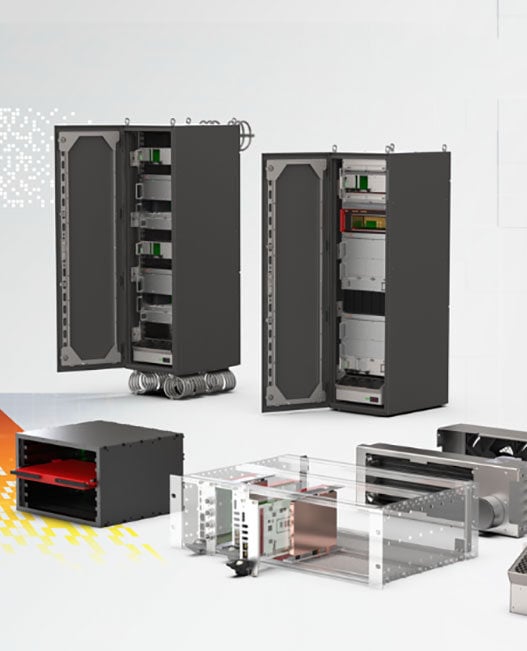
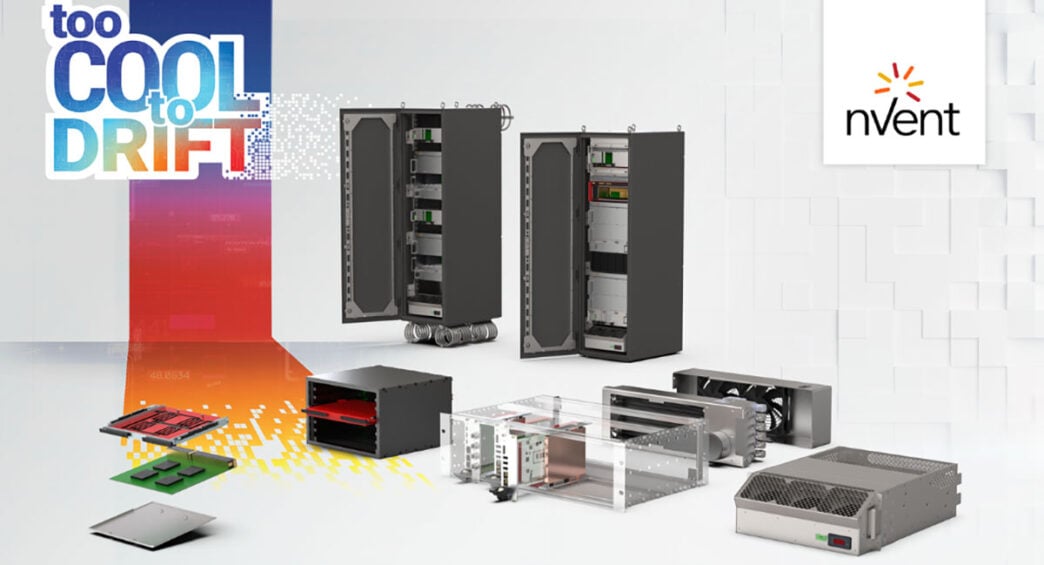
Technologies such as AirBender and Air Inlet Modules help direct conditioned air precisely where it is needed. By improving airflow distribution, minimising recirculation, and reducing hotspots, they can increase the effectiveness of existing air-cooling architectures.
For many applications, this provides a practical way to create additional thermal headroom without increasing rack footprint.
When air cooling isn’t enough
As power densities continue to rise, liquid-assisted cooling offers another path to greater thermal performance.
Liquid can transport heat much more efficiently than air, allowing cooling capacity to be brought closer to high-power components while maintaining compact system architectures.
The objective isn’t necessarily to replace existing infrastructure. Instead, modern thermal solutions can extend the capabilities of systems already in operation, helping organisations deploy more powerful electronics while protecting existing investments.
Easy swap LFT: more cooling in the same footprint
The nVent SCHROFF Easy Swap LFT (Liquid Flow Through) provides a practical upgrade path for applications requiring additional cooling performance within standard 3U Eurocard environments.
Supporting one to three cold plates in an integrated cooling circuit, the solution can dissipate more than 200W per cold plate and more than 600W per system at ambient temperatures up to 50°C.
By reducing thermal resistance at high-power components, hotspot temperatures can be lowered by more than 30K, creating additional thermal headroom for demanding applications.
4U LHX: expanding rack-level cooling
For systems with even higher thermal demands, the 4U LHX Liquid-to-Air Heat Exchanger increases cooling capability within standard 19-inch cabinets without increasing rack footprint.
Available in commercial and ruggedised configurations, it supports applications ranging from AI and HPC to defence and mission-critical electronics.
The future will be measured in thermal headroom
As compute density continues to rise, cooling is becoming more than a supporting utility. It is becoming a capacity multiplier – one that determines how much computing performance organisations can deploy within their existing infrastructure.
The next generation of computing will require more than additional processing power. It will require thermal architectures designed to support it.
The question isn’t how much power your system has. It’s how much more performance your thermal infrastructure can support.