




In wearable devices, industrial tools, and medical systems, maintaining consistent and comfortable contact with the human body is a fundamental engineering challenge. Small variations in shape can create dramatic contact pressure variations that impact usability, performance and long-term adoption.
Here, Dr Jae Son, CEO and Founder of tactile sensing technology specialist PPS, examines how tactile sensing can help engineers measure and optimise these interactions. The result? A more data-driven approach to ergonomic design.
As electronic systems become more closely integrated with the body, the challenges around usability and comfort are becoming more pronounced. Devices are worn for longer durations, used in more dynamic environments and expected to perform reliably across a wider range of user sizes and anatomies.
Whether it’s a headset distributing pressure across the skull, a tool handle transferring force through the hand, or a medical device maintaining stable contact with tissue, achieving optimal contact mechanics for everyone remains difficult.
Applications driving the need for measurement
The importance of understanding contact mechanics is already evident across multiple areas of electronic product design.
In wearable and head-mounted devices, pressure mapping is used to optimise fit and reduce discomfort during prolonged use. This is particularly relevant in augmented reality (AR) and virtual reality (VR) systems, where devices must remain stable during movement while maintaining user comfort. Even small imbalances in load distribution can lead to pressure points, slippage or fatigue over extended sessions.
In industrial environments, analysing how forces are distributed across the hand can create improvements in tool design. Sensor-enabled gloves or instrumented handles allow engineers to observe how loads are transferred through the palm and fingers, helping to identify inefficient force paths and high-stress regions.
According to Iyer et al., writing in the journal Ergonomics, emerging contact mechanics measurement systems enable more accurate and scalable assessment of musculoskeletal risk than traditional observational methods, particularly in repetitive-use scenarios.
In medical devices, maintaining consistent and controlled pressure is often essential for both performance and patient compliance. Applications such as orthotics, prosthetics and continuous monitoring systems require stable contact with the body, where uneven pressure can lead to discomfort, reduced effectiveness or discontinuation of use.
Across these sectors, a common requirement is emerging: the ability to measure how devices physically interact with the body under real-world conditions.
The challenge of subjective ergonomics
Despite its importance, ergonomics has traditionally been difficult to quantify. Evaluation methods have relied on user feedback, iterative prototyping and observational testing. While these approaches can identify obvious issues, they are inherently subjective and provide limited insight into the underlying mechanics of interaction.
This limitation has clear consequences. Indeed, previous research by Deloitte, in its 2021 Connectivity and Mobile Trends survey, found that 39% of users stopped using a device because it was uncomfortable to wear. This demonstrates how comfort directly influences product adoption and long-term engagement.
However, this creates a disconnect for engineers. Core performance parameters – such as electrical efficiency, thermal management, or signal integrity – can be measured with precision. In contrast, comfort and fit are often assessed qualitatively, making them harder to optimise systematically.
Understanding interaction through pressure distribution
From an engineering perspective, ergonomics can be understood as a problem of force distribution across an interface or contact mechanics.
When a device contacts the body, forces are applied across a surface that may be soft, irregular and dynamic. The way these forces are distributed, rather than their total magnitude, determines whether the interaction is stable, comfortable or problematic.
Conventional sensing approaches typically measure total force but do not capture spatial distribution. As a result, localised pressure concentrations can remain hidden, even when overall force levels appear acceptable.
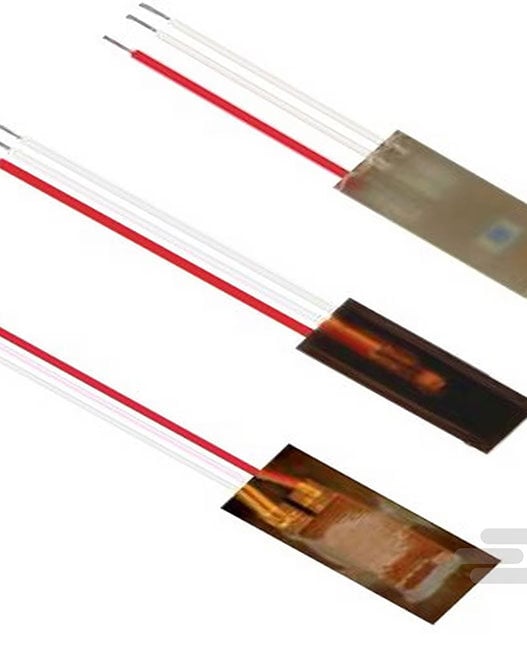
Tactile sensing addresses this limitation by enabling high-resolution pressure mapping across a surface. Arrays of sensing elements provide detailed insight into where contact occurs, how contact pressures are distributed and how these interactions change during movement or prolonged use.
According to research published in the International Journal of Human-Computer Interaction, “While pressure is critical for both proper device placement and maintaining comfort, quantitative references for suitable pressure levels are scarce.” How can we improve analysis of localised pressure effects, rather than relying solely on aggregate measurements?
Integrating measurement into design workflows
The value of tactile sensing lies not only in measurement, but in how it is integrated into the design process.
By incorporating pressure measurement into early-stage development, engineers can capture baseline interaction data from prototypes and identify issues such as pressure hotspots, uneven load distribution or instability on reference standards that cover 5, 50, and 95% of the human anatomy. This provides a reference point for evaluating design changes.
Modifications to geometry, material properties, padding or fastening mechanisms can then be assessed quantitatively. Engineers can compare pressure distributions across iterations, identify trends and correlate specific design features with measurable outcomes. This structured workflow reduces reliance on subjective feedback and enables more efficient development cycles.
According to Naranjo et al., writing in the journal Sensors, wearable technologies “can significantly improve workplace safety and efficiency,” with studies reviewed reporting improvements such as a 15-20% increase in productivity and a 35-40% reduction in task error rates in industrial environments.
From measurement to implementation
For engineers looking to apply these principles in practice, the challenge lies in selecting sensing technologies that can operate reliably across complex interfaces while delivering sufficient resolution and repeatability.
Tactile sensing systems developed by PPS are designed to address this requirement, providing high-resolution pressure mapping across flexible and conformable surfaces. These systems can be integrated into prototypes, test rigs or evaluation setups, enabling engineers to capture detailed interaction data without significantly altering the behaviour of the device being tested.
By supporting real-time measurement and repeatable testing, such systems allow design teams to move beyond one-off evaluations and establish consistent, data-driven workflows for ergonomic optimisation.
Calibration and measurement integrity
Tactile sensors operating on complex geometric interfaces and environmental conditions impact sensor accuracy and factors such as non-uniform loading, material deformation and environmental variation can introduce significant errors. So, application-specific calibration methods that reflect real-world conditions are developed to ensure that measurement data is accurate.
In regulated sectors such as medical devices, ensuring measurement reliability is essential not only for performance but also for compliance.
From application insight to engineering standard
As electronic systems become more closely integrated with the human body, ergonomics is evolving from a secondary consideration into a primary design constraint. The ability to measure contact pressures allows engineers to treat comfort and fit as quantifiable parameters, enabling them to be analysed, compared and optimised in the same way as other performance metrics.
This represents a broader shift in wearable electronic design: from focusing solely on device functionality to understanding how devices interact with the people who use them. In this context, ergonomics is no longer subjective. It is measurable and increasingly essential.