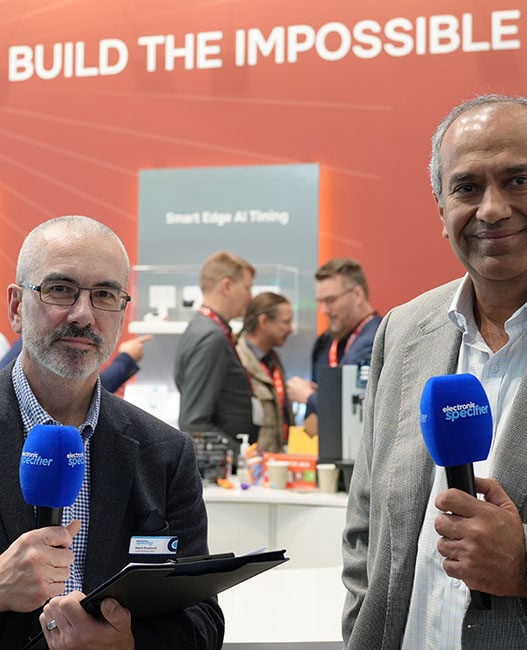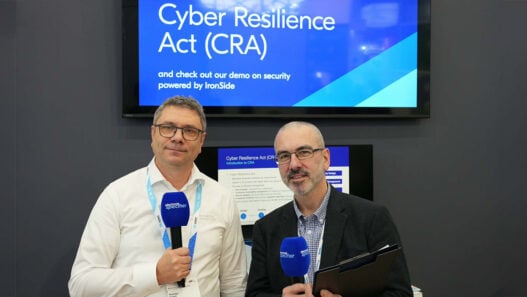


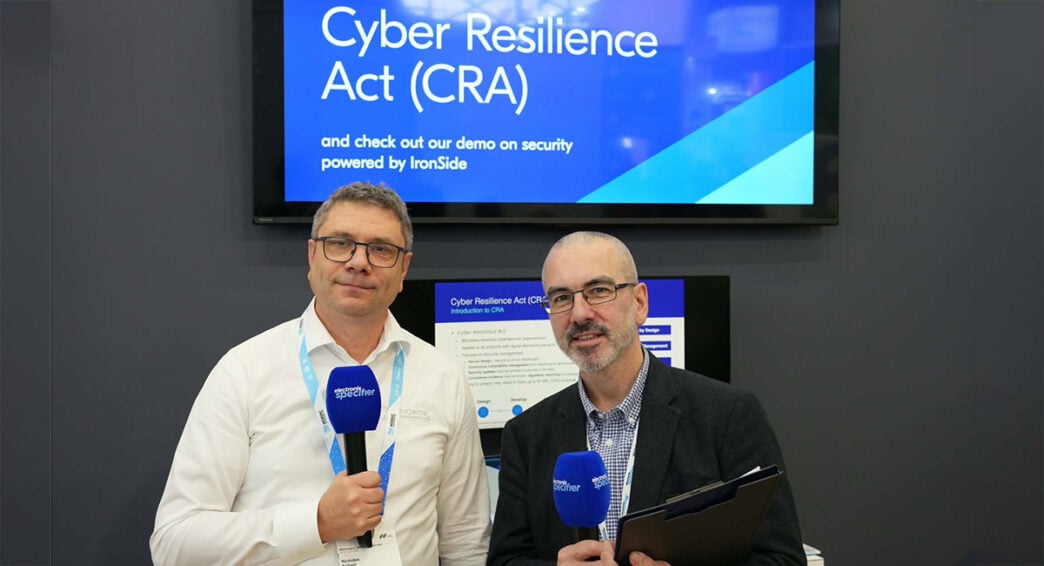
At electronica 2026, Mark Gradwell, Contributing Editor at Electronic Specifier, spoke with Nicolas Schieli, VP of Product Security at Nordic Semiconductor, a Norwegian fabless semiconductor company and a leader in wireless low-power products. They discussed what the EU’s Cyber Resilience Act means for device makers and how Nordic is helping customers prepare.
Cybersecurity was one of the most talked-about topics on the show floor at electronica 2026, and the EU’s Cyber Resilience Act (CRA) was one of the key topics that surfaced throughout the show. For Nordic Semiconductor, it was the defining theme of the week, with many of its customers keen to talk about the new regulations.
What the CRA means for Nordic and its customers
“CRA is an important regulation that was passed in Europe that will impact essentially every single product that has digital elements … hardware and software,” Schieli said. That puts Nordic’s own products in the scope, as well as most of its customers’ products.
Nordic’s own CRA compliance work is already underway. “We have put in place the vulnerability handling that is required by that regulation that is in force since September of this year. We have been doing this for quite some time, actually,” he said. The CRA’s mandatory reporting obligations for actively exploited vulnerabilities and severe security incidents have applied since 11 September 2026, and the regulation’s full requirements follow on 11 December 2027.
As for customers, Schieli said that they “need to prepare an upgrade of the design to make sure that their design is compliant itself, to be secure by design”. They also need to be able to handle vulnerabilities themselves, fixing issues when they are found and deploying those fixes to products in the field.
How Nordic is supporting compliance
Vulnerability handling is delivered through Nordic’s nRF Cloud platform. Customers upload the software bill of materials (SBOM) for their products, and nRF Cloud scans it for known vulnerabilities. If any are found, customers are notified. They can then update their software and upload the new version to nRF Cloud, which deploys it to their devices in the field. Schieli said this lets customers meet the CRA’s first essential requirement, which is keeping their products up to date and secure.
The service builds on the firmware vulnerability scanning that Nordic announced for nRF Cloud in July 2026. It works alongside the platform’s firmware-over-the-air (FOTA) update service, so manufacturers can identify a vulnerability, see how many deployed devices are exposed to it, and roll out a fix from a single platform.
Nordic also offers a CRA readiness tool. It shows customers where they currently stand and which parts of the regulation they should focus on first. The tool will be expanded in Q1 2027 so that customers can enter their design and target application and see which specific parts of their design need attention. It will also show them how to reach the CRA compliance package that Nordic will deliver.
A burden worth embracing
“Like any regulation, of course, there will be a burden,” Schieli said, in response to the CRA being one more set of rules for developers to work with. But it should also bring benefits to device makers and their end customers: “R&D teams need to upgrade the way they work. They need to design products secure by default.”
Schieli acknowledged that this is a major change in the way products will be designed from now on, and that it can be seen as a significant burden. However, he believes the industry should welcome it. “I think this is something that should be embraced because the net benefit to the end user will be quite substantial,” he said. “End users will end up having products that they know will be safe to use.”
The regulation also brings much-needed clarity about who is accountable when something goes wrong. “There will be a clear responsibility about who is owning any vulnerabilities … there will be a mechanism for fixing them,” Schieli added.
For Schieli, the end result means that products will get better overall, and “customers should embrace it rather than fight it”.
Watch the full interview here: