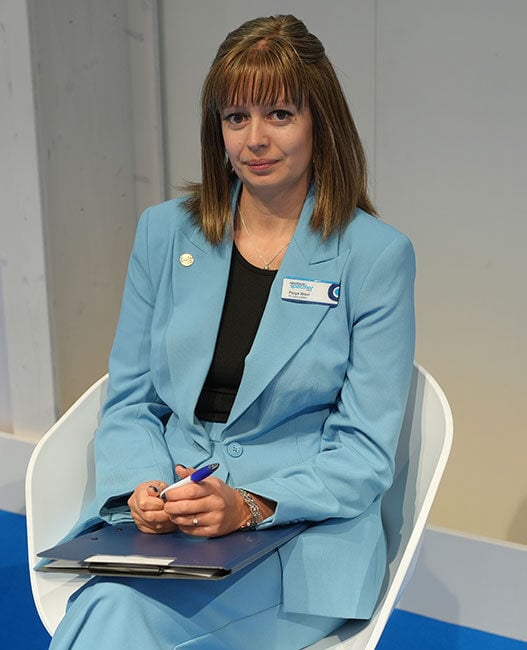






When you look at the world, do you take it as it is? Or do you see what is missing and try to fix it? Paulette Watson MBE saw that future workforce stability depended on making sure that the right voices were not only in the room, but that they were heard and respected. Those voices could make a difference to the future. Because those voices are the future.
Watson is the founder and CEO of Academy Achievers Global and the architect of a digital inclusion drive to raise one million black women and girls into science, technology, engineering, and mathematics by 2030.
Semiconductors: the gap nobody was filling
Throughout her years in education, teaching, leading on ICT infrastructure, and sitting as a non-executive director, Watson gained a rounded view of a problem that most people were either ignoring or failing to name. Everywhere she looked, be it boardrooms, DFE league tables, or government apprenticeship data, women were underrepresented. And black women? They were virtually invisible.
In 2017, she was rejected for a Winston Churchill Fellowship, a UK charity that supports individuals in their mission for change. She realised that she now had a choice to make. She could stop. Or she could scale independently. She chose to scale.
Leaning into her analytical mindset and computer science training, Watson began researching global digital exclusion trends. She found that the lack of women in technology was global. Not only did these countries have a gap when it came to female representation in foundational technologies, but within that gap, there was an even deeper absence of black women. When she looked specifically at the semiconductor industry – the most foundational technology behind every smartphone, computer, and AI chip on the planet – she was shocked.
“For engineering apprenticeships, it was zero. There was nothing for women. Nothing for Asian women or for black women. It was zilch.”
So she set a target. One million. One million women entering the semiconductor industry and representing the global diversity that is so desperately missing from technology. Because the voices of today shape the choices of tomorrow.
“If over four billion women exist globally, one million entering semiconductors is not radical – it is responsible,” she says.
Watson is also an advocate for ethical AI and AI governance. She points out that technology built without diverse voices will inevitably serve some people better than others.
“If we exclude large parts of the global majority – in particular black women and girls – from AI, semiconductors, and emerging technologies, we are not just harming communities. We are limiting innovation itself.”
What is the #BeMe ecosystem?
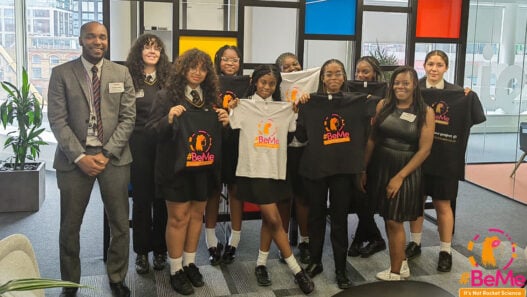
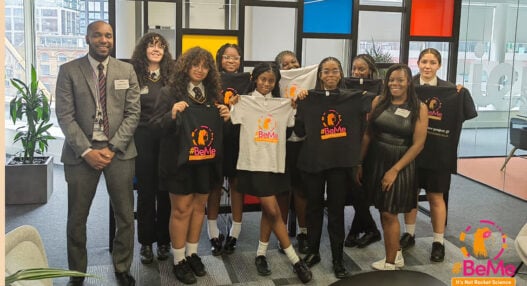
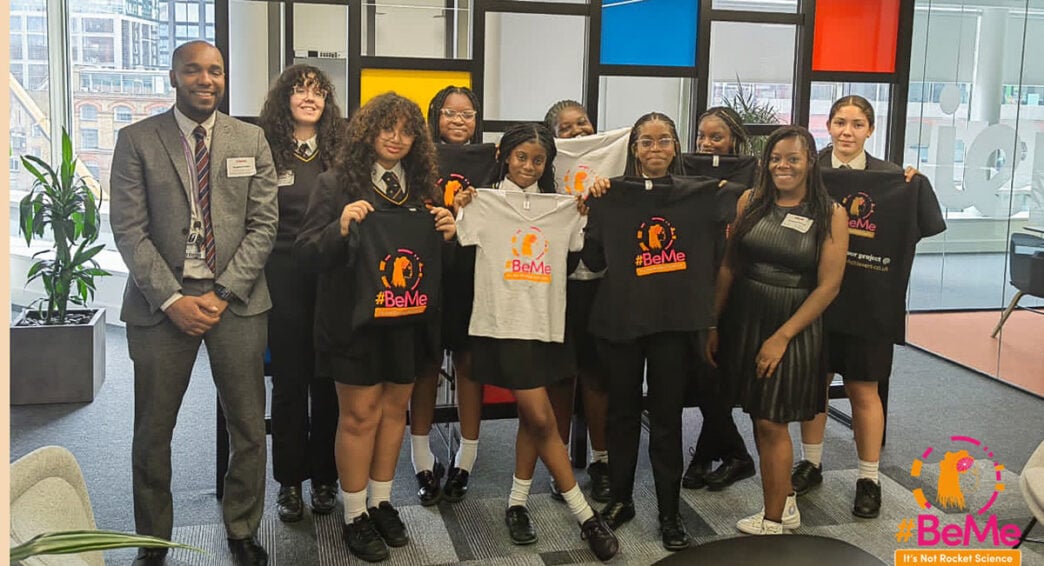
The vehicle for Watson’s mission is the #BeMe Digital Inclusion ecosystem – a structured, end-to-end pathway designed to take a young woman from uncertainty to employment-readiness. This is not a day workshop. It is not a way to tick a box and say that you’ve done your bit for diversity. This is a fully supportive and comprehensive ecosystem that takes students through everything they need to succeed and then pay that success forward.
It begins with mentorship: CV writing, interview technique, exam preparation, and confidence-building. Participants are then matched with an industry mentor – someone who looks like them – via an AI-powered platform that handles scheduling and matching automatically. From there, they move into tech company visits, work experience, internships, and hands-on technical training covering everything from HTML and cybersecurity to SQL, Cloud computing, and an introduction to AI and semiconductors.
The #BeMe platform also runs sustainable tech, where industry leaders share their journeys and young people attend career fairs and workshops. These events are open to everybody. Nobody is turned away.
Then comes the alumni stage, where graduates return to mentor the next cohort, build their professional portfolios, and ultimately become ambassadors who open doors into the organisations they join. The blueprint, says Watson, feeds itself.
Funded pilots were set a target of reaching 400 girls. Yet, indirectly, the movement has already reached over 500,000 people across the globe.
The long road to success
As with all success stories, there have been setbacks along the way. In the early days, sometimes only one person showed up, yet Watson remained undeterred.
“Even if one person turned up, I would carry on as if the whole world was there.”
There were professional frustrations, too. Watson would sit in governance meetings – the only black woman in the room – watching, as ideas were obscured by jargon, and women stayed silent. Not because they lacked understanding, but because the language had been made deliberately impenetrable. Watson, who is dyslexic, decided to make a habit of asking the questions everyone else was afraid to ask.
“I put myself in a position of vulnerability, and I encourage my girls to do the same. Failure is only a curse when you give up.”
She eventually stepped back from her director and trustee roles, coming to realise that those positions were not creating the change that needed to happen. She realised that it needed to be built from the ground up, in communities, in schools, in church halls, on podcasts, at speaking engagements in Africa where nobody knew her name, and she had to earn every room – that was where the real work was.
A vision of the future
Watson’s vision for the next two years is to globally scale the #BeMe platform, become a leader in AI and semiconductor inclusion, and advance women in chip design labs. Her wish is that AI engineers who have been a part of #BeMe spread the news of their lived experiences via their own social platforms. And, to see a measurable shift in representation data across the industry.
Watson is working towards policy reform that would embed semiconductor literacy and AI governance into secondary education curricula and building partnerships with innovation hubs in places such as Taiwan and Ghana, with the explicit goal of decentralising access rather than concentrating it.
“I’d like to see systems built where inclusion is not an initiative. It is the norm.”
A message for every young person reading this
If you are a young woman – or any young person – wondering whether there is a place for you in technology, let Watson’s story encourage you that there is a place for you. You belong, and don’t let anyone tell you otherwise.
Watson did not start with funding, connections, or a perfect plan. Her journey started with wanting better for her daughter. It continued because she believed in what she was creating and had a willingness to get back up every time she fell.
The doors into industry are not closed to you; it’s just that you sometimes need to find someone who has the right key. Watson has been unlocking those doors for nearly thirty years. And she is only just getting started.
Academy Achievers Global runs #BeMe Digital Inclusion across the UK, Africa, and internationally. For more information, visit their website or connect via LinkedIn.
This article originally appeared in the July’26 magazine issue of Electronic Specifier Design – see ES’s Magazine Archives for more featured publications.