

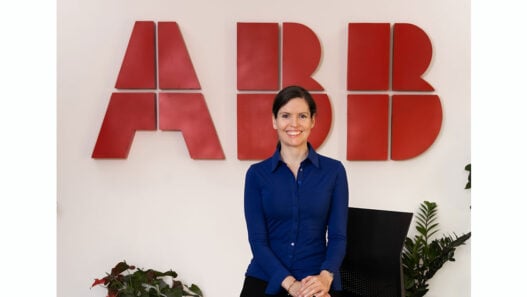



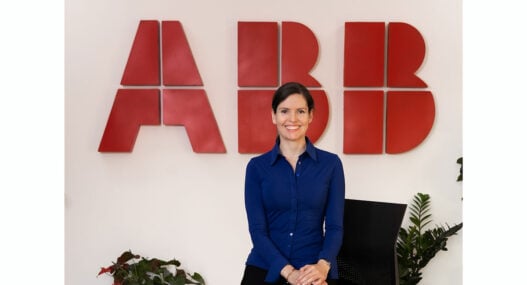
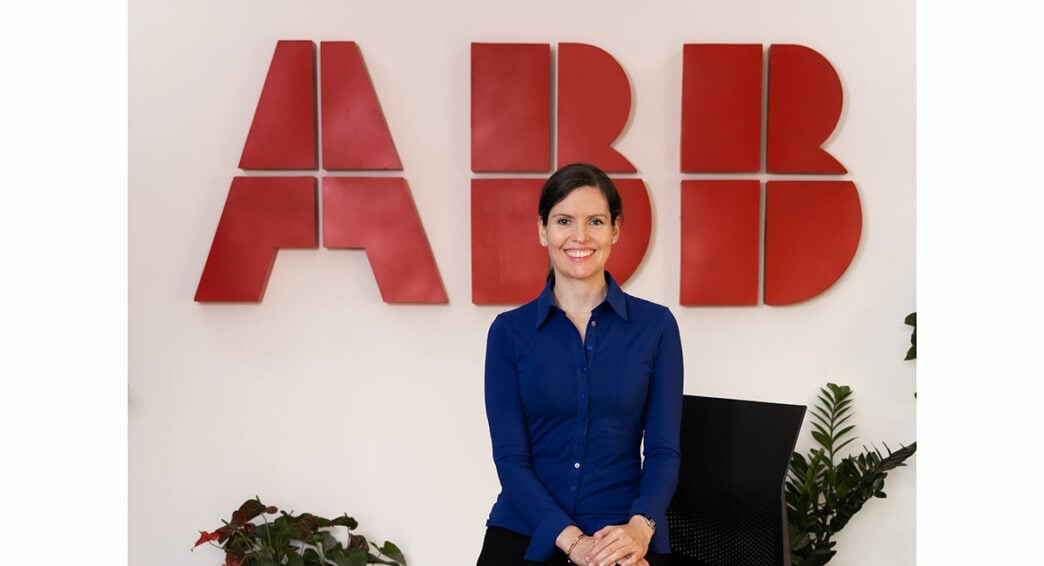
Andrea Estrada-Hein is EVP of the Global Business Line for Switchgear at ABB and a powerhouse of switchgear knowledge. Describing herself as a Bolivian-born, US-educated German engineer, Estrada-Hein was born into an engineering family and started her career studying environmental engineering in the US before moving to Germany to complete her PhD in mining, with the intention to return to Bolivia. “Well, that was 20 years ago, and I’ve not been back yet,” she said.
Estrada-Hein has always been keen to absorb information and learn, but she found that after 10 years of study, she was ready and wanted to work in industry so that she could understand the real-world applications of how industries operate. It was then that she made the transition to Siemens, working in its Management Consulting section. This move enabled her to still be included in engineering, but it also allowed her to learn management and strategy.
Siemens marked the beginning of a 17-year tenure, during which time, she transitioned from consulting at group level to mobility – specifically the rail business side of the company. There, she was able to dive into rail infrastructure and was introduced to her first foray into switchgears. Two years ago, she joined ABB to lead the business line switchgear globally. And since then, things couldn’t be more exciting.
“Being an engineer gave me a great base on the analytics of understanding how things work because it was a very deep dive into details. I could get lost in a rabbit hole, and I loved it. I love to understand every detail … then the layer of management consulting helped me because it taught me to go into topics very fast, because you could get given new and completely different programmes at any time. It also taught me to structure things as well as how to talk to top management. Not only this, but it taught me top-down communication as well,” she said.
So, what exactly is a switchgear?
A switchgear is one of the most important pieces of technology on the planet. If something in the electrics trips, a switchgear cuts off the electricity supply – a bit like fuse boxes do at home, only switchgears do it at voltages around 100 times higher, distributing and controlling electricity across distribution networks, industrial sites, and, increasingly, data centres, explains Estrada-Hein.
A grid under pressure
The energy sector is coming under huge strain. Electrification is driving up consumption as EVs and heat pumps replace fossil fuels. Renewables are feeding power into a grid that was designed for one-directional flow, not thousands of entry points. And in Europe alone, around 40% of grid infrastructure is more than 40 years old.
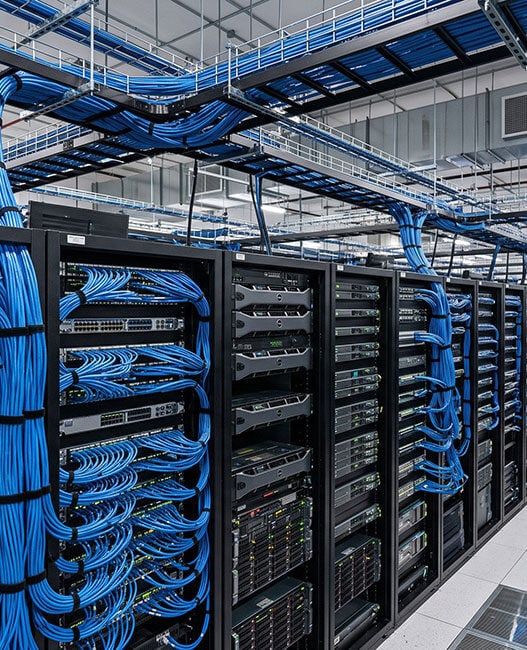
Then there’s the data centre boom, fuelled by the AI race. “In the US alone, we’re confident that 100 gigawatts of new data centre capacity are coming. If you think that every gigawatt is like a nuclear power plant, that’s the equivalent of 100 nuclear power plants – just in the US. And this will happen in Europe and Asia too,” she says.
To meet that demand, ABB is investing €200 million across European manufacturing sites, including in Germany, Italy, Bulgaria, Norway, and the UK, to increase and modernise its production capacity.
The SF6 phase-out
On top of managing explosive growth, the industry is also traversing a major technological transition. SF6 – the gas used as an insulating medium inside switchgear – is being phased out across the EU due to its greenhouse gas potential, which is at least 20,000 times more potent than CO2. The problem is, SF6 is technically brilliant, and so finding an alternative that matches its performance has been no small feat.
“The industry has worked with SF6 for a long, long time, and it was not an easy transition,” said Estrada-Hein. “It’s been a very busy year for our R&D teams to make these products come to life, but they’ve come to life this year. We are producing them and distributing them to customers – it’s exciting to see them going out into the field with this new technology.”
All hands on grid
The challenge the energy industry faces is one that will affect the entire population, and so companies cannot afford to ignore half of it.
“We will need all hands on deck. This unprecedented demand will not happen without engineers – and not just engineers, but the electricians installing, servicing, maintaining, and operating the equipment. We cannot give up on women or minorities. We need them to make this happen,” she said.
Estrada-Hein is especially passionate about getting women interested in STEM early, and about making the industry feel familiar rather than intimidating. ABB runs programmes in countries including Brazil, where students – particularly women – spend one to three days inside a factory, talking to engineers and getting a feel for what the work actually looks like day to day. “If you’re not scared of something, you’re more engaged,” she said.
What keeps women in – and what pushes them out
Attracting women into engineering is only half the battle; keeping them there is a whole other challenge. Company culture, followed closely by what’s happening at home, are some of the reasons Estrada-Hein believes that women will either thrive or dive.
“I think the culture of the company is the one that makes the most difference. Once you’re an engineer, find a company that supports you – that makes the whole difference.” At ABB, she works to build a culture grounded in the company’s four values – care, collaboration, curiosity, and courage – and deliberately creates space for psychological safety, a growth mindset, and learning from mistakes. “No question is stupid. Probably five people are thinking the same thing, it’s just that nobody dares to ask. We encourage our management team to ask questions, because then it encourages people to come forward if they think, ‘well, if they don’t know, then it’s okay for me to ask too’.”
However, she acknowledges that workplace culture doesn’t exist in a vacuum. “It’s like a circle. You cannot expect your manager to help you if your husband is taking none of the responsibility at home. But, how are we going to get a male manager to understand what women are going through, if, when he’s home, he doesn’t understand what women are going through at work and at home?” This, she says, is not just a woman’s issue – it requires understanding from every single person, at every level, in every part of life.
Advice for the next generation
For any young woman unsure whether engineering is for them, Estrada-Hein says that STEM provides a great foundation in problem-solving, analytical thinking, and professional credibility – and that makes the journey easier.
“You will need to fight against stereotypes through your career, and coming from a STEM background will help you in this fight, because you will have credibility among your peers and across the industry. It makes it easier.”
She also wants women to know they don’t have to have it all figured out from the start.
“If you have a growth mindset and curiosity, you can jump into anything,” she said.
This article originally appeared in the July’26 magazine issue of Electronic Specifier Design – see ES’s Magazine Archives for more featured publications.