



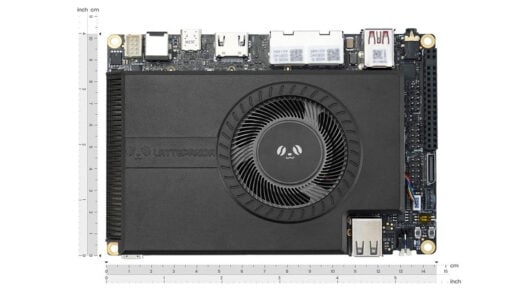


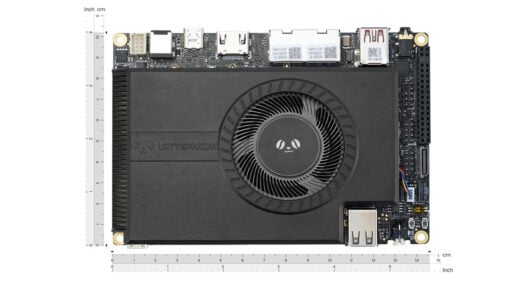
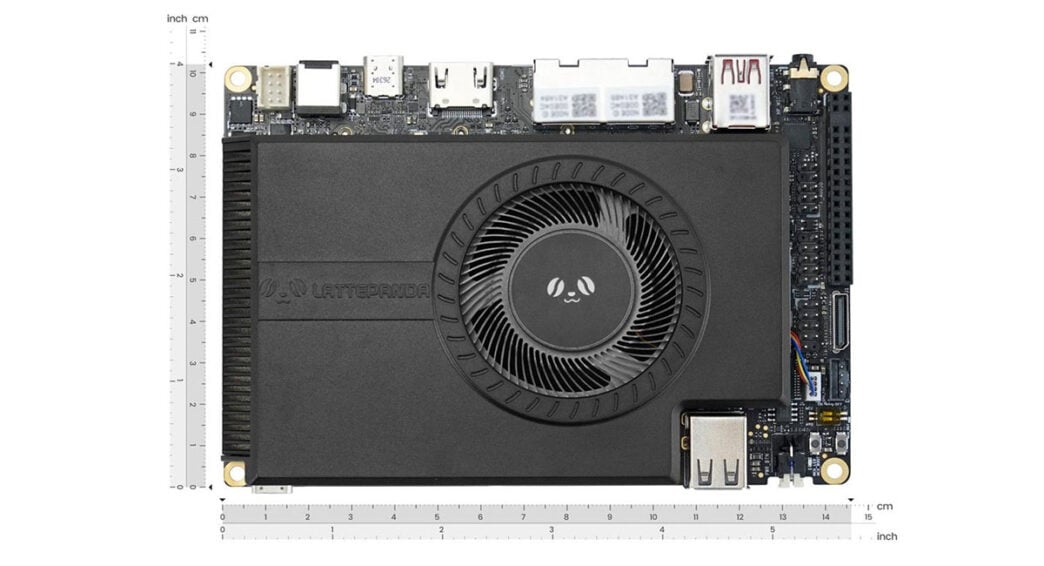
Run private multi-agent AI systems and high-speed data processing workloads efficiently without Cloud reliance. The high-performance LattePanda Sigma 2 combines Intel Core Ultra processors with server-class expansion for direct product-level integration.
Redefining local AI integration
The integration of artificial intelligence into physical Edge systems has traditionally forced a compromise between processing constraints, power consumption, and space efficiency. While relying on Cloud-based architectures offers a temporary workaround, it introduces major bottlenecks, including data privacy vulnerabilities, high latency, and heavy bandwidth dependence. To address these structural friction points directly within intelligent product development, the LattePanda team has unveiled the LattePanda Sigma 2.
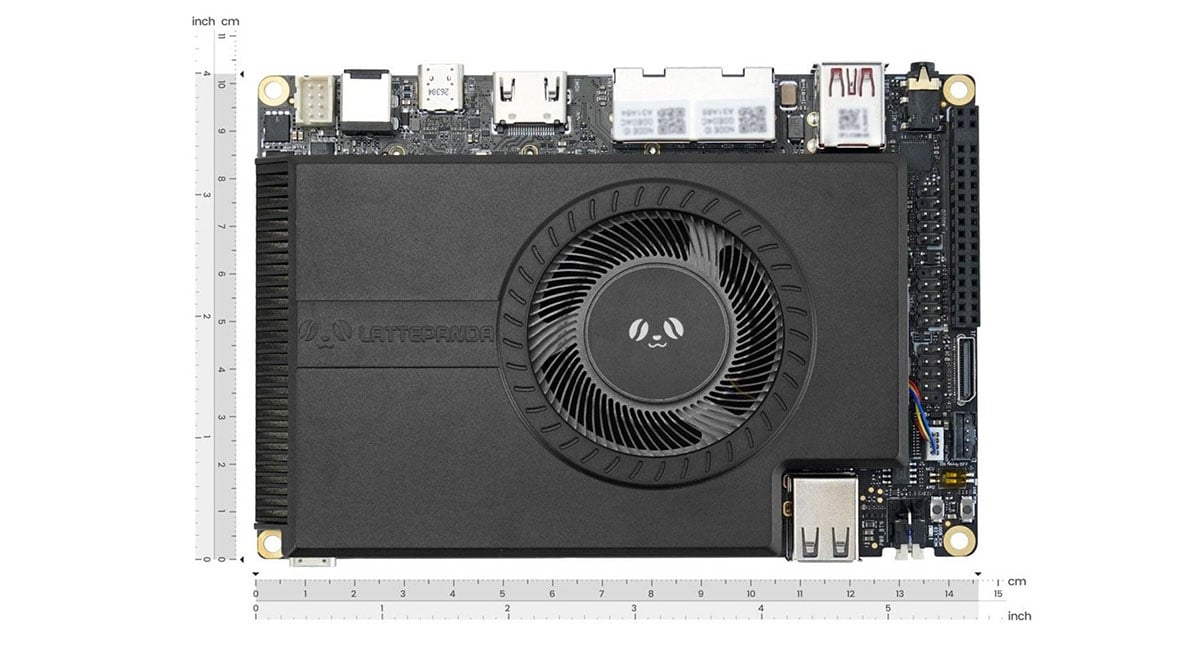
Characterised as ‘The Embeddable AI Single Board Server’, this compact x86 platform is engineered to deliver high-performance local AI computing directly inside autonomous and industrial hardware. Unlike traditional single-board computers or bulky desktop servers that sit alongside an application, the Sigma 2 is intentionally designed for deep product-level integration.
Measuring just 146 × 102mm, it consolidates server-class computational bandwidth, rapid memory throughput, high-speed networking, and real-time lower-level hardware control onto a single, space-optimised board. This design empowers engineering teams, system integrators, and OEMs to deploy secure, autonomous local AI capabilities across a broad spectrum of intelligent Edge applications.
Architectural framework: 180 TOPS of AI performance on a single board
At the core of the LattePanda Sigma 2 lies a sophisticated heterogeneous computing architecture designed to balance parallel processing power with strict hardware efficiency. Powered by the Intel Core Ultra X7 358H processor, the platform delivers a total AI performance of up to 180 TOPS at INT8. This computational bandwidth is achieved by dynamically distributing workloads across three distinct silicon engines: a central processing unit (CPU), an integrated graphics processing unit (GPU), and a dedicated neural processing unit (NPU).
The silicon distribution is optimised as follows:
16-Core CPU: built on a multi-tier architectural layout comprising four Performance cores (P-cores), eight Efficient cores (E-cores), and four Low-Power Efficient cores (LPE-cores). Operating at clock speeds up to 4.8GHz with an 18MB cache, this heterogeneous CPU infrastructure manages general operating system execution, sequential logic execution, and complex system orchestration.
Intel Arc B390 GPU: equipped with 12 Xe-cores, this integrated graphics engine delivers up to 122 TOPS of INT8 AI performance. It serves as the primary matrix for high-speed parallel pipelines, computer vision arrays, and deep learning model acceleration.
Dedicated NPU: providing up to 50 TOPS of deterministic compute power, the neural processing unit offloads repetitive mathematical matrix multiplications directly from the CPU and GPU. This ensures that continuous AI inference workloads run with optimal energy efficiency, preserving vital system resources for real-time Edge operations.
By condensing this multi-engine processing layout into a compact board, the platform eliminates the need for external, discrete graphics accelerators in standard deployments, lowering overall system power draw and heat dissipation within enclosed product chassis.
Memory architecture and on-device AI benchmarks
A major bottleneck in local AI inference is memory bandwidth. Large neural networks require rapid memory access to prevent processing cores from idling. The LattePanda Sigma 2 addresses this structural limitation by embedding up to 64GB of LPDDR5X-8533 RAM. This ultra-fast memory setup yields an exceptional memory bandwidth of 136.5GB/s, providing the raw data throughput required to sustain demanding Edge AI workloads without throttling performance.
To further accommodate complex deep learning systems, the platform’s flexible architecture allows up to 59GB of system memory to be allocated as VRAM for dedicated AI processing. This large VRAM allocation enables the single-board server to host complex 35B-class quantised Mixture of Experts (MoE) models locally. It also provides ample room to maintain the Key-Value (KV) cache required by long-context autonomous AI agents, mitigating out-of-memory errors during extended operational cycles.
In standardised performance benchmarks optimised with the Intel OpenVINO GenAI framework and INT4 quantisation, the LattePanda Sigma 2 achieves highly responsive local text generation speeds:
Qwen3.6-35B-A3B model: runs locally at approximately 30 tokens per second.
These real-world metrics demonstrate the board’s capability to process responsive local conversational AI, complex reasoning, and offline multi-agent operations entirely on-device. By computing workloads locally, the system bypasses external Cloud infrastructure, ensuring data privacy and eliminating network latency overheads.
Server-class expansion and real-time hardware control
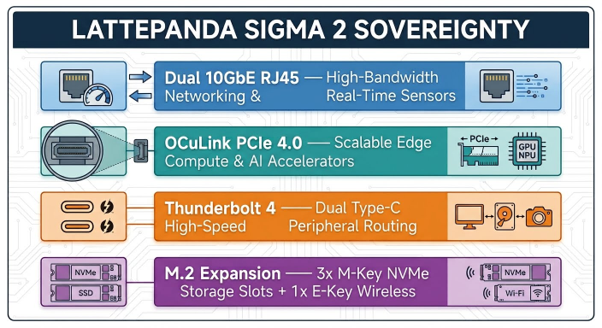
Transitioning an enterprise-grade AI application from a central Cloud repository to physical Edge environments requires extensive connectivity for storage, networking, and sensor arrays. The LattePanda Sigma 2 meets these requirements by offering server-class expansion options within an embeddable footprint. It features PCIe 4.0 x2 via an integrated OCuLink port and two Thunderbolt 4 Type-C ports, giving developers a direct path to scale computing capacity with external graphics cards or specialised hardware accelerators as local workloads expand.
High-bandwidth external I/O interfaces and storage expansion slots on the board include:
Storage and wireless slots: three M.2 M-Key slots for high-speed NVMe solid-state drives and one M.2 E-Key slot for wireless connectivity cards.
High-speed networking: dual 10GbE RJ45 Ethernet ports that support the massive data transfer rates required for real-time vision systems, network-attached storage (NAS), and dense multi-agent communication networks.
Peripheral and display routing: two USB 3.2 Gen 2 ports, two USB 2.0 ports, HDMI 2.1, DisplayPort 2.1 (via Type-C), and an eDP 1.5 internal header for flexible display configurations.
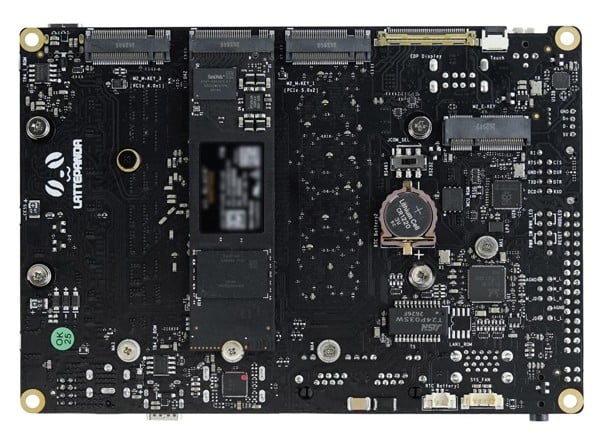
Bridging the gap between high-level machine learning models and physical automation, the board incorporates an onboard Raspberry Pi RP2350 microcontroller. This co-processor handles low-level General Purpose Input/Output (GPIO) connectivity, allowing the system to interface directly with actuators, relays, and industrial sensors with real-time responsiveness. Shipped with preloaded MicroPython firmware, the microcontroller provides developers with a clear, programmable script interface to coordinate physical hardware operations alongside local AI decision-making pipelines.
Ecosystem compatibility, lifecycle support, and key application horizons
Transitioning complex industrial setups from Cloud dependencies to physical devices can introduce severe deployment barriers. The LattePanda Sigma 2 eliminates software friction by fully supporting Windows 11 and Ubuntu 24.04 LTS (or later). This ecosystem compatibility preserves native integration with standard x86 production tools. To streamline out-of-the-box system staging, every unit ships with critical drivers, the OpenVINO Model Server (OVMS), llama.cpp, Ollama, OpenClaw, and pre-installed Edge AI models on the onboard SSD.
For enterprise-grade development and long-term hardware rollouts, the platform guarantees a 3+ year product lifecycle. It also offers custom boot logos, BIOS customisation options, and direct engineering integration support. This commercial longevity allows engineering teams to deploy advanced computing setups across four major application horizons:
Local AI appliances: runs private Retrieval-Augmented Generation (RAG) pipelines and multi-agent systems entirely on-premises, keeping sensitive enterprise data fully secure and independent of third-party networks.
All-in-one Homelabs: combines network-attached storage (NAS), compute virtualisation, media routing services, and heavy local AI evaluation workflows within a singular, space-optimised hardware hub.
Professional instruments: captures and evaluates high-speed digital data streams directly inside specialised, compact laboratory equipment or automated manufacturing machinery.
Mobile autonomous robots (AMRs): unifies diverse camera perception layers, SLAM mapping navigation, real-time spatial path planning, and physical hardware control pipelines onto a singular mobile platform.
Conclusion
The LattePanda Sigma 2 bridges the gap between massive computing arrays and embedded Edge form factors. By consolidating 180 TOPS of heterogeneous AI performance, server-class I/O connectivity, up to 64GB of fast LPDDR5X memory, and real-time microcontroller hardware management, the single-board server gives OEMs and system engineers a clear roadmap to deploy private local intelligence directly into their hardware. During its introductory pre-sale period through mid-November, the system is available at a promotional price of $2,599, before returning to its standard MSRP of $2,799.