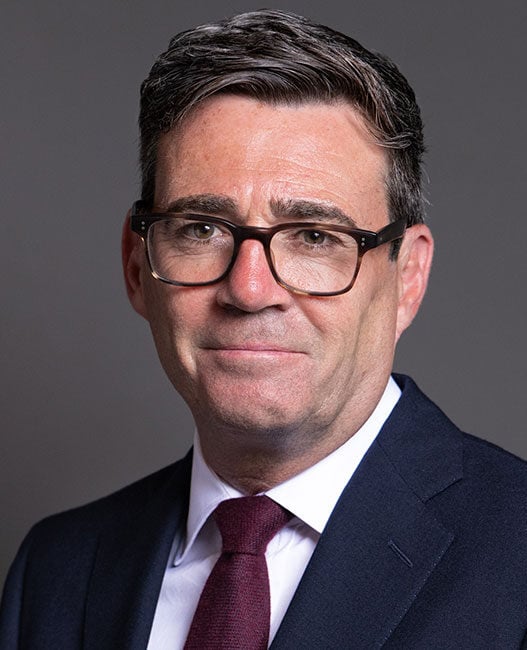







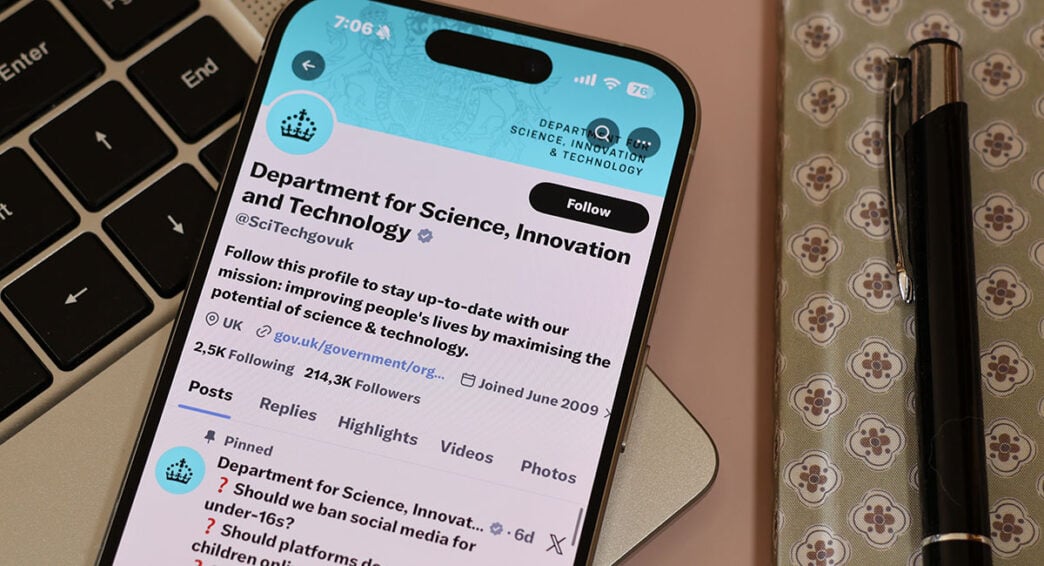
Andy Burnham, who took office as Prime Minister this week after Keir Starmer’s resignation, has scrapped the Department for Science, Innovation and Technology (DSIT) and merged it with a newly created Department for Business, Innovation, Science and Trade.
Rumours had been circulating in the lead up to Burnham’s appointment, with one Labour source telling the Financial Times that the department “needs to be mainstreamed” and that there was “a sense that DSIT has not been firing on all cylinders.”
The proposal had triggered a largely negative response from across the tech sector. techUK CEO Julian David and Startup Coalition Executive Director Dom Hallas wrote to Burnham warning it would be “the wrong change at the wrong time,” arguing that DSIT’s value lies in bringing researchers, AI practitioners, innovators, and policymakers together under one roof – “a single front door that gives the tech sector clarity, pace, and a government partner that understands technology.”
Matt Clifford, a former AI adviser to both Keir Starmer and Rishi Sunak, was blunter still, calling the plan “a big mistake” and warning that “tying up our most senior science and tech officials in a reorg wastes time and energy that’s desperately needed for the actual substance.”
What was the DSIT?
The DSIT was created in 2023 under the then-Prime Minister Rishi Sunak with the mission to bring together “the five technologies of tomorrow” – quantum, AI, engineering biology, semiconductors and future telecoms – plus life sciences and green technology, into a single department for the first time.
The plan was to make the UK “the most innovative economy in the world and a science and technology superpower.”
Sunak had six key priorities for the department:
- Increase private R&D investment to make the UK the most innovative economy in the world
- Deliver gigabit broadband and make the UK the best place to start a tech business
- Put public services at the forefront of innovation
- Strengthen international collaboration on science and technology
- Deliver legislative reforms like the Data Protection and Digital Information Bill and the Digital Markets, Competition and Consumer Bill
- Pass the Online Safety Bill
Key appointments
Under the banner of the new Department for Business, Innovation, Science and Trade, Burnham has made some key appointments.
Firstly, Jonathan Reynolds as the Secretary of State. Reynolds previously headed the Department for Business and Trade (DBT) from 2024 until September 2025, when he was appointed chief whip.
Reynolds has pushed back on industry’s fears, saying “British science and innovation is an absolute national asset – it is something we should be rightly proud of … The historic challenge has always been: can we commercialise that? Can we get the benefits of that for our economy?
“In no way will science be a secondary issue – it will be at the forefront of the business department.”
Dame Tamara Finkelstein DCB, CEO of the Royal Academy of Engineering, said: “We welcome Secretary of State Jonathan Reynolds to his new role, combining innovation, science and technology – the engines of growth – with the business brief. This move will help to improve coordination and collaboration across sectors to reap the full economic benefits of research, particularly between UKRI, government departments, industry, and investors. The UK generates more spinouts and startups than any other country in Europe, but we must support them to scale, grow, and stay to reach their full potential.”
Secondly, Kanishka Narayan’s role as Minister for Artificial Intelligence has been elevated to a cabinet position. This is the first time an AI-focused minister has been given a seat at Cabinet. Narayan previously served as Parliamentary Under-Secretary of State for AI and Online Safety since September 2025 under Starmer.
Narayan said via a LinkedIn post: “AI is likely the most significant technology in human history. Its impact will dwarf other things. The best case for it is compelling beyond our dreams: a reindustrialised Britain, stronger national security, public services transformed for the better.
“Nations have a narrow window to decide whether they shape AI or get shaped by it. Britain is in that window right now … While that window is still open, I will act with pace, I will act with ambition, and I will focus relentlessly on securing British influence in shaping AI.”
Britain isn’t the first to create an AI-focused ministerial role, France and Canada have had similar positions for a few years now, but this is a clear sign that Burnham wants to hold a key place in the global AI race.
Finkelstein continues: “At this critical time for the economy, we must focus on innovation infrastructure – we need tech testbeds, facilities, and data systems that can help turn ideas into products, services, and processes. I am delighted that Kanishka Narayan will attend Cabinet as AI Minister, continuing the highly effective advocacy and support that he built up in his previous role in DSIT across the UK’s rapidly developing tech scene.”
Dr Andy Sellars, Director of Strategy at CORNERSTONE says this could mark a significant moment for the semiconductor sector, with the UK’s long-term competitiveness and sovereign tech capabilities hinging on support for AI hardware and chip development: “Burnham’s decision to appoint Kanishka Narayan as Cabinet Minister for AI has the potential to generate significant opportunities for the UK’s semiconductor industry.
“In his previous position, Narayan established himself as a strong advocate for the sector, launching a £10 million fund to boost the country’s semiconductor SME ecosystem, and co-chairing the Semiconductor Advisory Panel. Notably, in spearheading the AI hardware plan, he played a pivotal role in recognising the strategic importance of chip development to support the country’s AI ambitions and acknowledging the role of photonics.
“Whether semiconductors will continue to fall within Narayan’s remit remains to be determined, but given his past advocacy, building AI hardware and UK semiconductor capabilities is likely to remain a key component of his approach to AI.
“With current momentum in semiconductors and photonics, the new administration has a clear chance to capitalise on UK strengths in these key areas and support AI hardware and the UK’s infrastructure development. We welcome this appointment, and look forward to continued support for the sector and the UK’s sovereign chip strategy to generate economic growth for communities across the UK.”
Whilst the focus appears to be on AI, and understandably so, it has left many questioning what will happen to other areas of important technology, like quantum computing, fintech, medtech, cyber security etc.? Will this new department be enough to put the UK at the forefront of innovation?