







Researchers from the University of Sydney, working with IBM, have identified one of the main sources of error in quantum computers, and demonstrated how redesigning a critical component of the error-correction process can substantially improve performance. The findings, published in Nature Communications, offer a clearer roadmap for engineers trying to make quantum computers reliable enough to be useful beyond the laboratory, a step that has the potential to change the game in the field of quantum computing.
Quantum computers process information using quantum bits (qubits), which are extremely sensitive to any outside interference. Even tiny disturbances can corrupt calculations. To address this problem, quantum computers rely on error-correction systems that continuously check qubits for mistakes as they run. But checks can come at a cost, as the act of measuring a qubit during a calculation – a process known as a mid-circuit measurement – forces every other part of the system to pause and wait.
“This occurs many, many times during each step of the quantum computation,” said Professor Stephen Bartlett, project lead and Director of Sydney Nano. “Each such mid-circuit measurement takes time and everything else in the operation has to ‘idle’ while the measurement is completed. This is a major stumbling block.”
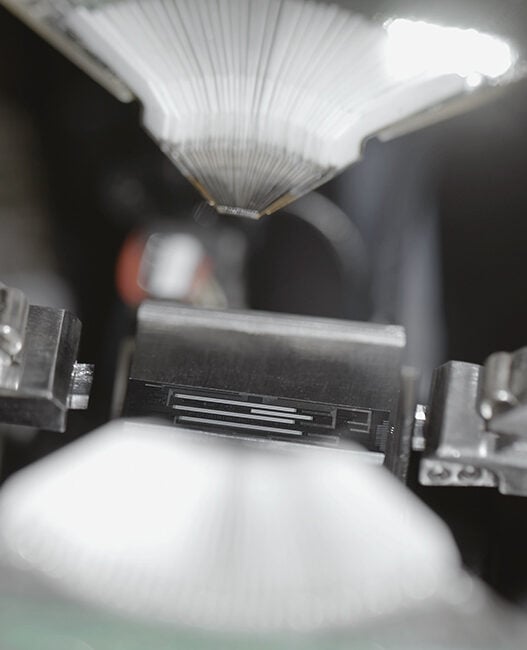
To investigate this issue, the team utilised a 156-qubit IBM Quantum Heron r2 superconducting processor, one of the most advanced pieces of quantum hardware currently available. They found that the noise generated during those idle periods was one of the main limitations on the reliability of quantum logic operations in today’s devices.
By redesigning the error-correction circuitry to shorten the idling time, the researchers managed to push logical qubit survival rates from below 90% to more than 96% for each error-correction cycle, marking a significant improvement, especially when errors can quickly compound across a long calculation.
Lead author Dr Robin Harper explained: “We wanted to identify which physical processes were limiting performance on modern quantum devices,” he said. “What we found is that the act of measuring qubits during a calculation can itself create instability. By redesigning how those measurements are performed, we were able to significantly improve the reliability of the logical qubits.”
The work comes as part of a broader collaboration between the University of Sydney and IBM, announced in 2024 and funded by IARPA, the US government’s intelligence research funding agency. It also draws on a talent exchange with University College London, with UCL PhD student Constance Lainé embedded in the research group during the project.
IBM quantum scientist Dr Ben Brown, a co-author and co-principal investigator on the grant, helped design the benchmarking framework used to characterise the mid-circuit measurements.
Professor Bartlett explained that this kind of collaboration illustrates the type of academic-industry partnership that quantum computing requires to move forward and develop. “Testing these ideas on advanced quantum hardware allows us to better understand the practical challenges involved in scaling up quantum computing systems,” he said. “This kind of collaboration is essential if we want to develop quantum technologies that are useful outside the laboratory.”
Quantum computers have long been seen as potentially transformative for tasks such as modelling complex chemical systems, designing new drugs and materials, and tackling optimisation problems that are beyond the reach of classical machines. But the path from today’s noisy, error-prone hardware to machines capable of tackling those problems reliably remains steep. Research like this, which identifies and quantifies the specific bottlenecks in current devices, is central to that effort, and brings the industry another step forward in quantum computing.