





Europe must “invest in light or be left in the dark”, Photonics21 has warned, as it published a new position paper urging the European Commission to create a €2 billion stand-alone programme for photonics in the 2028–2034 budget.
Channelled through the Multiannual Financial Framework (MFF), the funding is designed to unlock a further €6–8 billion from industry and secure Europe’s place in the global race for technological leadership.
Photonics, the science and technology of light, powers everything from advanced manufacturing and secure communications to AI, quantum computing, aerospace, healthcare, energy, defence, agriculture and food. Europe’s photonics industry is already worth €124 billion, grows five times faster than the EU economy, and directly employs 430,000 people. But with global rivals accelerating, the next decade will determine whether Europe leads in the technology of light – or buys it from elsewhere.
Dr Lutz Aschke, President of Photonics21, said: “The European Commission has already shown tremendous vision in recognising photonics as a Key Enabling Technology and investing billions through Horizon 2020 and Horizon Europe. That commitment helped build a world-class innovation ecosystem.
“But today, more than half of Europe’s photonics companies depend on imported components, leaving critical supply chains exposed. Without a dedicated €2 billion programme in the next EU budget, progress will stall – and Europe will become even more dependent on other regions for the technologies that power our economy, industry, and security. Unless we invest in light today, essentially we will be left in the dark.”
The position paper sets out a clear programme to keep Europe in the game. At its heart is the €2 billion stand-alone photonics programme in the next MFF, designed to crowd in €6–8 billion of private co-investment and close Europe’s time-to-market gap with the US and China.
To translate lab breakthroughs into products at speed, Photonics21 proposes a new class of Photonics Grand Challenge projects ranging from €250-900 million public investment in sovereignty-critical domains – AI, healthcare, defence, space, agrifood and quantum – with the aim of delivering market-ready solutions by the end of the 2028–2034 period.
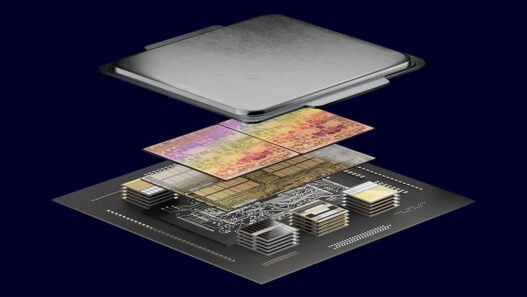
Among the proposed Grand Challenges, one of the most urgent is ‘Lightspeed AI’, a push to build the next wave of artificial intelligence infrastructure using light rather than electricity.
Photonic processors promise to run AI systems at much faster speeds while cutting the vast energy demands of today’s data centre. By leading this shift, the paper envisions that Europe could cut its dependence on imported chips while securing its digital sovereignty during the global AI race.
The paper also calls for a scale-up of European photonics manufacturing to shore up fragile supply chains; the creation of high-TRL application hubs to accelerate deployment; targeted support to help 5,000 SMEs and ~570 start-ups become global leaders; and a firm place for integrated photonics at the heart of Chips JU 2.0, alongside semiconductors, in Europe’s industrial strategy.
“To invest in light is to invest in Europe’s future: it is a commitment to our security, our prosperity and our ability to stand on our own two feet in a turbulent world,” concluded Dr Aschke.