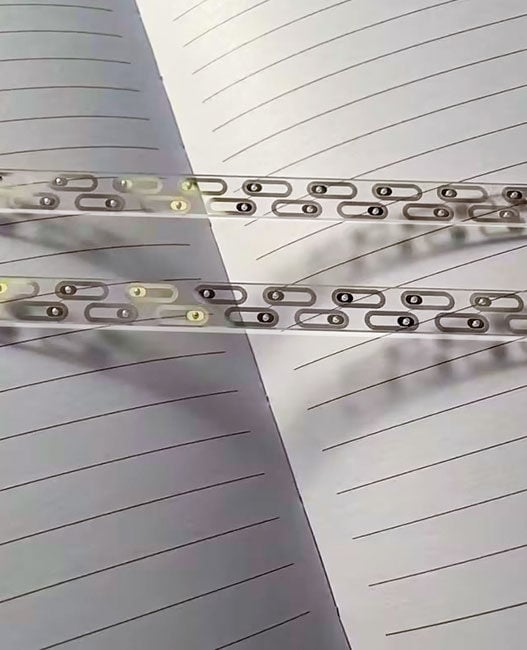




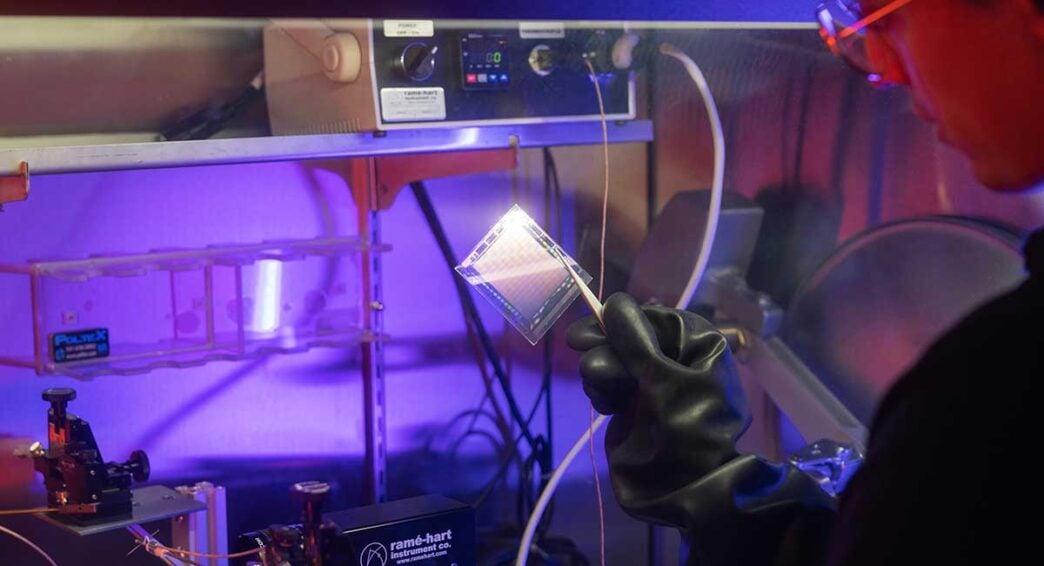
Deeptech startup Itera has emerged from stealth with a prototype of the world’s first fluid circuit board, enabling engineers to test and modify electronic designs using real components in real time.
The company also announced $12 million in seed funding from Upfront Ventures, Costanoa Ventures, and Colle Capital to launch their first product and bring it to market.
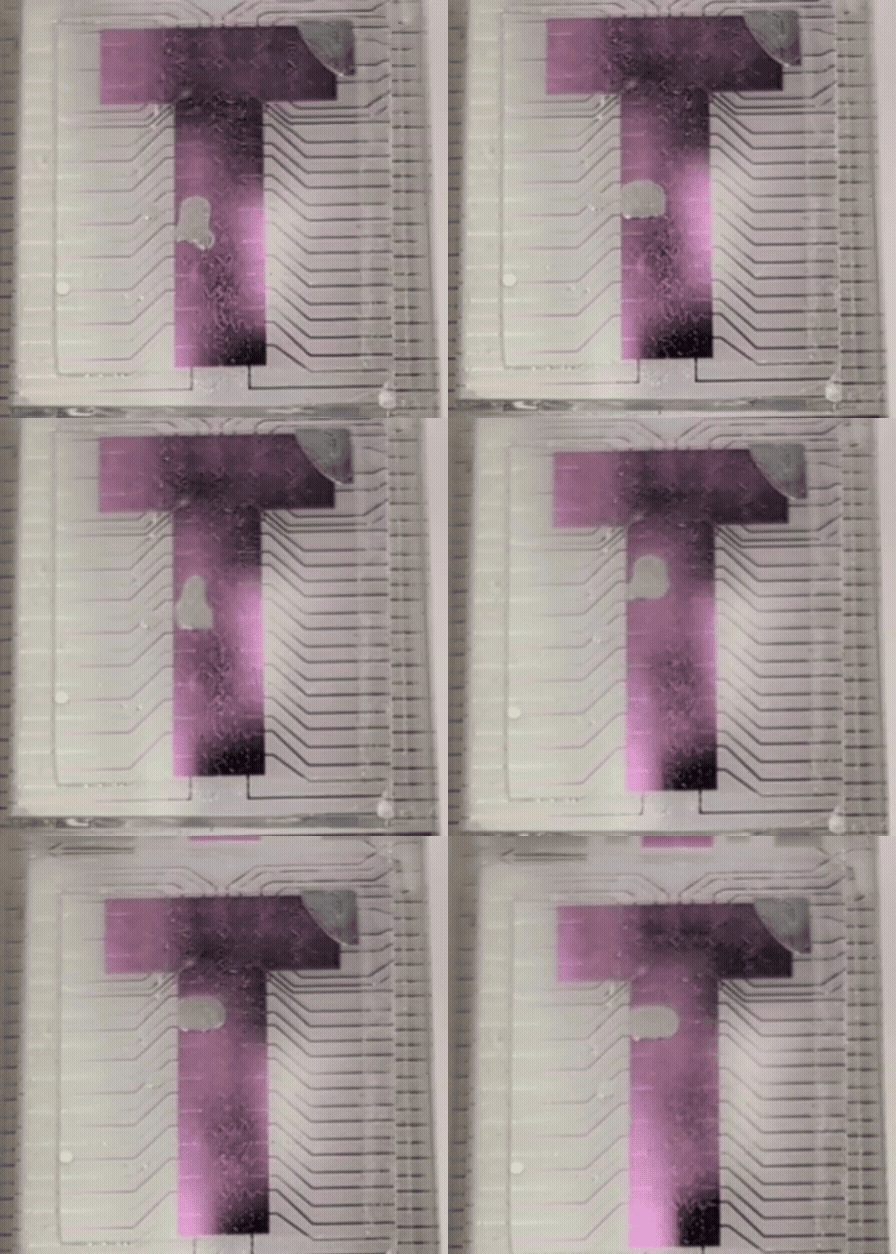
Traditional printed circuit board (PCB) prototyping cycles force engineers to wait two to six weeks per design iteration, costing hundreds of thousands to millions for a single hardware team and contributing to an estimated $50 billion of direct spending on electronics development annually. Itera’s patented technology eliminates this bottleneck by using a novel architecture of glass and liquid metal, allowing circuit rewiring in less than a minute.
“Software developers have been able to write code, test, and iterate in real time for decades. Itera makes real-time design and iteration possible for hardware too,” said AJ Cooper, CEO and Co-Founder of Itera. “Hardware has always been hard because it is permanent. Changing it requires time and money. Itera is making hardware easy. For the first time ever, an engineer can change a circuit and test it again before their coffee gets cold.”
Speaking to Electronic Specifier, Cooper traced the idea back to his own years building hardware teams: “It was the amount of time it took us to build each one of these products,” he said. “There were frequent moments when we realised there was a component we should have changed – that ‘we’ll fix it in firmware’ problem that comes up again and again. It was that inability to switch something and learn faster that convinced me there had to be a better way.”
Unlike simulation software, which cannot replicate real-world component behaviour, Itera’s fluid circuit board is actual components with real electrical behaviour. Even more importantly, engineers can probe any internal circuit node, not just exposed test points, offering signal visibility that traditional PCB prototypes cannot match. The end product is iteration cycles that are up to 1,000x faster, compressing months of development into days.
Itera operates through an Electronics-as-a-Service model: customers’ designs are assembled using their actual components on Itera’s multilayer substrates at secure, US-based testing centres. Customers change and test their hardware and software from anywhere until they have a validated design ready to go to manufacturing. Itera is uniquely positioned as the only source of actual electronic performance data, allowing companies to build better products faster with greater confidence. Amid growing government and enterprise focus on domestic manufacturing and ongoing supply chain disruptions, Itera is well equipped to meet the testing and development needs of reshoring initiatives and data sovereignty.
Cooper described the model to Electronic Specifier as “a bit like AWS for electronics.” He explained: “Engineers keep the same design tools they already know and love. They send us the bill of materials … just as they would to any pick-and-place or quick-turn supplier. Instead of that work going overseas, we pull from our inventory of multilayer glass and liquid metal substrates and place their components on those. They then get remote access to every signal they’d normally need and can bring it up exactly as if the board were sitting on the desk next to them. But they also get the ability to measure any signal inside the board, not just the test points they predicted they’d need, and to change routing in seconds to a minute, or swap components in a minute or two.”
He added that the output remains fully compatible with conventional manufacturing: “Your output is just a manufacturing-ready bill of materials and Gerber file – your schematic, layout, and BOM are all there, but your production board still goes out via the traditional fibreglass and copper PCB route.”
Asked about the current scope of the technology, Cooper said Itera’s initial focus is on surface mount components. “Engineering is always a sequence of trade-offs, and right now we’re focused on surface mount components,” he said. “We excel where signal integrity and impedance matter most – those hard, pernicious problems where you bring up firmware and wonder why a transient behaviour wasn’t captured in the datasheet or TRM. That’s where we excel.”
On the reshoring and supply chain pressures referenced in the announcement, Cooper drew on first-hand experience. “I had components on the Ever Given when it got stuck in the Suez Canal,” he recalled. “I had to tell the Board we weren’t going to ship that quarter, because we couldn’t risk swapping a component and upsetting all the validation and verification we’d done across the rest of the system. In the future we’re building, a customer could run two versions of their board with different supply chains – variants of key components – and run continuous integration against their firmware and software from anywhere in the world, confirming it still meets FCC requirements, radiated emissions, and signal integrity. That allows reshoring and national sovereignty initiatives to proceed much faster, with much lower risk.”
“I’ve worked with hardware companies for 15 years and there have been almost no innovations in how to massively reduce the time to test and iterate physical PCB designs,” said Mark Suster, Managing Partner at Upfront Ventures. “Itera brings an AWS-like solution to testing hardware, and this can dramatically lower costs for startups and incumbents alike.”
The company’s initial production capacity is already reserved by a top 5 global automotive OEM and defence neoprimes, while a leading hyperscaler and multiple chipset manufacturers are actively evaluating the technology with hands-on demonstrations.
Cooper told Electronic Specifier that automotive and defence are just the starting point. “I want this to be the way electrical and firmware engineering is done,” he said. “I want engineers – while they’re still learning, at university or even high school – to be able to log into an eval kit from their favourite chipset and component suppliers from their bedroom, anywhere in the world, and change and measure things so they can build their ideas. That lowers the barrier to entry for building products and building dreams. That’s where I want this to go.”
Looking ahead to the next 12 months, Cooper pointed to general availability as the key milestone. “This time next year, I want to be in general availability, with multilayer boards at the target 100-micron line and space, so people can upload their designs and get production-ready feedback in a few hours or days – accelerating their time to market by more than 20x.”
Sign up and learn more at itera.co.