






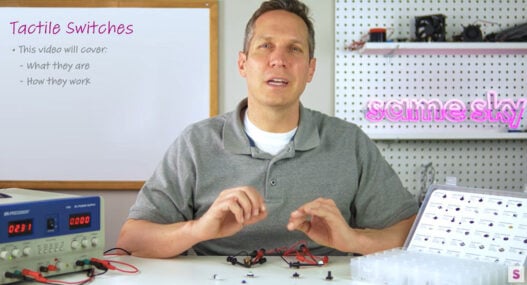
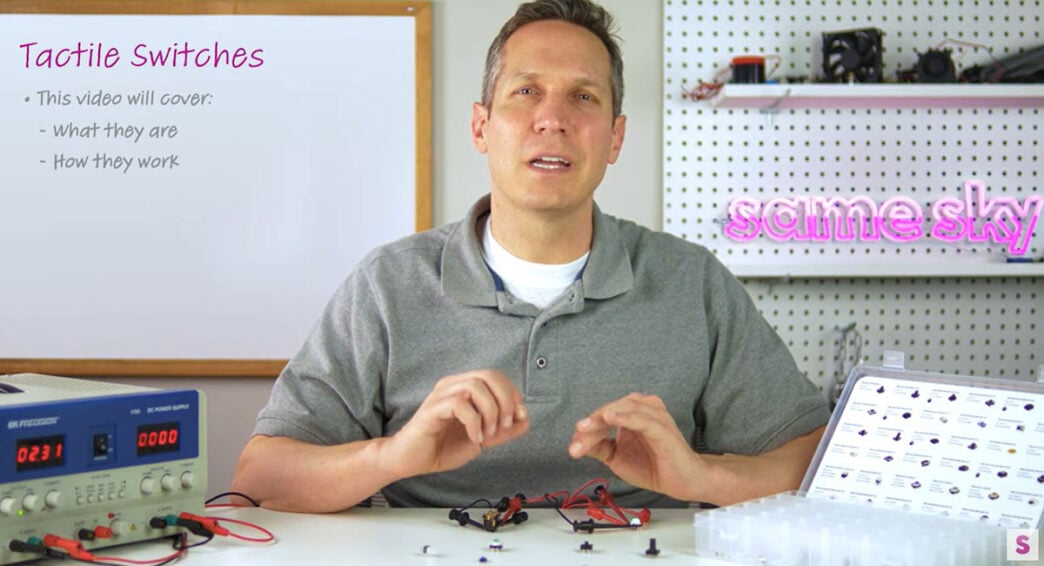
Tactile switches are one of the most widely used input devices in electronic designs, but small differences in force, travel, sound, and construction can significantly impact performance and user experience.
In this video, we break down how tactile switches work, what creates their distinctive ‘click’, and how to choose the right tactile switch for your application.
What you’ll learn:
- How tactile switches work, including internal components like the plunger, metal dome, and contacts
- What creates tactile feedback and sound as well as how it impacts user experience
- Key specifications to evaluate, including operating force, travel, actuator height, and lifecycle ratings
- How rebound and overtravel affect performance in high-speed or precision applications
- Design considerations like debounce, environmental ratings, and PCB mounting stability
- Live demo using an illuminated tactile switch as well as real examples of switch sound profiles