




A chain is only as good as its weakest link: every component counts!
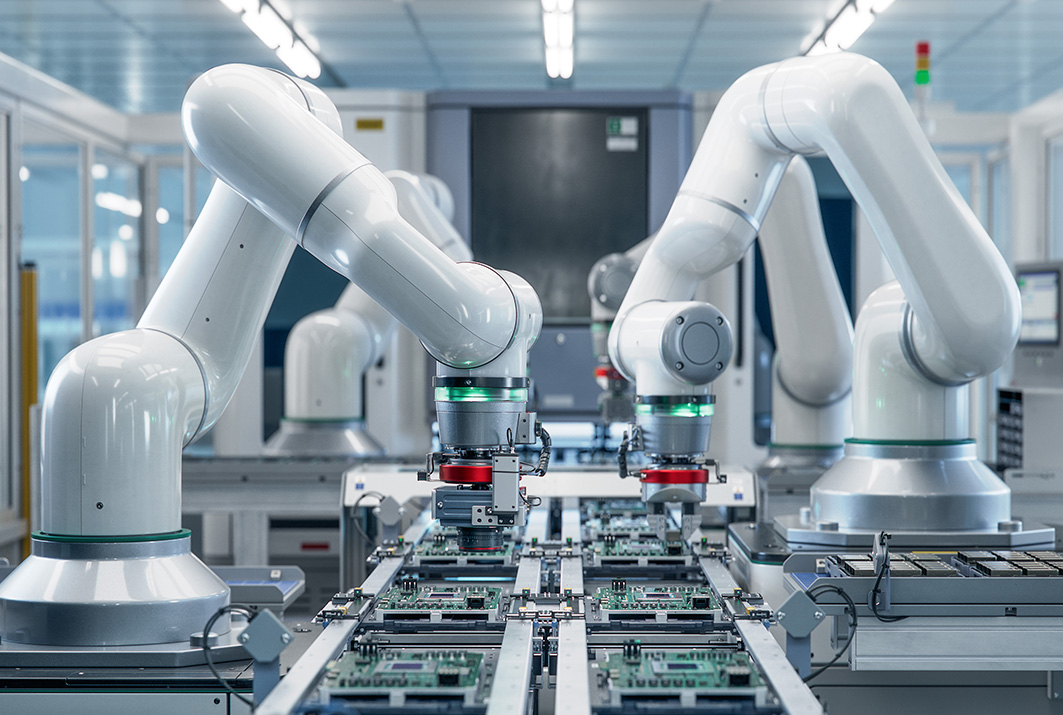
The degree of automation in industry is growing, primarily because it significantly increases productivity: automation systems can run around the clock, work at a consistently high speed and eliminate human error.
At the same time, automation ensures a noticeable increase in quality, as automatic control loops and sensors detect fluctuations in the production process and correct them immediately. From an economic point of view, automated processes reduce unit costs due to lower personnel costs and fewer rejects.
Another important aspect is flexibility: modern programs and control systems can be quickly reconfigured for product changes without the need for mechanical conversions. Finally, automated systems also increase occupational safety by taking over hazardous or unhealthy activities and thus reducing the risk to personnel.
Solutions for industrial automation: key automation components at a glance
In industrial automation, specialised components play a central role in ensuring efficiency, safety, and reliability. The most important building blocks include components such as switches and operating elements, input and sensor systems, connectors, circuit protection devices, and fuses.
These automation components make a significant contribution to operational safety, process stability and ease of maintenance – making them essential for the economically and technically smooth operation of modern industrial plants.