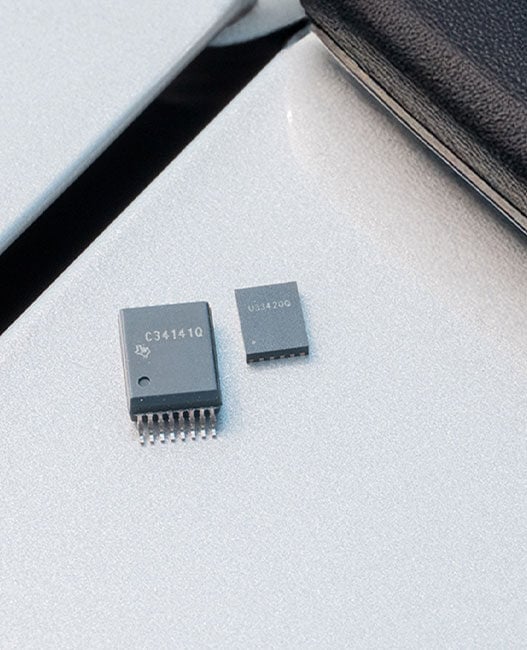





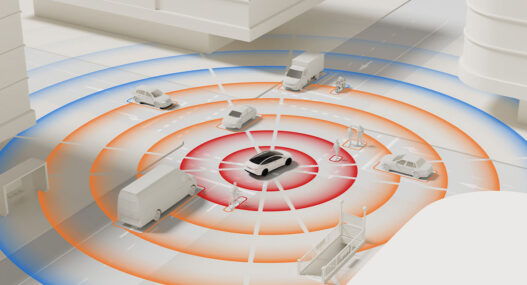
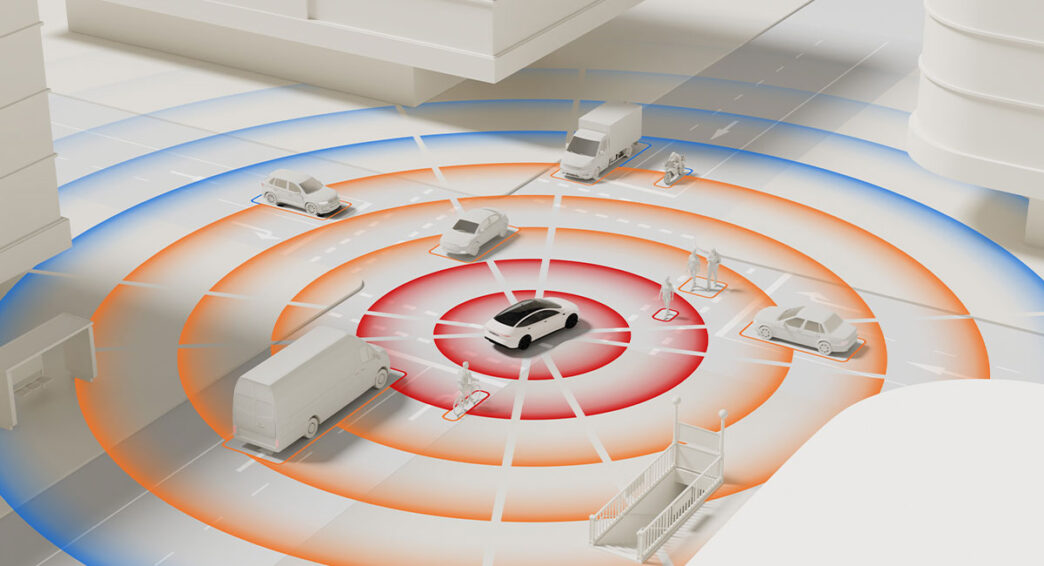
NXP Semiconductors has unveiled its third-generation RFCMOS automotive radar transceiver TEF8388. It is a highly integrated 8-transmit/8-receive (8T8R) device designed to unlock the full potential of imaging radar for L2+ to L4 ADAS and automated driving systems.
In the era of software defined vehicles, advanced perception systems have become key enablers, with high resolution radar sensing as a foundational technology. Radar sensors must deliver higher resolution, enhance dynamic range and longer detection range while remaining feasible for large volume production.
This new transceiver is a key building block in NXP’s scalable portfolio of radar sensing devices, addressing the growing need for robust perception in increasingly complex driving environments.
Combined with NXP’s radar processing solutions, such as the S32R4 radar processor series, it forms a scalable imaging radar solution designed to meet the diverse performance, cost and regulatory requirements of global markets.
This matter because, says NXP, driving automation remains a top priority for OEMs and tier 1s worldwide.
With the automotive industry pushing for more advanced radar performance, the challenge is no longer purely technical – it is a system level challenge. Higher channel counts historically increased power consumption, cost and integration effort while slowing down adoption.
NXP’s latest radar transceiver TEF8388 breaks this trade-off by combining excellent RF performance with strong power efficiency and system cost optimisation, making high-performance imaging radar a practical and sustainable choice for next generation ADAS programs. FORVIA HELLA is leveraging NXP’s advanced radar transceiver technology as a key building block within its next generation radar sensor solutions.
The first high-resolution radar program for a major car OEM – featuring the TEF8388 and S32R47 – will enter series production in mid-2028.
“High-resolution radar is a key enabler for advanced ADAS and automated driving functions, but achieving the required performance at scale demands close system-level collaboration,” said Felix Schmauch, Head of the Global Product Centre Autonomous Driving at FORVIA HELLA. “NXP’s latest radar chip technology allows us to combine high-resolution radar with efficient, production-ready system designs, supporting reliable and cost-effective deployment in next-generation vehicles.”
“Imaging radar is a cornerstone of advanced ADAS and automated driving systems – when it can be deployed at scale,” said Meindert van den Beld, Senior Vice President & General Manager, Radar & ADAS at NXP Semiconductors. “With the TEF8388, we’re enabling OEMs to push radar performance to the next level, accelerating safer and more automated driving functions across their entire fleet line-ups.”
The new radar transceiver integrates eight transmit and eight receive channels on a single monolithic RFCMOS die, delivering outstanding RF performance while maintaining power consumption comparable to today’s much less integrated 3-transmit/4-receive devices.
Its carefully engineered architecture, optimised pin assignment and strategic launcher placement help improve channel isolation and signal quality, while simultaneously reducing overall system bill of materials.
These design choices allow OEMs and tier 1 suppliers to build higher resolution radar sensors while cutting the amount of costly power and thermal management components needed.
The transceiver is designed to work seamlessly with NXP’s radar processing solutions, forming a scalable portfolio that supports a wide range of radar configurations, from 8T8R up to 32T32R.
This system-level approach enables OEMs to tailor radar performance to regional regulations and vehicle segments while relying on a single, trusted semiconductor partner, ranging from RF transceiver and processing to in-vehicle networking such as CAN and Ethernet and power management, streamlining development and accelerating time to market for next-generation advanced driver assistance systems.
NXP and FORVIA HELLA are showcasing their joint solution at Tech.AD Europe in Berlin (23-24 March), including a technical presentation, as well as a live driving demonstration showcasing the radar system in action together with FORVIA HELLA.
Development support for lead customers is available now. Mass market support will follow later in 2026.