


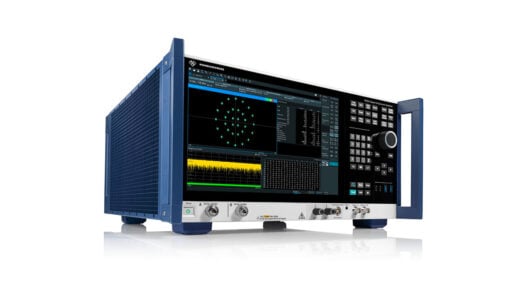



Hardware-based decoding makes finding errors with the oscilloscopes especially fast, which accelerates the design verification and commissioning processes for chipsets with CAN FD interfaces.
Users can trigger directly to telegram start, telegram stop and data values and use the high-performance search and navigation function to find relevant events in the CAN FD bus protocol. Decoded telegrams are displayed as color-coded bus signals in a waveform diagram or as a table. The new software option also supports industry standard CAN-dbc files for describing bus configurations. The R&S RTE and R&S RTO allow users to simultaneously decode up to four serial buses from analogue or logic signals.
Rohde & Schwarz offers a number of additional product solutions for its oscilloscopes that are tailored to the automotive industry. They include the CAN/LIN and FlexRayTM triggering and decoding options for debugging during component development and integration. There is also an option available for verifying BroadR-Reach compliance – a technology now being increasing used for networking various in-vehicle systems.