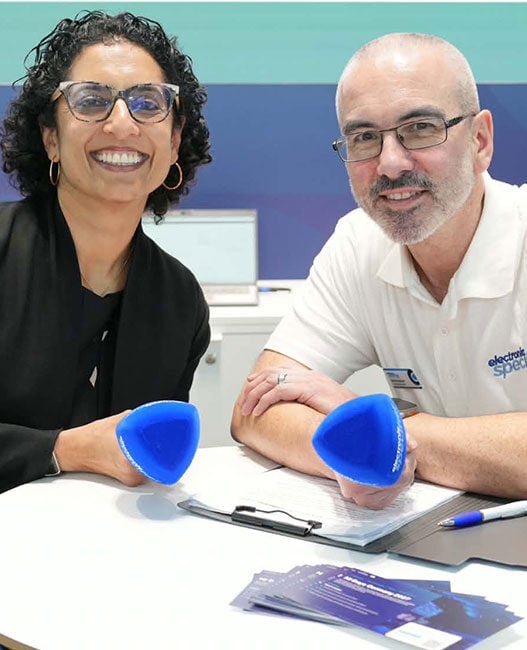



UK-based test system integrator, Peak Production, has adopted Testblox as its standard instrumentation platform for a new generation of automated, fixture-based production test systems, Testblox told Electronic Specifier at electronica 2026 in Munich, Germany.
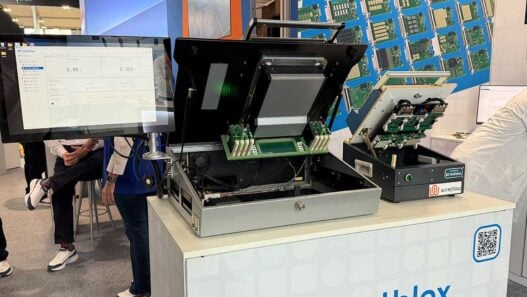
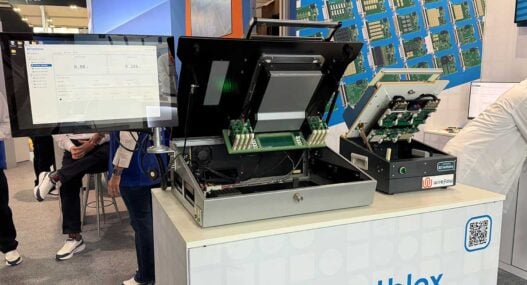
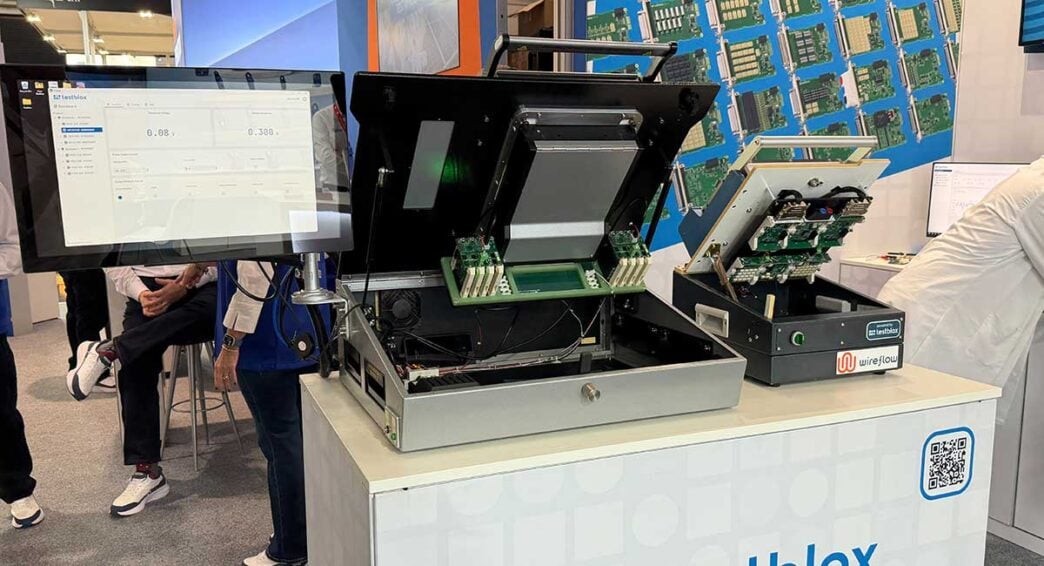
The collaboration was showcased by the two companies at the show, with Peak’s fixture-based ATE system on display, alongside another test fixture example built by Testblox founding partner, Wireflow, allowing visitors to learn more about the Testblox platform and Peak’s approach to integrated functional test – and to see Testblox modules deployed in-fixture.
What is Testblox?
Launched in October 2026, Testblox is a new platform designed for in-fixture functional test. The small form factor multi-vendor instrumentation platform consists of playing-card-sized modules that bring measurement, switching, power, communications, and I/O into production test fixtures through shared hardware interfaces and software tools. Almost 40 COTS modules were available at launch.
The platform is designed and manufactured by Testblox AB, a new test & measurement company formed in 2025 as a joint venture between founding partners, Pickering Interfaces, a UK T&M firm focused on modular signal switching and simulation, and Wireflow, a Swedish PCB test system integrator. The company says it is focused on reducing the size, complexity, and cost of test through its new range of standardized, in-fixture COTS instrumentation for automated functional test.
Early adoption proves out the concept
“Test engineers already embed instrumentation inside the fixture, so the appeal for Testblox is clear,” Kyle Voosen, Testblox Product Manager at Pickering Interfaces told Electronic Specifier last month at a pre-launch briefing. Current approaches force compromise, he said, with test engineers having to either build custom hardware or combine instruments from multiple vendors. “For people who build test fixtures, Testblox is like a magnet,” claimed Keith Moore, CEO of Pickering Group, as he showed Peak’s test system to Electronic Specifier on the expo floor.
Peak’s adoption of Testblox as its standard instrumentation platform for a new generation of automated, fixture-based production test systems – with two of the company’s lead customers already taking advantage of the new approach – is evidence of this appeal, according to Testblox.
At the centre of the collaboration is a new test architecture developed by Peak that incorporates eight Testblox instrumentation modules mounted on two backplanes. Rather than connecting the instruments to the device under test (DUT) through conventional cable assemblies, Peak’s custom interface board connects directly to the Testblox modules’ edge connectors. This direct, pin-to-pin approach eliminates much of the individual instrument-to-fixture wiring traditionally required in functional test systems. It also shortens signal paths, reduces the number of interconnections, and creates a compact, repeatable design that can be readily adapted to other test applications.
“One of the biggest challenges in developing and building fixture-based production test systems is fitting all the equipment inside the fixture,” said Karl Miles, Sales & Marketing Director at Peak Group. “With Testblox, we’re starting with a standardised ultra-compact set of instruments and building the application-specific connections around them. Our custom interface board eliminates a significant amount of wiring, saving design and assembly time. Equally important, this approach makes the finished system much easier to support and quicker to replicate. Testblox’s small size means we don’t have instruments sat on the bench next to the fixture taking up valuable space, with awkward external cables that can be damaged or unplugged.”
The collaboration combines Peak’s more than 40 years of experience designing and manufacturing automated test equipment with Testblox’s compact, commercial-off-the-shelf (COTS) instrumentation. Together, the companies are demonstrating how Testblox’s standardised, playing-card-sized modular hardware and Peak’s application-specific interface boards can reduce system costs and dramatically simplify the design, manufacture, and maintenance of production test systems.
Benefits for test system integrators
Unlike traditional rack-based instrumentation, Testblox modules are the size of playing cards and are designed to operate directly inside production test fixtures. The platform offers a broad range of measurement, switching, power, communication, and I/O modules from multiple manufacturers, sharing common mechanical, electrical, and software interfaces.
Peak expects the architecture to deliver significant improvements over conventional test systems, including:
- An estimated 50% reduction in total hardware and integration costs
- Accelerating delivery of new test systems
- Reduced design effort through standardised COTS hardware
- Quicker build time due to reduced wiring
- Simplified debug and commissioning with vastly reduced wiring and increased signal quality
- Easy reuse of unified software
- Maintenance complexity is reduced with simplified wiring, easy fault isolation, and quick module replacement
“Peak is exactly the kind of company we had in mind when we developed Testblox,” said Voosen. “They know how to build great test systems, but they’ve historically had to spend a lot of time and money connecting all the pieces together. By standardising the instrumentation and letting Peak focus its engineering expertise on the fixture and the customer application, we can take real cost and complexity out of the system. Their eight-module design is a great example of what we mean when we say: ‘The Fixture is the ATE.‘”