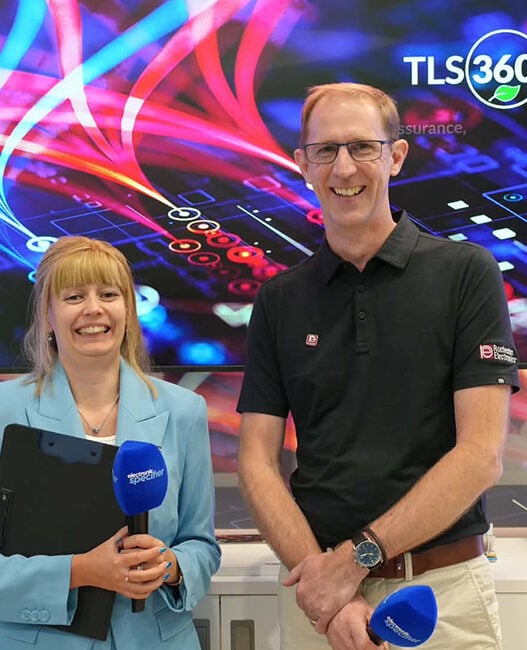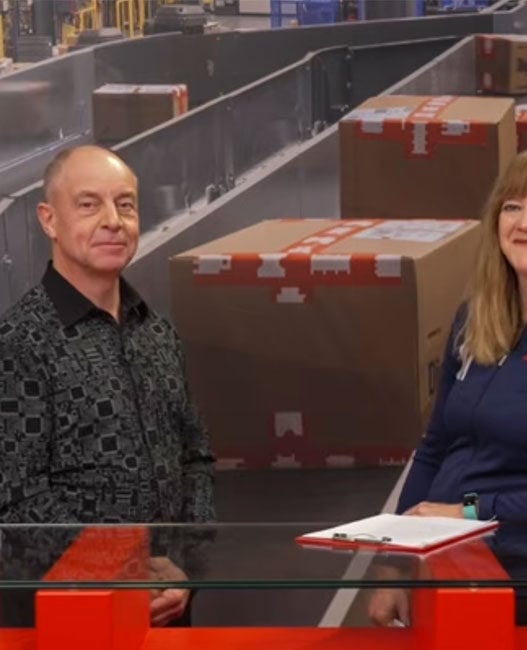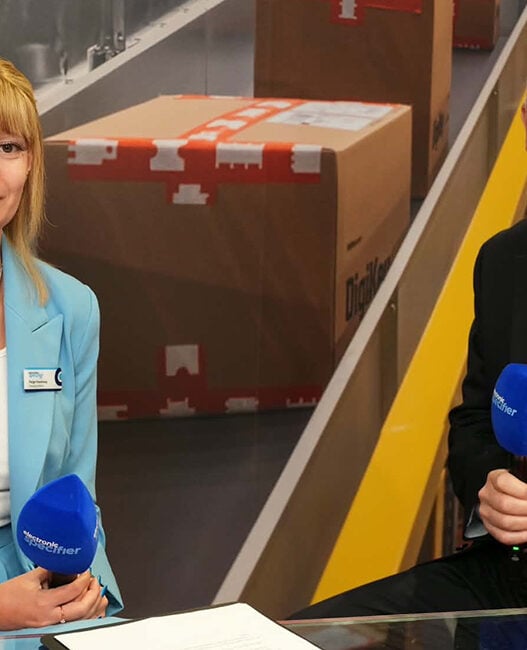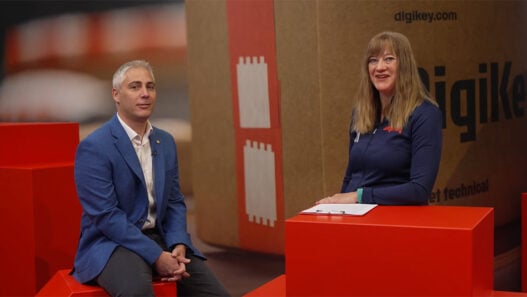



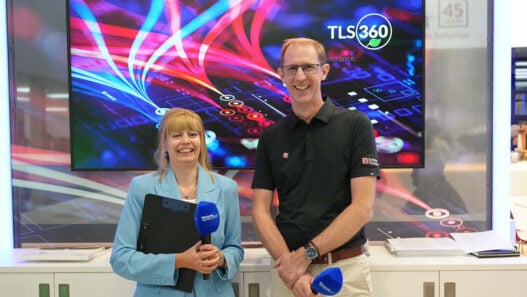
At electronica 2026 in Munich, Editor Lucy Barnard caught up with Peter Schneid, Vice President of Marketing at Harwin, to talk about the company’s new XPi integration service, an expanding connector portfolio, and the digital tools changing how engineers find and specify components.
Harwin is a UK-based, family-owned specialist in interconnect solutions, primarily connectors and cable assemblies, and has been in business for more than 70 years. Schneid, who has been with the company for five years, came to the electronics industry from a pure marketing background, with a focus on digital experiences, websites, and configuration tools. Combining that with an industry as product-driven as this one is, in his words, a very exciting place to be right now – and electronica, he says, is always the highlight of Harwin’s year.
XPi: one extra step towards the best solution
Harwin’s newest offering is XPi, a service that gives customers who buy Harwin products access to experts who can look at their full board or application and advise on the cabling, harnessing, and backshells needed to complete it. Schneid is keen not to label it as consultancy: “It’s really just providing a service to our existing customers and providing them the best out of our solutions and products.”
So why can’t engineers simply build their own cables? They can, Schneid acknowledges, but it takes time, which they rarely have. He speaks from experience: during his own product training at Harwin, he was asked to crimp a contact and insert it into the back of a connector. “It’s a very simple procedure to understand, but to get it right with a low failure rate … it’s very difficult.”
That is where Harwin’s specialism comes in. “We are the experts at that. And we can do it faster, more automated, and actually at the fraction of a cost with a lower failure rate,” he explains.
The applications are wide-ranging, from a drone rotor arm to a satellite with solar wings that needs a detachable section. Almost any PCB-to-PCB connection involves some cabling, and with cable lengths that might range from five centimetres to a metre, the number of possible variations is huge. Rather than an engineer working out the best route from a single project, XPi draws on Harwin’s experience across hundreds of them.
Metal-bodied connectors for rugged applications
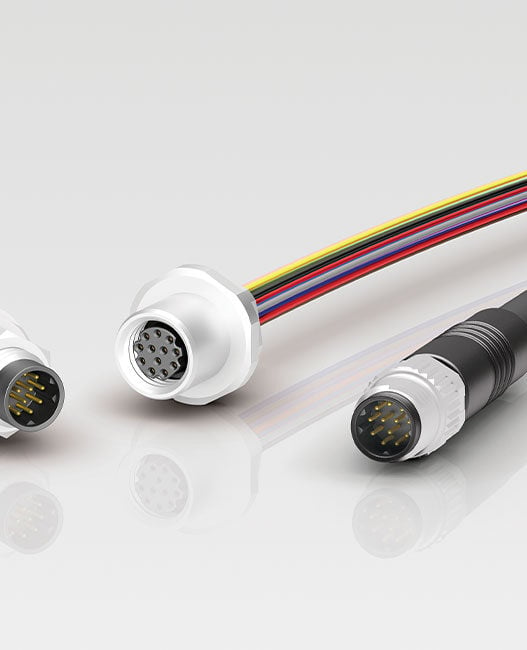
Harwin is also expanding its portfolio with a new range of metal-bodied connectors. Until now, its connectors have used plastic moulded housings, with shielding added through separate components such as custom backshells. The new range takes Harwin’s existing contact technology and places it in a metal body from the outset, so engineers get one product that does several jobs.
Schneid describes it as “taking our existing IP, or knowledge, our contact technology, and putting it into a much more reliable and rigid environment.” Much of Harwin’s existing portfolio was designed with miniaturisation and low weight as the main priorities, whereas this range is built for reliability and ruggedness.
This is not about one option replacing another. Within a single application, engineers may need a lightweight plastic connector in one place, a plastic connector with a metal backshell where flexibility is needed, and a fully shielded metal-bodied connector where vibration demands more rugged protection. With all three available, Harwin can cover the full spectrum.
The new range came directly from customer feedback. Staying close to the end customer is a key objective for Harwin: while distribution partners such as DigiKey handle fulfilment, Harwin’s own engineers work with customers at the design stage, reviewing their boards and passing what they learn back to the R&D team at Harwin’s headquarters. In its key markets – satellites, autonomous vehicles, and drones – that feedback showed a growing need for more rugged, higher-reliability metal connectors.
“That’s why we developed it, and our roadmap is very much driven by market demand,” says Schneid.
Digital tools built around the engineer
Harwin has invested heavily in digital tools in recent years, and Schneid explains that this reflects how people now look for information. Whether at work or at home, most of us start our research online – and that is just as true of engineers who have been in the job for 20 or 30 years as it is of the younger generation. “For us, it is really important that we intuitively present information to the engineer where they’re actually researching it,” he says.
The aim is an online experience that feels natural, so engineers don’t have to work out how to use a tool on top of solving their technical challenges. Whether they want to specify a connector or a cable harness, or simply get a feel for Harwin’s products, Schneid wants visitors to go to harwin.com to find “a digital, intuitive, visual solution that you can click, play, and customise” – with something tangible at the end, such as a drawing or a PDF.
The next step is AI-powered search. Just as people moved from Googling everything to using their preferred AI tool, Harwin wants engineers to be able to ask in a simple way, for example, “which Harwin connector is the best for a rotor blade on a drone that has to do X, Y, and Z.” Instead of a long list of results to sift through, the search would offer a recommendation alongside relevant blog posts, technical articles, and test reports.
Connecting it all together
Looking ahead, Harwin is bringing together data from its configuration tools and XPi enquiries into one database, so results continually improve. The aim is for that knowledge to surface wherever engineers are searching – whether in their preferred AI tool or on DigiKey – and for customers to move seamlessly from specifying a Harwin product to purchasing it.
For Schneid, the next chapter is about “connecting all of these smart individual tools … into one place where it just becomes a really unified experience.”
Watch the full video interview with Peter Schneid here: https://youtu.be/mnoGHNSwAPw