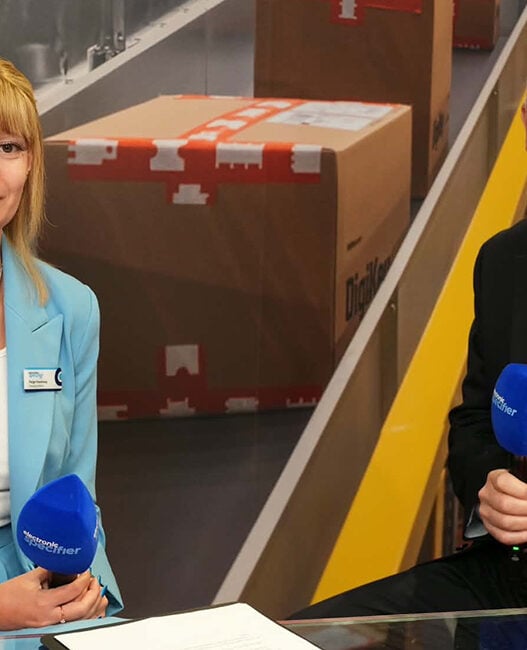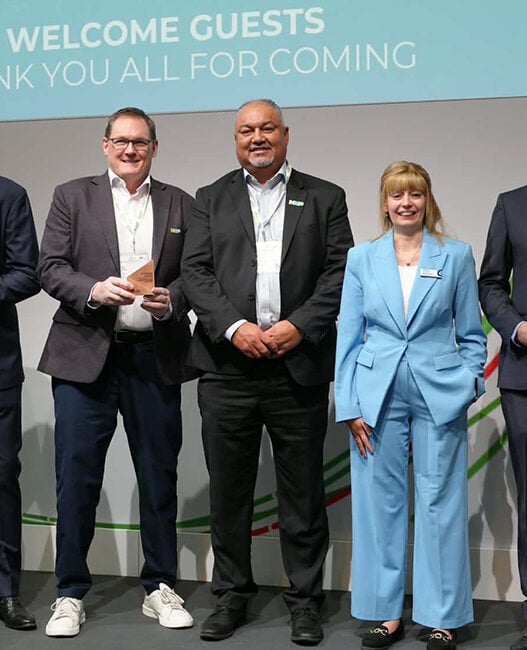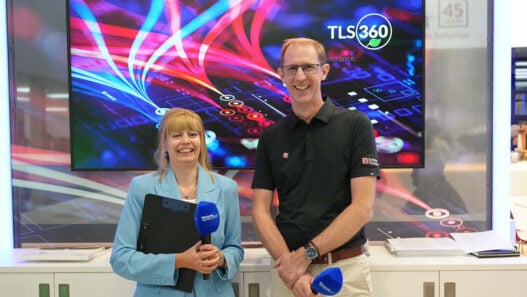


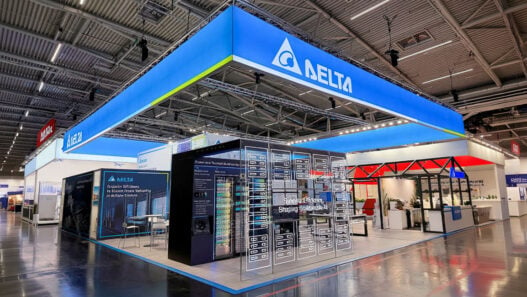
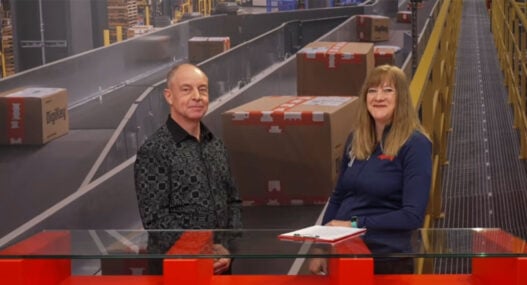
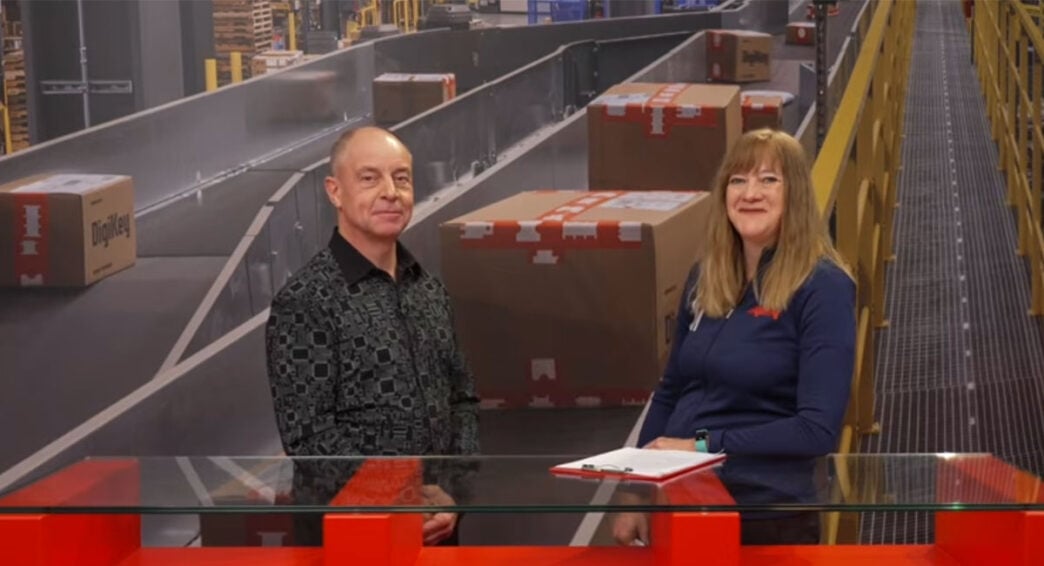
AI promises faster, better electronics design, but it also comes with a growing appetite for power. At electronica 2026, we caught up with Alexander Gerfer, Chief Technology Officer of the Würth Elektronik eiSos Group, on the DigiKey booth to talk about both sides of that story: how the industry can rein in AI’s energy demand, and how AI can help engineers do their best work.
From TV repair bench to CTO
Gerfer describes himself as an electronics design engineer “by heart.” He started out as a radio and television technician, went on to study engineering, and spent years in technical sales helping customers improve their designs. He is also a co-author of Würth Elektronik’s well-known design guide, the Trilogy of Inductors (today published as the Trilogy of Magnetics), which explains how to choose and use inductors and EMI ferrites.
Making electronics easier to understand has always been his goal, he says, and it’s one he believes everyone at Würth Elektronik shares.
Würth Elektronik manufactures its own components, runs technical sales teams and warehouses around the world, and makes its products available through distributors such as DigiKey. Behind the parts sits a strong layer of technical support for customers of every size, from established OEMs to early-stage startups, with the goal of faster time to market. As Gerfer puts it: “We enable that success.”
Bending the energy demand curve
Rising energy demand is one of the biggest issues facing the industry, and AI is a large part of it.
At its current stage, Gerfer says, AI is extremely “energy-hungry.”
The challenge, in Würth Elektronik’s words, is to “bend the energy demand curve” so that consumption doesn’t keep climbing in a straight line or exponentially, “because we need energy to feed that, and energy is not an unlimited resource.”
That starts at home. Würth Elektronik has rolled out energy-saving initiatives across its factories and is adding more renewables to its sites. But for Gerfer, the biggest lever in manufacturing is yield. Many components pass through high-energy firing ovens, so every part scrapped after firing is energy wasted. Getting the upstream processes right matters, “because our yield rate means less waste and, of course, in the same production time, more output.”
Small percentages, big numbers
When it comes to data centres, Gerfer cited a projection of 945 terawatt-hours of demand for AI by 2030. Improving efficiency by just 1% would free up enough electricity to power roughly two to four million households for a year. He is confident that better component design could deliver 2% “easily”, with the move to DC power distribution in data centres adding another 2% while also reducing the amount of copper needed.
“It’s a step, a small step, but an important step,” he says. Alongside better hardware, he points to two more pillars: more efficient language models, and deciding carefully what really needs to run in the cloud versus on the edge, where lower energy demand can even extend battery life.
AI as a design partner
AI for electronics design is still “pretty young”, Gerfer says, but it is growing fast. Würth Elektronik has long supplied accurate models to external simulation tools and to its own online platform, REDEXPERT, which is built on real measured component data.
What matters, he stresses, is measured data rather than datasheet figures. He adds that some of those models were only possible because AI and language models were used to organise the underlying data.
With good data and digital twins, engineers can explore several designs and use AI to generate starting ideas before committing to a breadboard. That matters for today’s young engineers, who face tight deadlines and increasingly complex parts such as sensors combining analogue and digital functions.
Being expected to read and understand a 100-page datasheet in an hour is, in his words, “Impossible. And that’s where AI comes into the game.”
Building trust
The big question, Gerfer says, is trust. Engineers need to know where an answer comes from, so Würth Elektronik aims to link AI responses back to its books and application notes.
The company is also keeping people firmly in the loop, an approach Gerfer describes as having a man or woman in the middle. Before any content goes into the system, Würth Elektronik’s field application engineers (FAEs) and design engineers review it thoroughly. If a customer finds an answer unclear, it is revisited and improved.
Will AI replace engineers?
Gerfer calls it “the elephant in the room”. At 61, he sees it as personally important to pass as much of his experience as possible into the systems being built now, so the next generation gets a better starting point. His view is clear: “I would say those which are not AI dedicated, they will be replaced.” Engineers who understand and apply AI will stay in demand, and he continues to encourage young people to study engineering, semiconductors, and passive component manufacturing.
Will AI’s energy use ultimately outweigh its benefits? Gerfer is candid that it is too early to call, though fewer breadboards, less waste heat, and longer product lifetimes all count in its favour. The principle, he says, is simple: “…a new technology should be better than existing ones.”
Watch the full interview
Watch the full conversation with Alexander Gerfer here: DigiKey at electronica 2026 with WE Online – YouTube