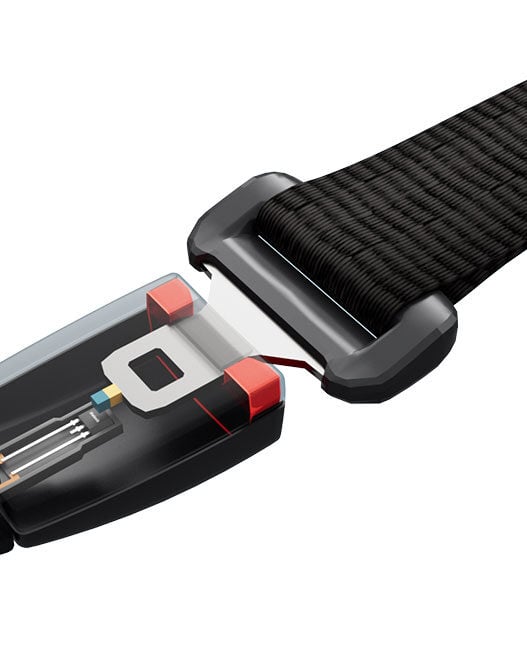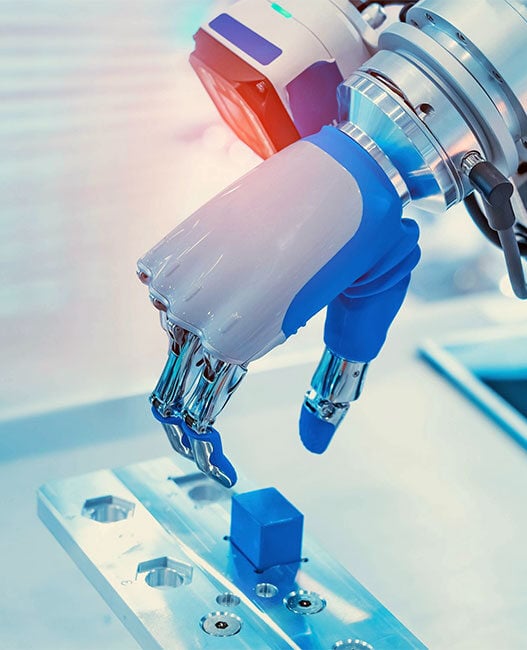

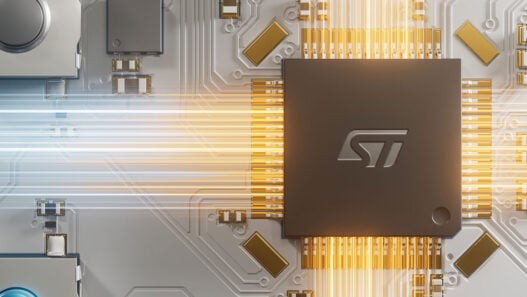


STMicroelectronics has used its STM32 Summit to announce what it describes as a unified STM32 microcontroller platform, spanning industrial, automotive, and robotics applications. It also introduced the STM32A automotive and safety family, the STM32H7P series with on-chip DSP and neural acceleration, the STM32G5 mixed-signal series, new Edge AI tools, and support for Agentic AI coding.
Speaking at a media and analyst briefing ahead of the announcement, Remi El-Ouazzane, President, Microcontrollers, Digital ICs and RF products Group, framed the move as a response to technology convergence. Automotive, industrial, and robotic systems, he said, increasingly share the same requirements for AI, security, safety, connectivity, sensing, and control, even though certification and qualification remain market specific.
Physical AI is, in his view, “likely the best embodiment of that convergence”. The challenge for customers is shifting “from selecting a single device to finding a way to reuse software, tools, architecture, and engineering expertise across multiple products,” he explained. “The value shifts from the individual MCU to the broader platform that surrounds it.”
“Embedded innovation should not require developers to start again with every new product,” El-Ouazzane added. “With the unified STM32 platform, we are creating a foundation they can trust across markets and generations.”
Three pillars
There are three pillars the platform rests on:
The first is portfolio continuity. Arm Cortex-M cores and shared architectural principles give developers a familiar path between STM32 families, with common building blocks for security, AI, and safety. ST will act as a lead partner with Arm in defining future generations of Cortex-M cores – an architecture that has now shipped in more than 100 billion devices. ST is also participating in Arm’s design programme for Physical AI, announced in September.
The second pillar is the STM32Cube software ecosystem, including the ST Edge AI Suite, which ST says is used by close to two million developers. Recent additions include the STM32Cube 2 generation of tools, the STM32 Sidekick AI-powered support assistant, and a library of more than 400 pre-trained AI models – which ST claims is the largest MCU-optimised collection of its kind.
The third is shared process technology: ST’s 40nm Flash and 18nm FD-SOI with embedded phase-change memory, augmented by TSMC’s eNVM technologies, giving a scalable manufacturing base for industrial, high-safety, and automotive roadmaps.
Customers can therefore draw on more than 4,000 STM32 part numbers and carry expertise across domains – for example, reusing automotive safety know-how in a robotics design.
STM32A brings the platform into automotive
The STM32A family extends STM32 into automotive and high-safety systems such as body, convenience, zonal, and actuation applications, while also targeting industrial and robotics use cases that now demand similar safety levels. Like the rest of the portfolio, it is based on Cortex-M cores and shares the STM32Cube ecosystem. The first three devices are sampling now, with broader availability planned in 2027:
- STM32A4 targets entry-level automotive local control nodes and safety systems, and is the most cost-competitive member of the family
- STM32A5 addresses mid-range safety-critical applications in industrial automation, robotics, and energy systems, as well as automotive
- STM32A9 is a multi-core device for safety-critical multi-domain control, where real-time control, low latency, Ethernet, and deterministic communication are essential
Customers including Volkswagen Group, Schneider Electric, Unitree, Vector, and Lutron back the approach. Volkswagen Group described the STM32A family as “an important step towards future automotive electronics,” offering more choice through a unified platform and software ecosystem. Unitree said extending the STM32 ecosystem into higher-safety applications is what it needs to build more capable humanoid robots.
STM32H7P: DSP and Edge AI acceleration
The new STM32H7P series extends the STM32H7 line with a 520MHz Arm Cortex-M7 delivering 2,773 CoreMark, plus two dedicated hardware accelerators. It targets digital power, motor control, condition monitoring, and other mission-critical industrial applications.
The first accelerator, ST’s Hardware Signal Processor (HSP), handles matrix, vector, and signal-processing operations, freeing Cortex-M7 bandwidth and potentially removing the need for an external DSP. ST says it cuts Fast Fourier Transform times by up to five times compared with a software implementation on the Cortex-M7.
The second, the Neural-ART NPU, delivers up to 85 GOPS. In ST’s own tests it ran the company’s AI arc fault circuit interrupter (AFCI) model for solar inverter safety 40 times faster than software, an anomaly detection model 20 times faster, and an AI battery management system model 15 times faster. Early-access customers in solar inverters can now handle arc fault detection on 20 panels with a single MCU, up from four previously.
“The STM32H7P extends the proven STM32H7 series, with two dedicated hardware accelerators alongside a 520MHz Cortex-M7 core that deliver 1.7-times the performance of alternative products on the market,” said Laurent Vera, STM32 Marketing Director, STMicroelectronics. “In addition, richer analog and timer capabilities, and strong cost efficiency are ideal for power electronics applications such as solar, digital power, and motor control.”
Those analogue peripherals – ADCs, DACs, and comparators – and timers are inherited from the STM32G5. Larger tightly coupled memories improve real-time performance, and the series offers up to 2MB of Flash at a price similar to the previous 1MB STM32H7. The devices operate at up to 125°C ambient, are covered by ST’s industrial longevity programme, and are available in an exposed-pad LQFP package for improved thermal dissipation. Software support includes the ST Edge AI Suite, X-CUBE-MCSDK-2 motor-control tools, STM32CubeMX2, and HAL2.
The STM32H7P is sampling now, with production planned for January 2027, priced from $4.43 for the 1MB Flash LQFP100 version in 10,000-unit quantities. The NUCLEO-H7P5II evaluation board and STM32H7P5IDK Discovery kit will follow in January 2027.
STM32G5, AI tools, and Agentic coding
The STM32G5 is ST’s first mixed-signal MCU based on the Cortex-M33, running at 280MHz and doubling the CoreMark performance of the STM32G4. Aimed at digital power, including data centres, and motor control in applications such as humanoid robots, it targets SESIP Level 3 and PSA Certified Level 3 and adds post-quantum cryptography support. Delta Electronics is using it in power supplies, and Ruyan Intelligent Control in a next-generation robotic hand.
On the software side, redesigned Edge AI tools arriving at the end of November include Model Explorer for finding models, Model Factory for customising and optimising them, Dataset Factory for organising and cleaning data, and Model Bench for benchmarking on ST boards.
Finally, ST announced the first release of STM32Cube for Agentic AI. Through skills and MCP servers, it gives AI coding agents access to ST-maintained STM32 knowledge, reference code and code generation and review tools, so they can make better use of on-chip features including hardware accelerators.