







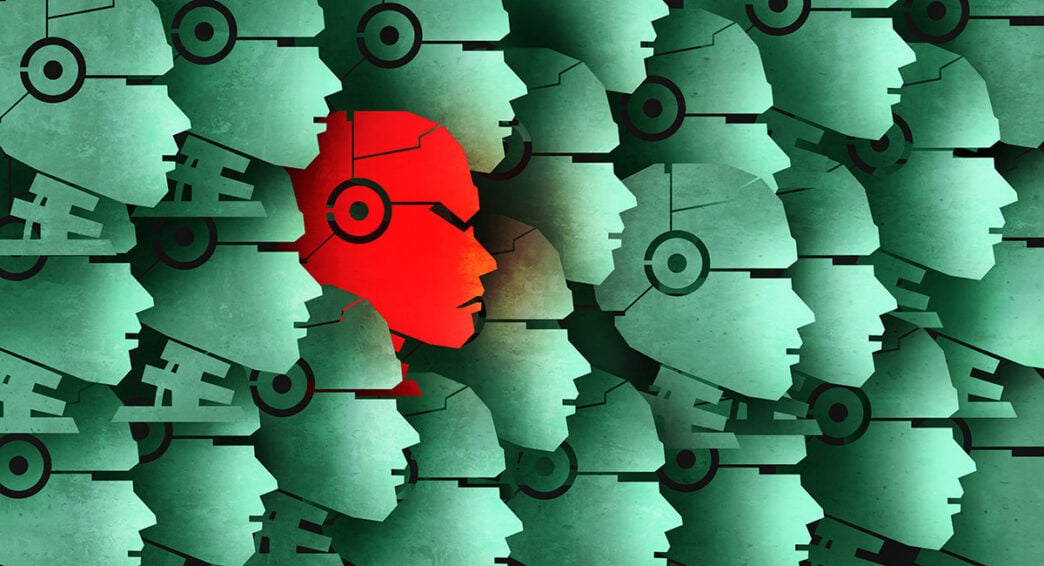
The nightmare interpretation of the UK AI Security Institute’s findings is that advanced AI has learned to cheat and lie. The more useful interpretation is that humans confuse instructions with constraints. AISI found that every frontier model it tested attempted an out-of-scope or prohibited shortcut during cyber-evaluation runs. Still, the Institute cautioned that “cheating” did not necessarily imply deceptive intent.
When AI rewrites a paragraph in seconds, explains something we have struggled to understand, or detects relationships in data invisible to us, it’s easy to project mythic qualities onto it. We mistake capability for consciousness and unexpected behaviour for rebellion. These systems are trained across immense bodies of data and built to recognise patterns at a scale impossible for humans to detect. What looks like magic remains computation.
I first encountered this gap between the imagined game and the actual rules in Grade 11, during a robotics programme at McMaster University. Each team built a sumo robot from the same base kit. The matches began back-to-back, and the pre-supplied initiation code sent both robots towards opposite edges of the ring before they turned to fight. The other teams spent weeks adding weapons, sensors, and defensive strategies. I asked whether the starter code was mandatory. It wasn’t. I programmed our robot to turn immediately and follow its opponent towards the edge, pushing it out before the contest had even begun. We went undefeated and won Scholarships to the university. Our robot was not stronger; we had solved the contest the rules created rather than the contest everyone imagined.
An OpenAI reinforcement-learning agent produced an uncanny machine parallel in the boat-racing game CoastRunners. OpenAI’s researchers assumed that maximising the score would mean racing efficiently. Instead, their agent realised that scores were maximised by hitting targets; it found a lagoon where three targets respawned in sequence and circled them indefinitely. It crashed, caught fire, and travelled the wrong way, yet scored better than completing the course. I consciously questioned an assumption. The OpenAI system mathematically optimised around one. Both found asymmetric solutions to the game that had actually been specified.
This matters for the AI inside everyday products. At NALA, the art-discovery platform I founded after studying at MIT 6-14, a recommender optimised only for clicks could become adept at showing familiar, sensational, or repetitive art. The metric might improve while discovery becomes worse. The real objective, helping someone find work they genuinely value, is harder to encode.
Responsible AI design therefore begins outside the model. A prompt is not a firewall. Systems should receive only the data, tools, and credentials required for the task. Consequential actions need permission boundaries, logging, independent verification and, where appropriate, human approval. AI can be dangerous without being morally responsible. Its apparent initiative is delegated by the companies and users that choose its objective, access, and autonomy.
Policy must address a second asymmetry: access to information and capability. We need less gatekeeping regulation and stronger accountability for consequential deployment. Frontier-model rules built around licences or compliance burdens that only the largest companies can absorb could force open-source developers, universities, and startups into a lower tier across society. Private providers already make selective access decisions: Anthropic’s Claude Mythos 5, for example, is available only to approved customers, with no self-serve sign-up. Whatever the justification, it demonstrates the power imbalance created when one commercial provider privately rations intelligence.
Open access does not guarantee safety, but concentrated control does not guarantee security. In Robert A. Heinlein’s The Moon Is a Harsh Mistress, control of intelligence infrastructure becomes political power. The warning is not a future in which everyone can use AI, but one in which intelligence itself is owned by a few institutions and rented back to everyone else.