






In the third instalment of our four-part series on embedded system design from Texas Instruments, we continue to explore the latest collection of resources that push the boundaries of embedded system design forward. This instalment turns to two of the fastest-moving frontiers in embedded design: next-generation wireless connectivity and intelligent robotics. Readers will get an overview of Wi-Fi 6 (802.11ax) and why its OFDMA and Target Wake Time features make it particularly well-suited to dense IoT deployments, followed by a look at TI’s new CC33xx Wi-Fi 6 family, which pairs the standard with built-in Bluetooth Low Energy 5.3 for cost-conscious industrial IoT designs. From there, the article shifts into robotics, covering how precise current sensing in motor control underpins safe, responsive movement in humanoid robots, and how TI’s processor platforms are being positioned to meet the combined demands of real-time control, functional safety, and edge AI inference in robotic systems.
The piece then rounds out with a tour of TI’s broader MCU and software ecosystem, including the Sub-1 GHz CC1310 SimpleLink MCU, the automotive-grade CC274x Bluetooth LE devices built for car access applications like passive entry and remote keyless entry, and the Arm Cortex-M0+ based MSPM0 subsystems designed to speed up development through reusable building blocks. Readers will also see how TI’s software strategy ties these pieces together, with an emphasis on interoperability across protocols like Wi-Fi, Bluetooth, Profinet, and EtherCAT, support for open-source projects such as Linux, Yocto, and Zephyr, and educational resources like the Precision Labs MCU series for engineers looking to deepen their skills.
Explore the full articles linked below for in-depth guidance from TI’s engineers and ecosystem partners.
What is Wi-Fi 6?
Wi-Fi 6, also known as 802.11ax, is the latest generation of Wi-Fi technology. It offers several improvements over its predecessors, Wi-Fi 5 (802.11ac), such as better performance in congested environments, lower latency, and higher power efficiency. These improvements are possible through new features like Orthogonal Frequency Division Multiple Access (OFDMA) and Target Wake Time (TWT). Wi-Fi 6’s ability to handle a high density of connected devices with reduced latency and interference makes it an ideal solution for the expanding IoT landscape, enabling seamless integration and performance.
Reimagine IoT with scalable, secure connections
The demand to transfer more and more data in a secure and reliable way is increasing. Listen to Marian Kost, our vice president of connectivity technology as he discusses how innovations in our products and standards as well as open source software is enabling more connectivity in applications like smart buildings, grid, medical system, cars and more.
Simplifying IoT with TI Wi-Fi® 6
Introducing the CC33xx family of Wi-Fi® devices, designed with affordability and reliability in mind to help you connect more IoT applications. These latest devices support the latest Wi-Fi standard, Wi-Fi , with built-in Bluetooth Low Energy (BLE) 5.3. TI is your trusted partner for your next IoT industrial design with more than 20 years of experience in developing Wi-Fi products.
Current Sensing in Humanoid Robots
The precise measurement of motor currents is important for enabling safe and efficient operation of humanoid robots. These measurements are used by the control algorithms of actuators in the robot’s joints to enable precise movement and dynamic performance. Maintaining a high level of precision is crucial during complex tasks that require fine motor control and responsive behaviour.
Designing Functionally Safe and AI-Enabled Robotics Systems with TI Processors
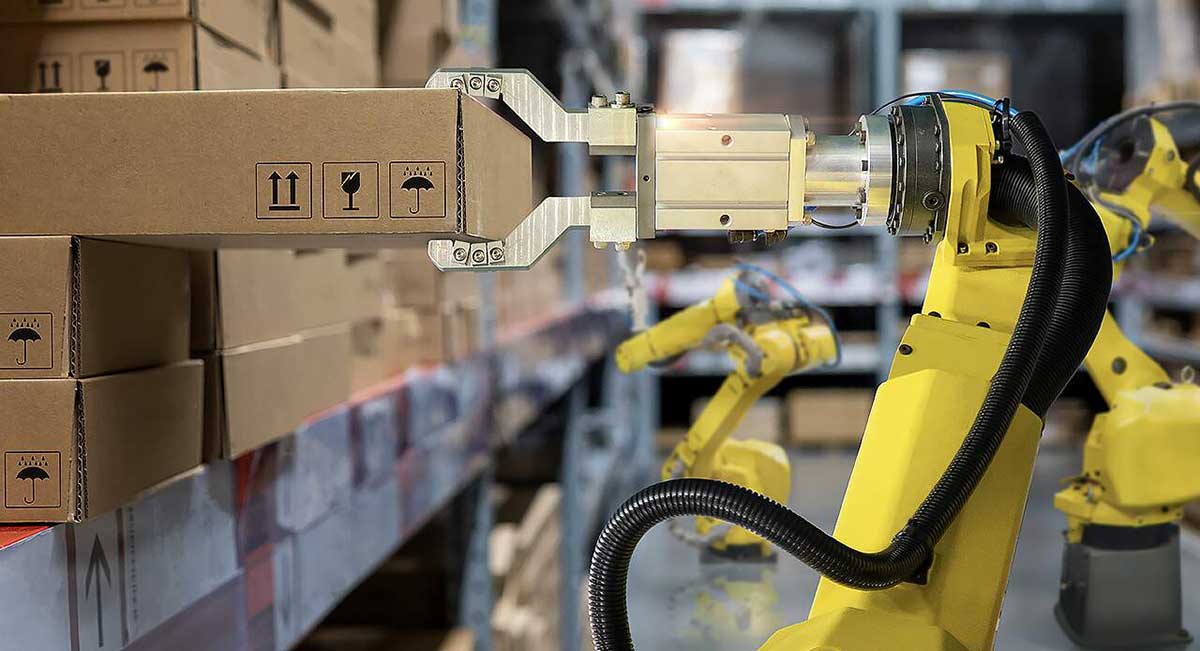
Robotic systems are becoming increasingly complex, requiring advanced processing platforms capable of operating intelligently, safely, and in real time. Whether deployed in AMRs (autonomous mobile robots), collaborative industrial robots, or humanoid platforms, robotics applications of today demand a combination of high-performance compute, deterministic real-time control, functional safety, edge AI acceleration, and secure execution. These requirements impose unique challenges on system architects, who must integrate diverse computing domains—application logic, AI inference, safety-critical control, and sensor fusion—within a unified and cost-effective hardware platform.
SimpleLink™ 32-bit Arm Cortex-M3 Sub-1 GHz wireless MCU with 128kB Flash
The CC1310 device is a cost-effective, ultra-low-power, Sub-1 GHz RF device from Texas Instruments™ that is part of the SimpleLink™ microcontroller (MCU) platform. The platform consists of Wi-Fi®, Bluetooth® low energy, Sub-1 GHz, Ethernet, Zigbee®, Thread, and host MCUs. These devices all share a common, easy-to-use development environment with a single core software development kit (SDK) and a rich tool set. A one-time integration of the SimpleLink platform enables users to add any combination of devices from the portfolio into their design, allowing 100 percent code reuse when design requirements change.
Automotive SimpleLink™ Bluetooth® LE wireless MCU with 1MB flash, HSM, APU, CAN-FD
The SimpleLink™ CC274xR-Q1 and CC274xP-Q1 devices are AEC-Q100 complaint wireless microcontrollers (MCUs) supporting Bluetooth Low Energy 6.0 for automotive applications. These devices are optimized for low-power wireless communication in applications such as car access, including passive entry passive start (PEPS), phone as a key (PaaK), and remote keyless entry (RKE).
Arm® Cortex ®-M0+ MCUs subsystems
Accelerate your development with our broad selection of MSPM0 subsystems, integrating our application building blocks to simplify your software efforts. You can easily adapt each subsystem to meet your specific end-equipment needs using our step-by-step instructions, design insights, software, and suggestions for feature enhancements.
Advancing your journey toward embedded software development
Our approach to software focuses on speed, interoperability and scalability, helping you get to market faster. Whether you are developing the latest software for automotive, robotics, or healthcare, we have the expert codewriting tools, repositories and support you need. And as always, we also remain committed to protocols such as Wi-Fi®, Bluetooth®, Profinet, and EtherCAT and open-source projects such as Linux kernel, Yocto and Zephyr.
Software-defined future: Why prioritizing software is essential
At any point in the day, you’ll interact with hundreds if not thousands of smart embedded devices. From customizing home appliances to enhancing safe driving and smooth operation of automation in factories, these embedded technologies propel you forward with everything from comfort to productivity to making energy more sustainable.
Precision labs series: Microcontrollers (MCUs)
TI Precision Labs: MCUs is an online classroom for all engineers needing to work with microcontrollers (MCUs). The on-demand curriculum pairs theory and applied lab exercises to deepen the technical expertise of experienced engineers and accelerate the development of those early in their career. This video provides an introduction to a microcontroller and is a framework for additional training on the different sub-parts that make up a microcontroller.
This instalment surveys TI’s latest advances in wireless connectivity and intelligent embedded systems, spanning Wi-Fi 6 and the new CC33xx IoT devices, current-sensing and processing solutions for safe robotics, a range of SimpleLink and MSPM0 microcontrollers for industrial and automotive applications, and the software ecosystem and training resources that support developers building across these platforms.