



In the world of electronics engineering, product development can be a big revenue generator for developers and manufacturers. But the cost to get any product to a market-ready state can be a big investment. This is usually in design team resource, of varying skills levels, plus materials use in multi-stage prototype development.
The rise of AI isn’t lost on anyone, and certainly has a big role to play in electronics engineering. When AI solutions can be deployed to accelerate prototyping, negate some of the steps – reducing cost – and generate options that might not have been thought of, embracing it is a real no-brainer.
Democratising advanced product development
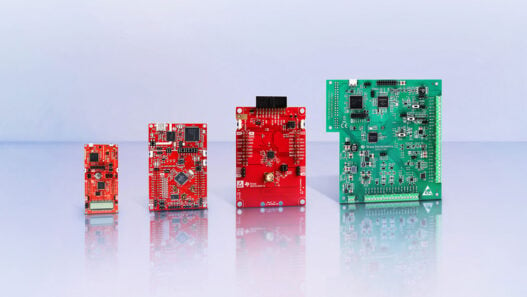
Historically, sophisticated and expensive Cloud compute resources or enterprise-grade infrastructure would have been required for AI-driven design. Now, thanks to powerful single-board computer (SBC) developer kits, design engineers in all organisations can access the benefits of streamlined processes, and reduced development cycles and commercial risk.
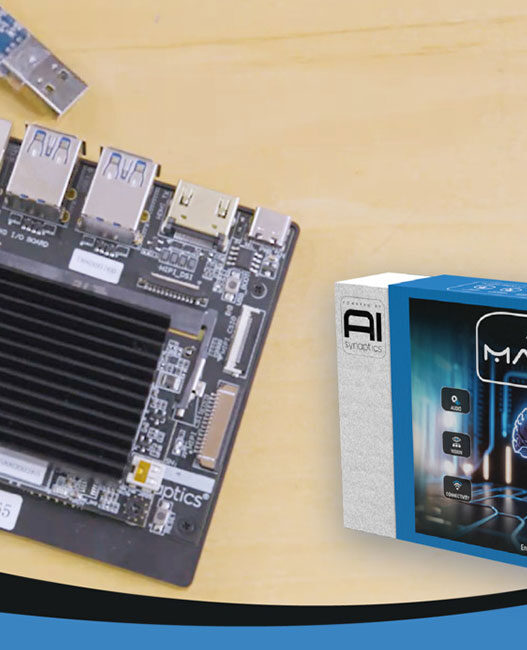
The rise of this affordable hardware is democratising AI access for smaller design teams and startups. SBC developer kits, like the NVIDIA Jetson Orin Nano, are reducing the need for high-performance servers and Cloud services, as well as specialised accelerator cards.
Running on the Edge and in real time, this technology is enabling design engineers to access powerful embedded AI computing within a compact device. While small in size, these SBCs are powerful enough to capably combine graphics processing unit (GPU) acceleration, dedicated AI processing cores, high-speed memory, and flexible Input/Output (I/O) interfaces.
Prototyping using AI-enabled devices locally is also highly valuable in privacy-sensitive or disconnected environments, where Edge-based AI deployment is a good solution.
This low entry cost AI technology is reducing prototyping costs and technical barriers, fostering more innovative electronic design where development acceleration isn’t constrained by restrictive budgets. It is also helping organisations take their concept through to scalable deployment, by standardising development on scalable hardware ecosystems. This allows a seamless transition to production-ready modules, and is invaluable in many sectors, including industrial automation, healthcare devices, logistics, and autonomous systems, to name a few.
Reducing development bottlenecks and material costs with AI-driven design optimisation
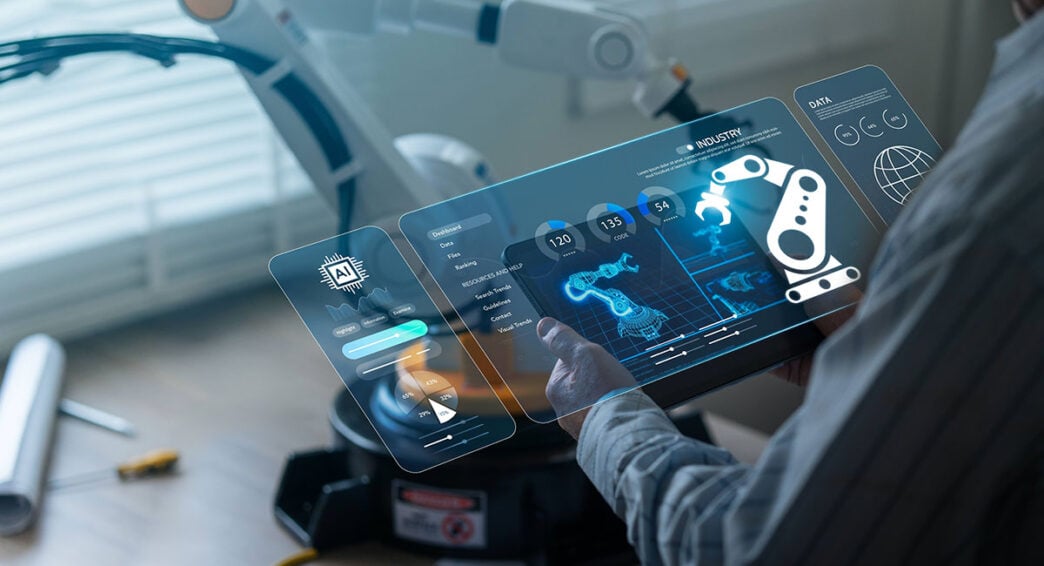
When developing complex systems involving PCB layouts, embedded software, machine vision, or robotics, traditional electronics prototyping would often require multiple iterative design and test cycles. AI is removing these design stages cycles, accelerating the process using automation, predictive modelling, and generative development tools.
As well as rapidly evaluating design variations, AI-powered SBCs can optimise component placement, and identify potential design flaws before physical manufacturing begins. Engineers can easily simulate performance, and other important elements like power consumption, early in the process.
A significant proportion of product development expense is derived from physical prototyping. Each design revision saps materials, manufacturing, and testing resources. Using AI can significantly reduce these costs with sophisticated virtual prototyping capabilities.
These include digital twinning. A digital twin is a virtual replica of a physical object, system, or process, and can allow engineers to simulate operating conditions and environmental stresses before committing to physical hardware. The digital twin is updated in real-time using IoT sensor data and AI to mirror its counterpart’s behaviour. The capabilities include simulation, prediction, and optimisation of performance. This can remove many design stages of potential materials use, therefore reducing associated cost.
By drawing on historical design data, AI can also predict likely failure points, helping engineers avoid inefficiencies from further costly testing. For design teams, this means valuable resources can be redirected from repetitive manual iteration, towards higher-value innovation.
AI augments engineers rather than replacing them
The worry of AI taking over jobs is real, but despite the speed and efficiency it offers, human expertise remains essential. AI is most effective when used to augment engineering capability rather than replace it. The value of AI lies in the ability to automate repetitive tasks, generate alternative design options, and improve predictive accuracy. Experienced design engineers are still critical for areas like managing compliance, product strategy and customer requirements.
AI presents a collaborative opportunity, enabling engineering teams to focus more on creativity, innovation, and competitive differentiation.
Rapidly becoming essential to design engineers in product development, AI is key to competitive advantage in increasingly crowded technology sectors. For electronics manufacturers and developers, adopting AI is becoming a fundamental requirement for maintaining commercial viability.
Contrary to the perception that high-level innovation can only be deployed by large enterprises, AI is increasingly becoming an option for organisations of all sizes. There is no doubt that modern AI developer kits are redefining accessibility, and emerging as a real practical solution for OEMs, design companies and manufacturers.